Almost invariably, the certainty of a proximate reality destabilizes under the multiple angles of possible perspectives. Nature itself — at least as understood through the objective lens of science — is defined by fundamentally antagonistic structures, with complex roots branching through both quantum and general physics. This dual nature, where probability competes with determinism and predictability, transcends the logic of a fixed, conclusive definition of reality, transforming its essence into a mixture of contradictory notions — real or unreal — that reciprocally potentiate one another as a kind of universal perpetuum mobile.
This exhibition operates in a similar register. Yet, unlike the scientific observations noted above, its antinomic play is constructed heterogeneously. Readily recognizable formations of the human figure dominate the gallery's white expanse. The cognitive space reflects varied narratives in which the figure tames its content-generating media. The transformation of these narratives resists the comfort of the figure as mere reflection of a photographic reality, driving a migration toward populating the two-dimensional plane with the specific impurities of painting, drawing, printmaking, and photographic collage instead.
The desaturated mountain landscape provides fertile ground on which the figure operates magically, amplifying the ambiguity of these wooded spaces in which Constantin Vulturar fixes, within the pictorial plane, anecdotes of a constant wandering. Unease — rendered through the relation of adventurous, spirited gestures to infusions of bizarre elements, often characterized by unpopulated architectural systems and forests laid barren by paranormal phenomena — acts as a psychological stimulus concealed beneath the layers of pictorial matter.
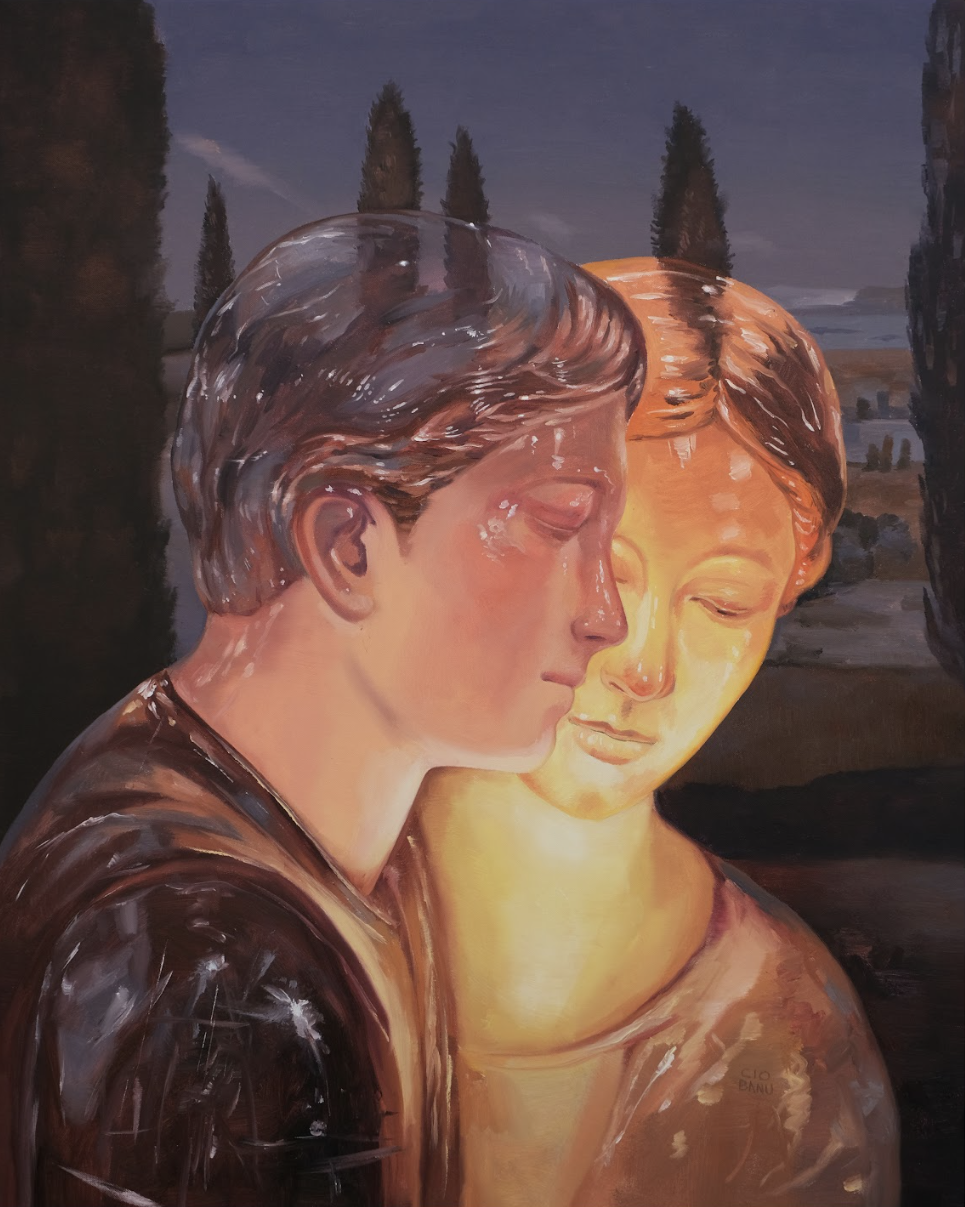
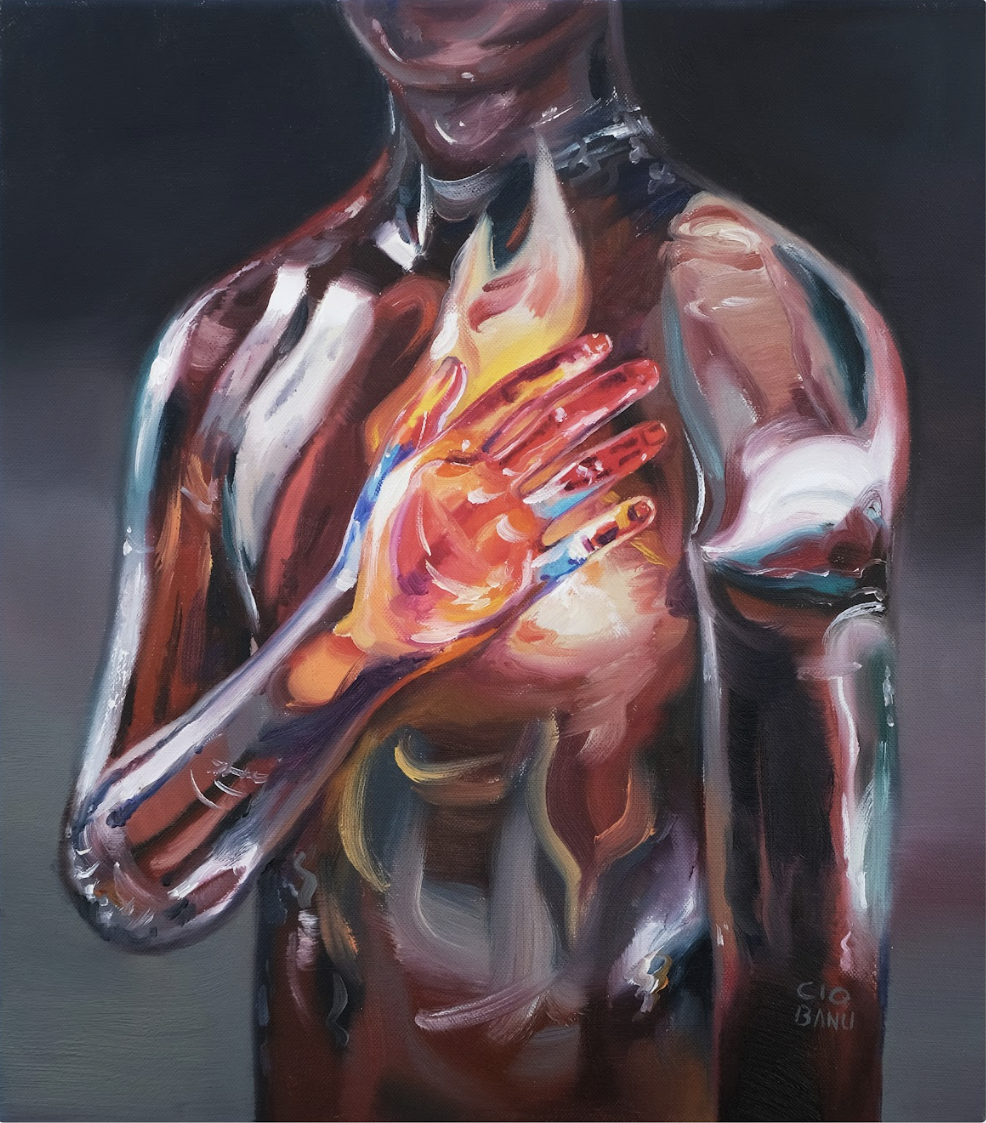
By contrast, Claudiu Ciobanu's painting foregrounds the dual nature of light through transparency. On one hand, light radiates through the incandescence of glass-like figures, evoking the presence of a spiritual flux that floods the viewer's retina. On the other, the landscape frequently found in Ciobanu's painting becomes a distorted element through the interaction between this luminous flux and the glassy silhouette of the incandescent figures.
With lightly altered morphological structures, George Semeniuc's self-portraits function as an analysis of the stages of self-figuration. The asymmetry at play contributes, above all, to an analysis of psychological states scored — particularly through the almond-shaped rendering of the eyes — by an arabesque of pen (or "liner," in contemporary parlance) that amplifies a possible emotional cartography.
Line becomes a performative element in Raluca Pavelescu's prints, transforming the stillness of the classical print run into frame-by-frame animation. The dynamism and effervescence of a spontaneous drawing construct actions in which the human figure is depersonalized, anonymized within a continuous social vortex, amplified by the sooty black of printer's ink.
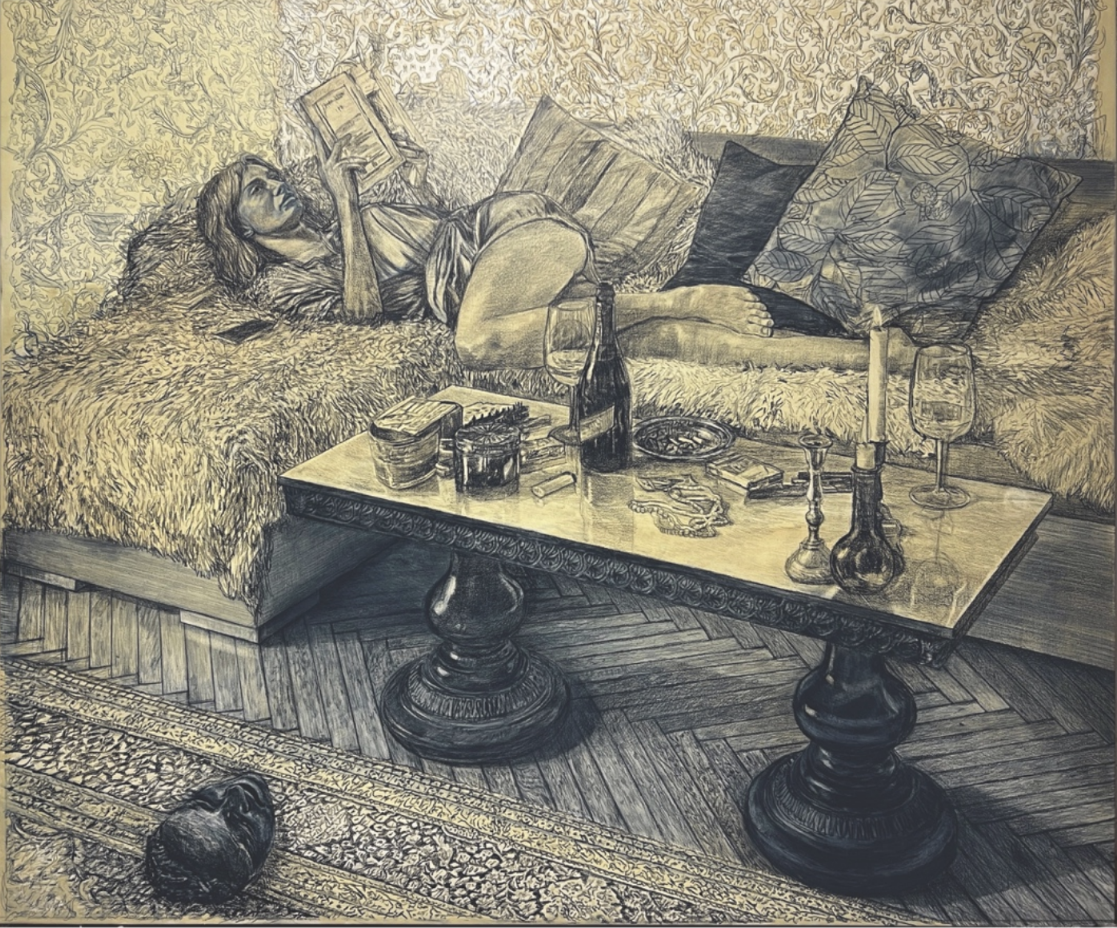
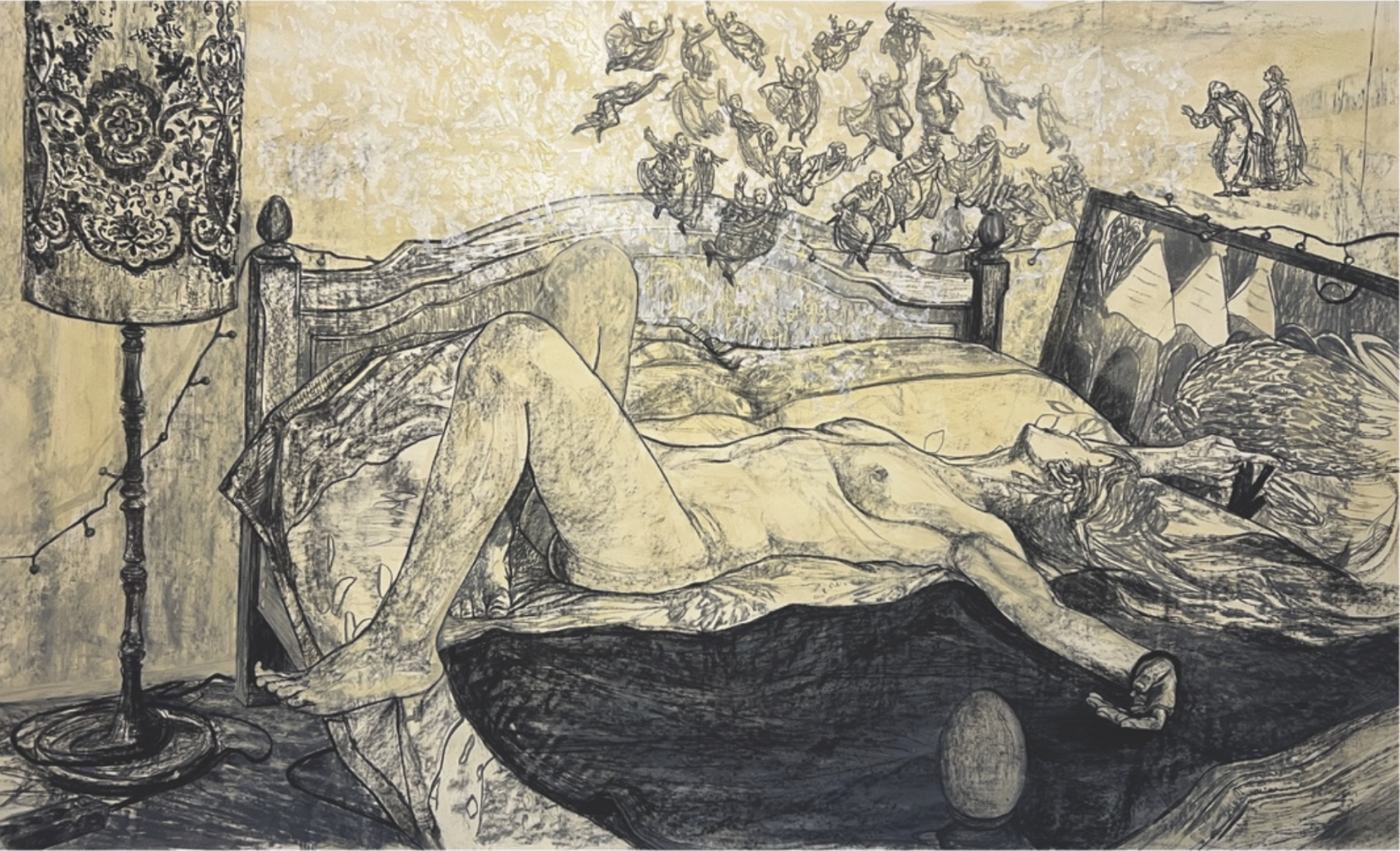
Charcoal — a noble derivative of the ember, honed for fine gesture — plays a crucial role in Celina Günter's artistic laboratory. Here, the arabesque dissolves into the natural softness of carbonized wood, transforming precise contour into marks of varying intensity, where the intimacy of her figures, targeted by the roundness of the charcoal tip, coalesces around an interior obsessively sketched through the fluidity of this ephemeral material.
In Oana Maria Pop's practice, the figure becomes a tool for abstraction. Yet even as the technique of photographic collage reconfigures the initial logic of the human figure, total abstraction never quite occurs, leaving subtle fragments of the human body visible — residues of the real that refuse to fully dissolve into the fiction of the image. The resulting new image explores tensioned junctures in which mutilation-by-collage invokes trauma and aggression against the female body, recomposing the body into a narrative suspended between the real and the unreal.
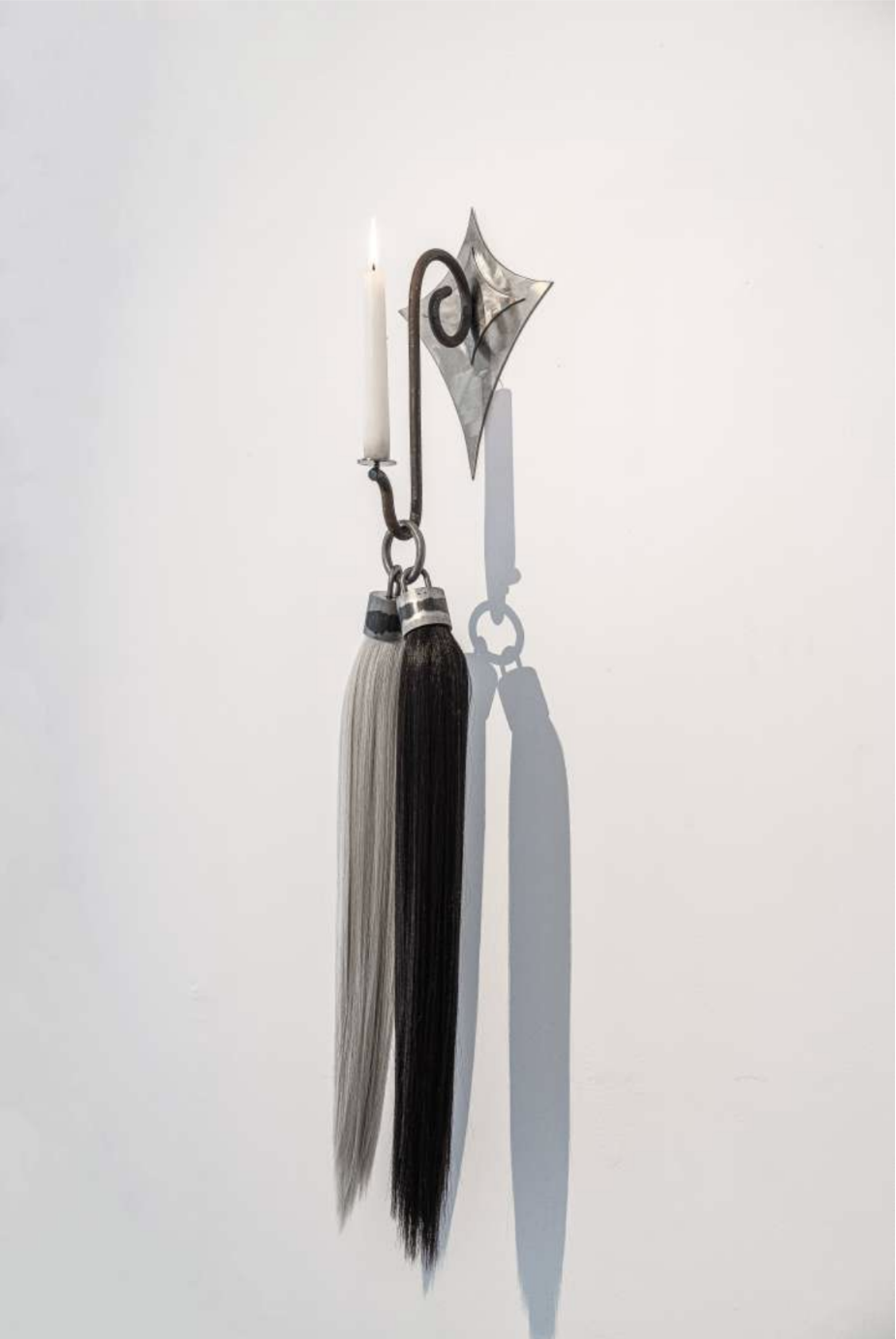
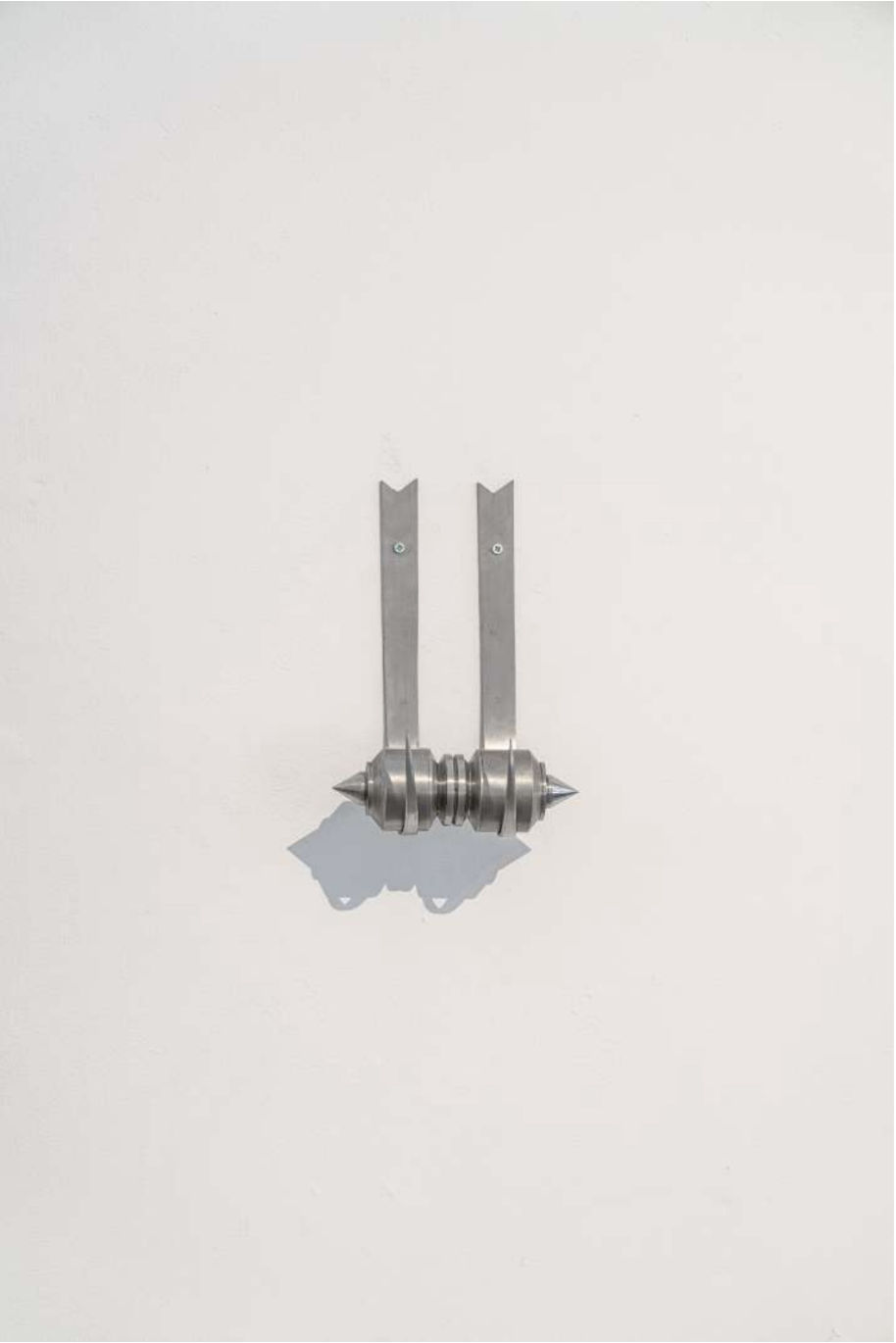
Ana Ionescu's sculptures recast the exhibition trajectory into pure abstraction. Yet beyond this formally minimalist status, the objects relate subtly to the fragility of the human body, where the absence of any explicit figuration amplifies the felt presence of the absent body. The sharp points of the metal elements transform the viewer's proximate space into a zone of heightened alert, redefining the contact between the hardness of metal and the softness of skin as an aichmophobic experience.
Norbert Filep, curator