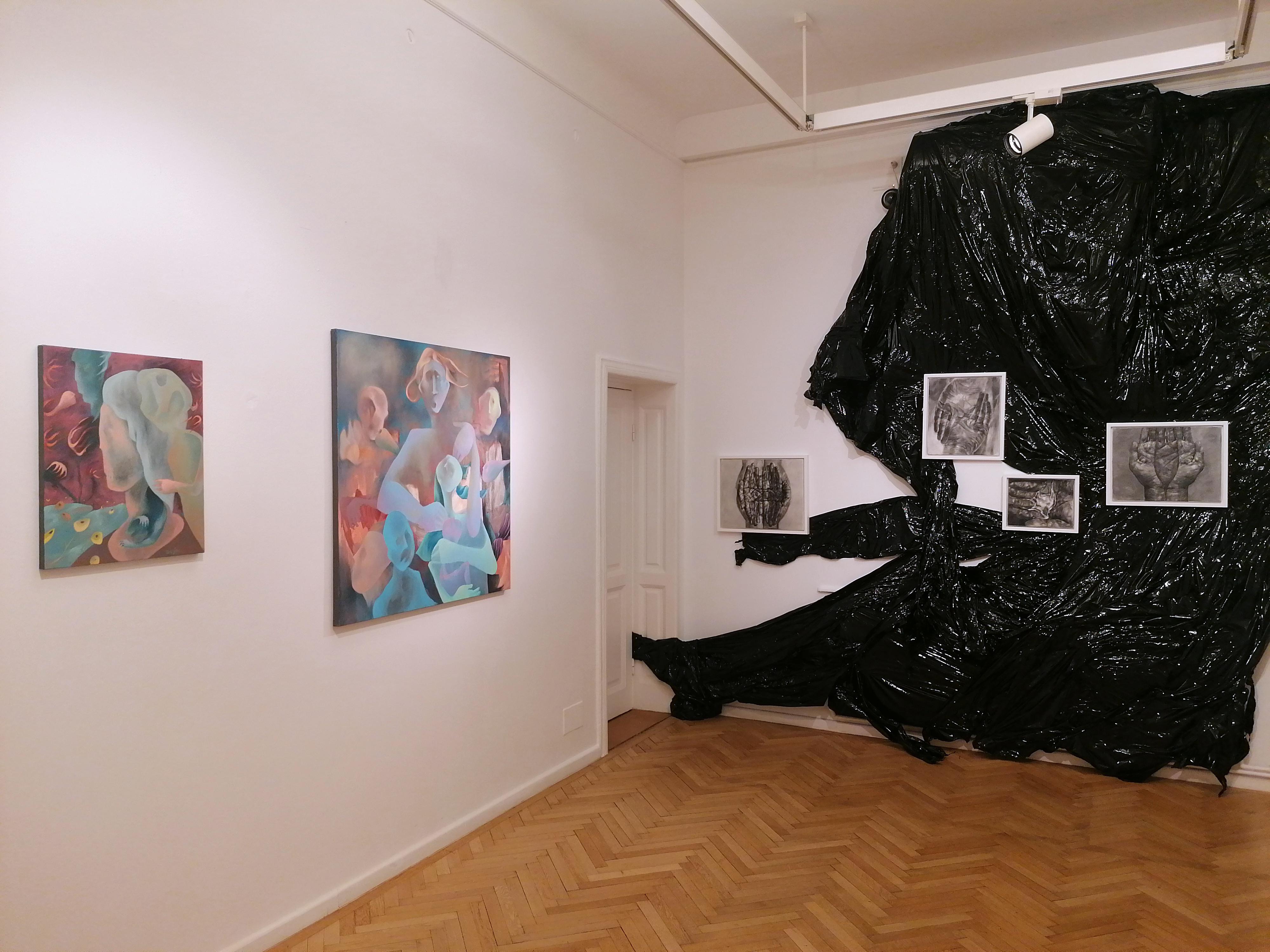
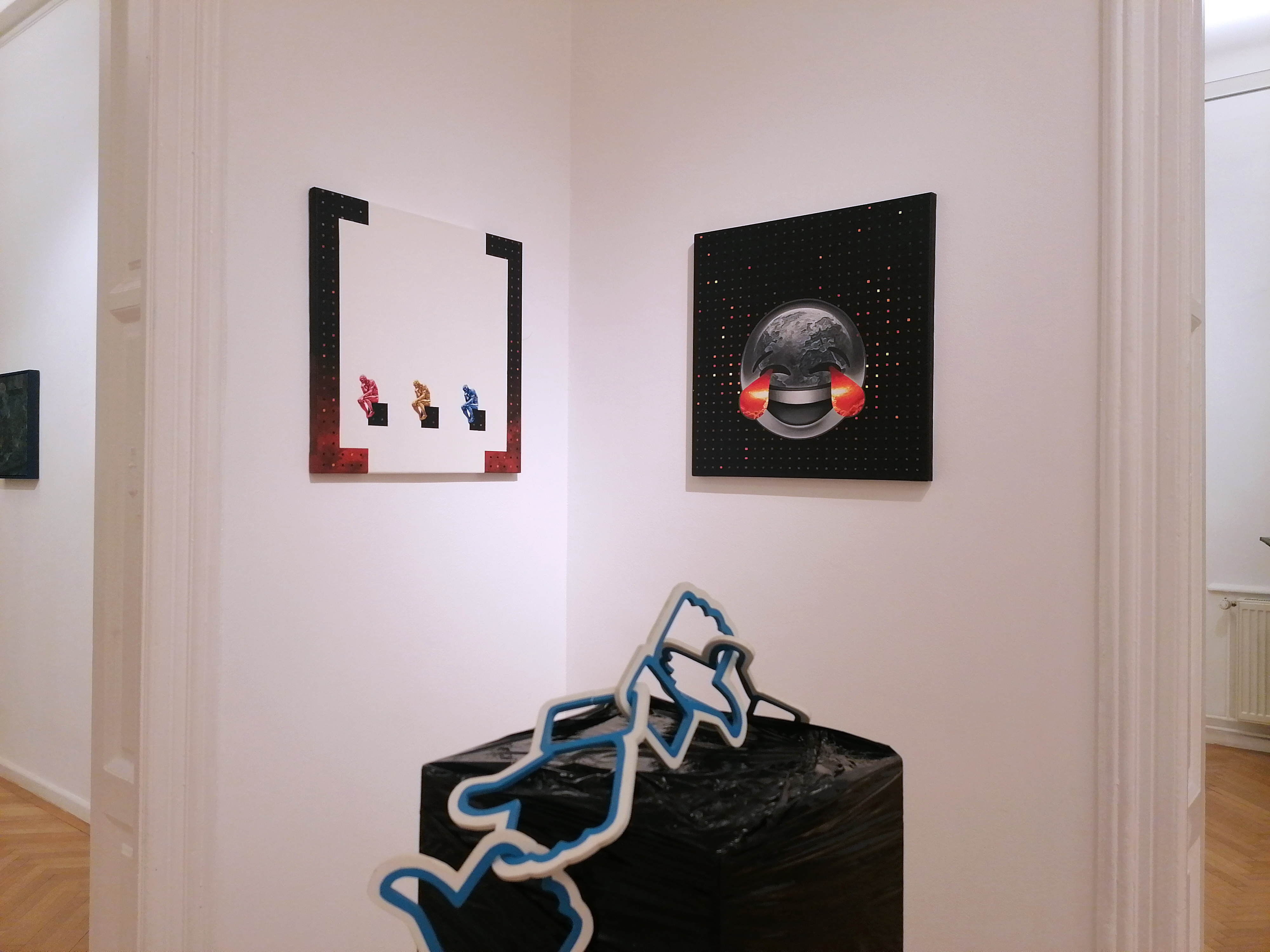
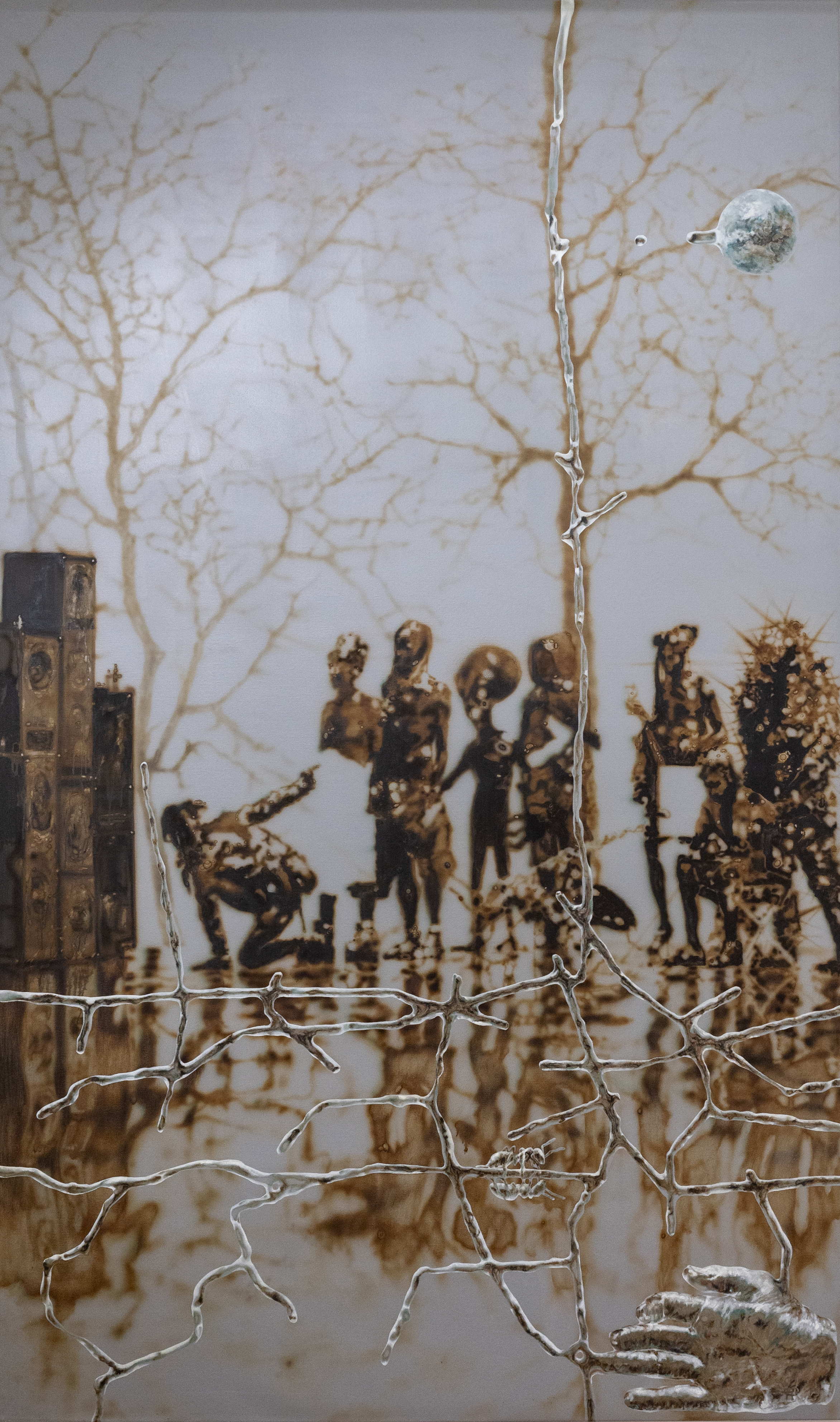
On November 23, AnnArt Gallery opens the group exhibition Silenced Anxiety, which proposes an exercise in introspection, exploring the diversity of creation/perspectives of 8 Romanian artists from Bucharest, Iasi, Arad and Cluj: Dragoș Bojin, Radu Carnariu, Antonia Corduneanu, Ada Muntean, Radu Pandele, Diana Serghiuța Popa, Andrei Tudoran and Ruxandra Tudoran.
Silenced Anxiety
There is the desire to do something, anything, rather than stay with the unknown and the anxiety it creates. There is the desire for quick solutions that would take care of everything. (Carl R. Rogers, 1995)
Our existence is marked by an overwhelming abundance of options, and the act of conscious choice has never been more profound. Anxiety is part of the primordial human design, and although it plays a very important role in keeping our minds sharp, we obsessively try to remove and replace it with positive emotions, which actually leads to a chronicization of fears.
Silenced Anxiety is a selection of narratives that explore the complexity of the human psyche. They formulate a way of coexisting with anxiety, turning it into a creative impulse, a life force, rather than an overwhelming, morbid one, thus developing antibodies to this modern affliction.
The artist's work emerges from the avalanche of ideas, not crushed, but crystallized; not constrained by the rules through which it will express itself, but free and fearless, for it is stripped of the infinite forms it could embody, authentic and dedicated to fulfill a unique experience. The journey of a work from the privacy of the workshop to the exhibition can be compared to a communication from behind computer screens, uninhibited by the fact that the dialogue is not a direct one. The freedom manifesto appears, paradoxically, through the implementation of structures that seek to surprise, intrigue, and charm the viewer.
The exhibition offers viewers the chance to explore the self, personal histories, and lesser recognized emotions, through the effect of mirroring seen in the work.
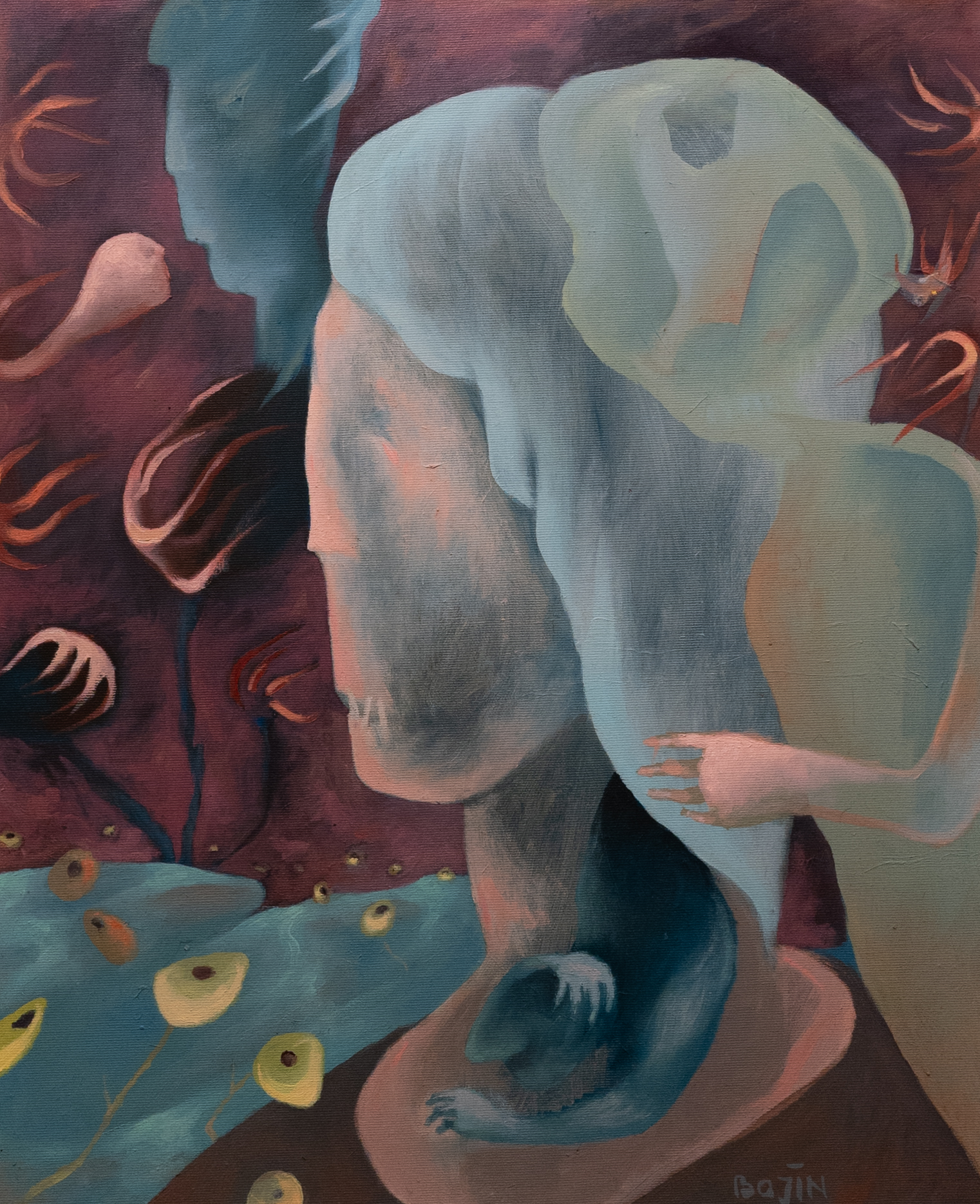
Fragments of heterogeneous dreams and memories escape through the paintings of Dragoș Bojin, and thus the whole is regained, and the apparitions which secretly plotted the destiny of man are now in a dialogue with the viewers. Anxiety, fear and the unknown are no longer part of the darkness, they are tamed by the warmest and most harmonious colors.
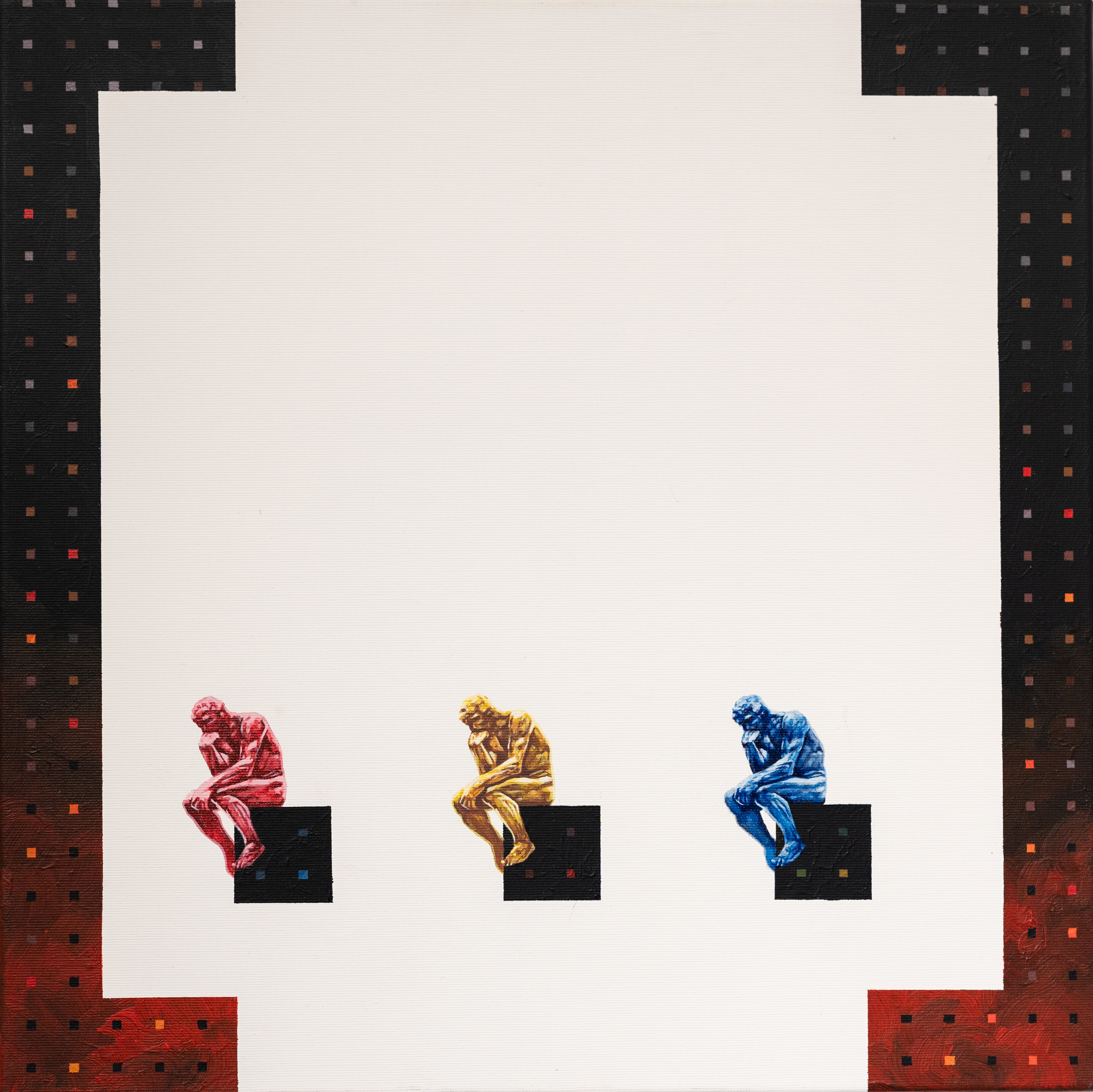
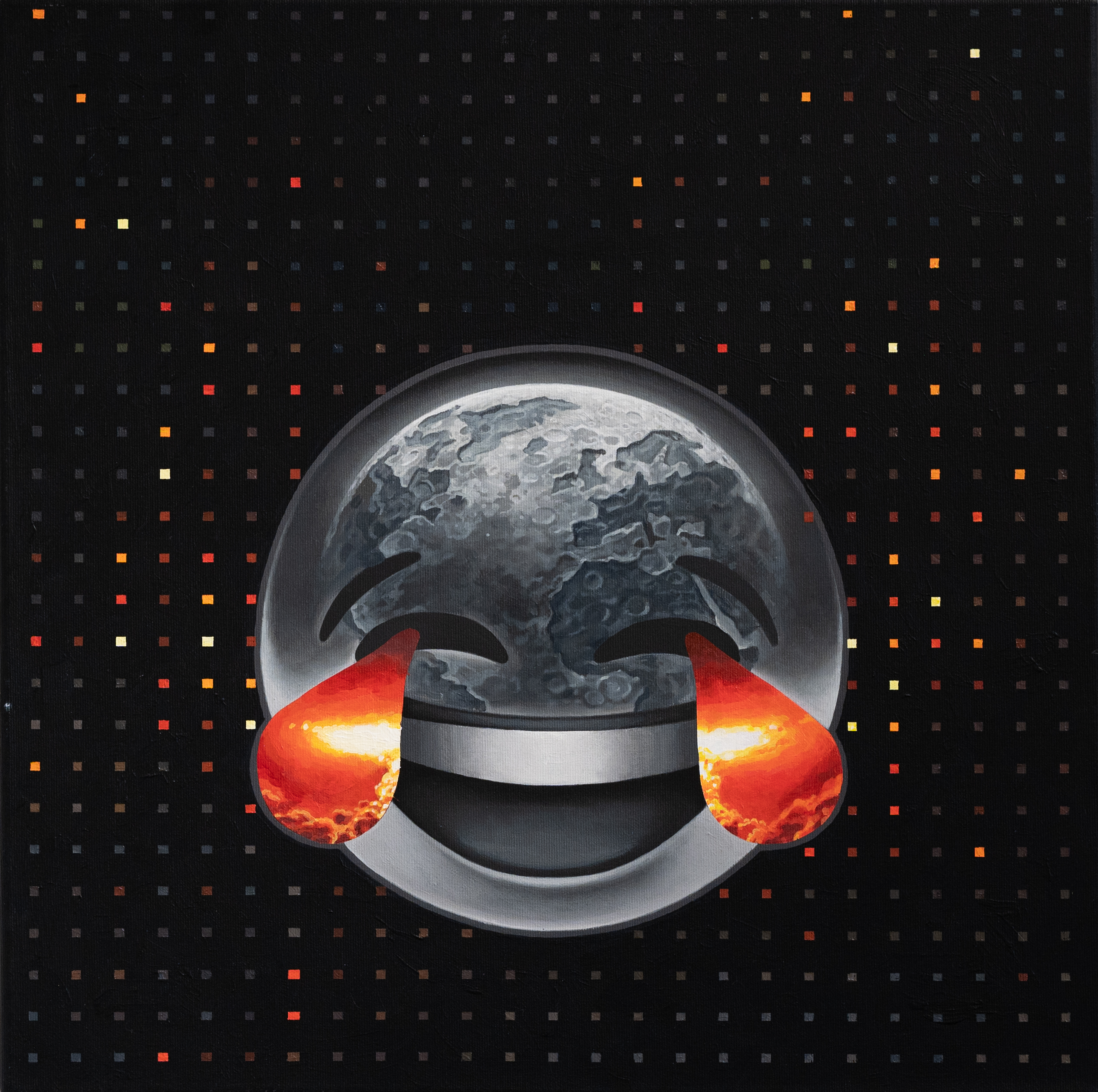
Radu Carnariu invites us to question the evolution of our relationship with "monumental needs" and with the new technologies that have brought us profound changes on a psychological level. He approaches, with irony, the notion of desire that shapes us according to the new techno-humanist trends and transposes them through drawing, metalwork, collage, and digital graphics in collaboration with artificial intelligence and video techniques.
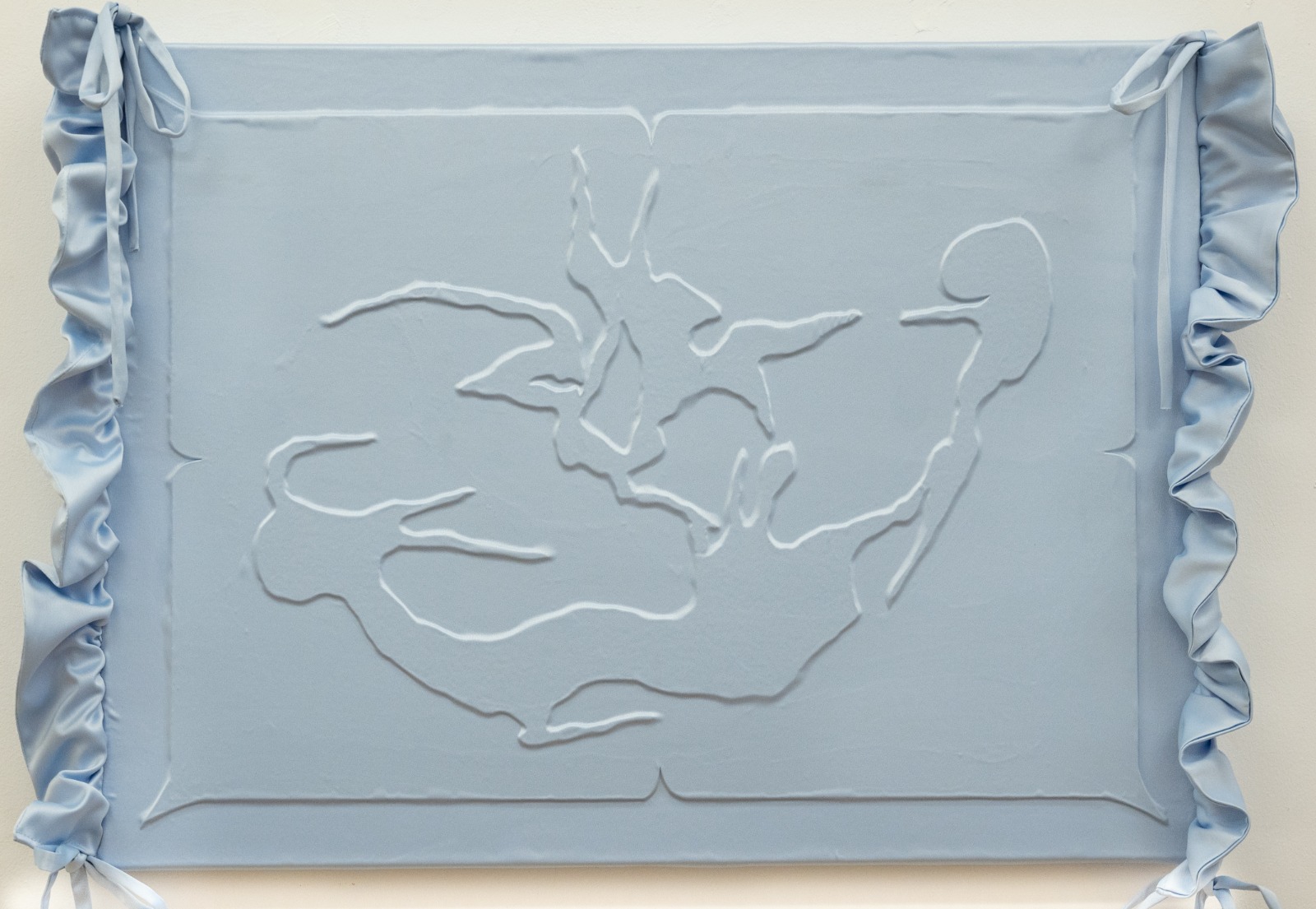
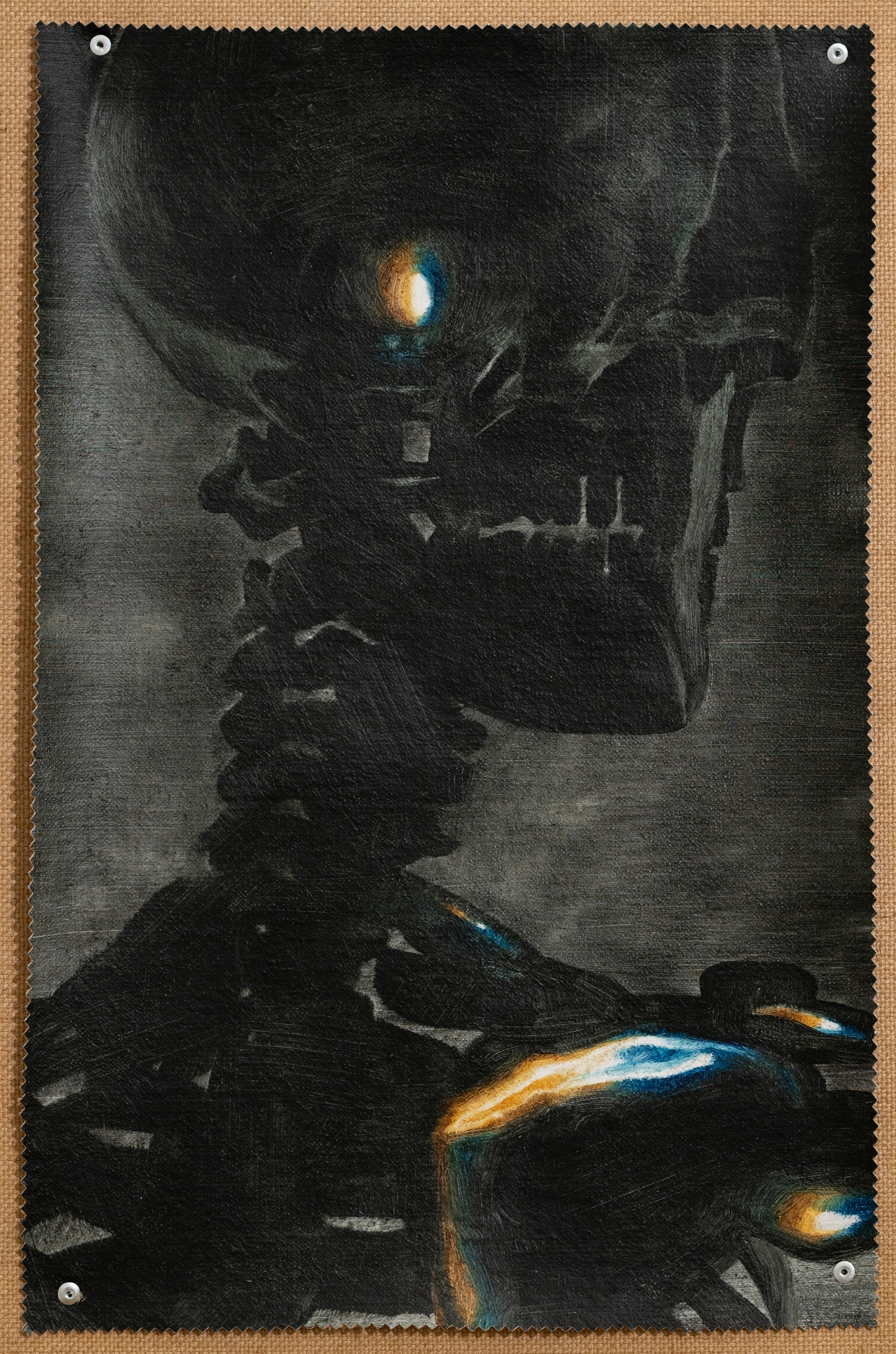
Antonia Corduneanu's embossed works take on an aesthetic inspired by design logic, where the matter/object explains its meaning through very clearly defined forms, and addresses a classic theme related to light and shadow, a duality composed of opposing forces such as revelation and mystery, knowledge and ignorance, good and bad.
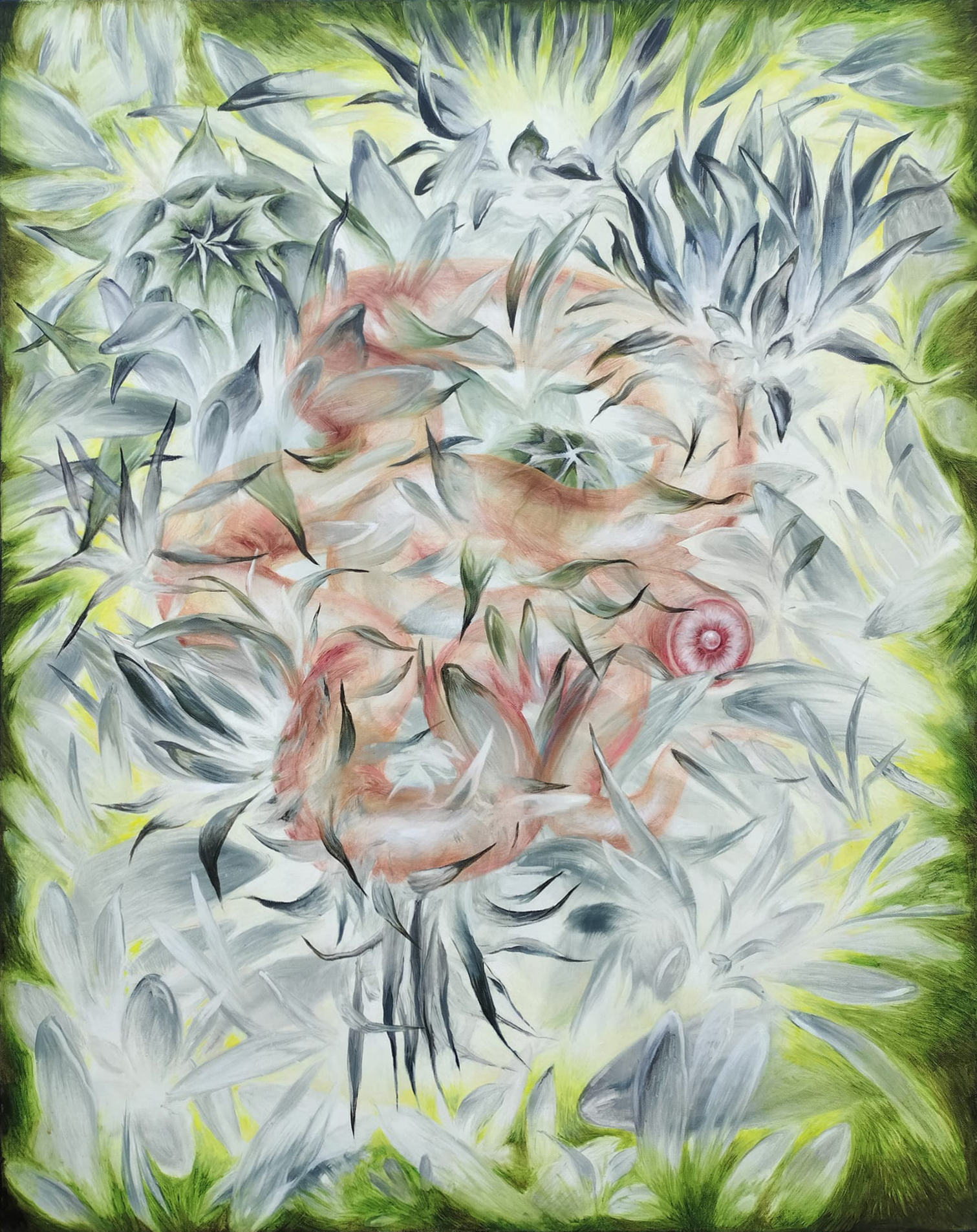
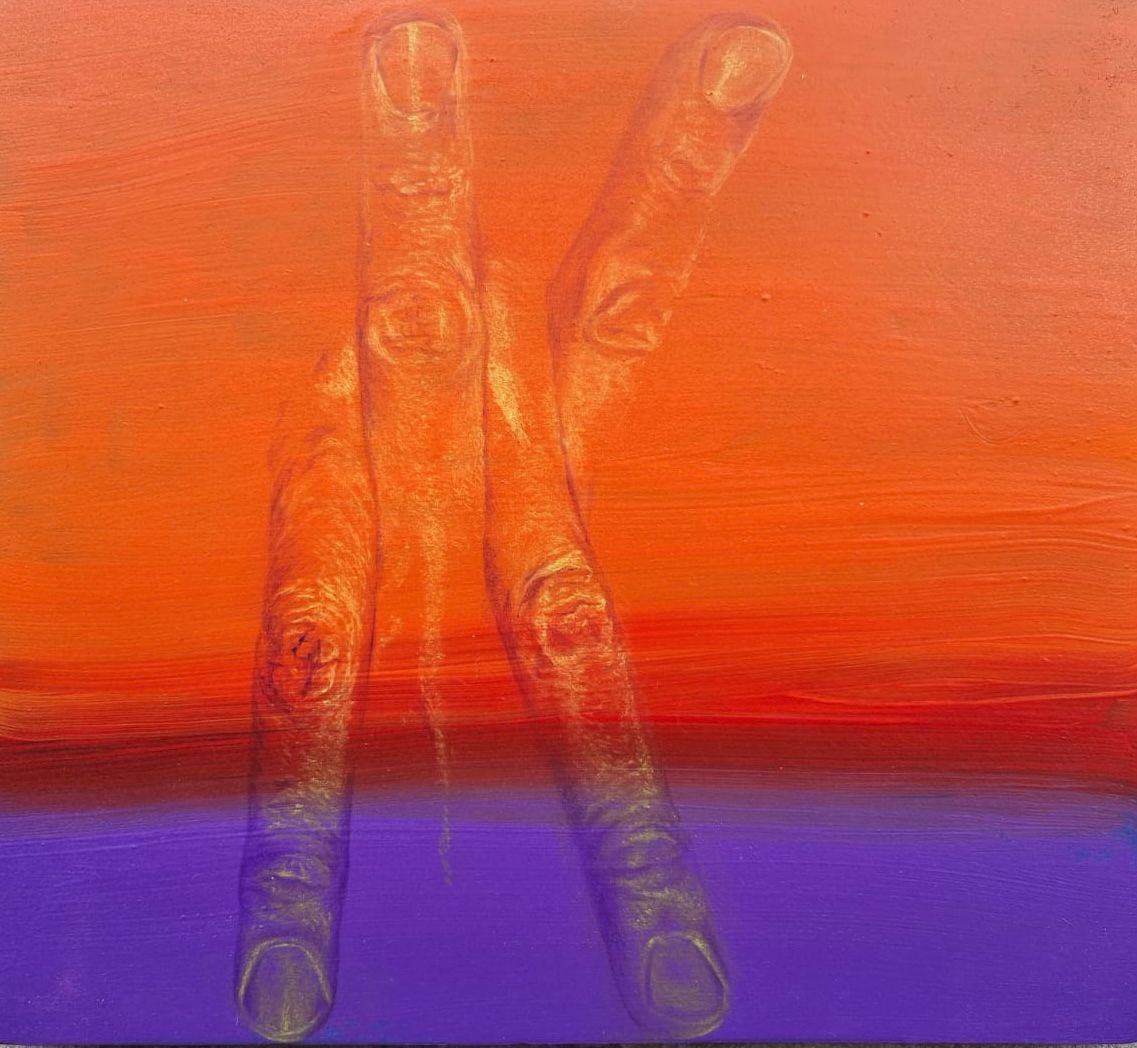
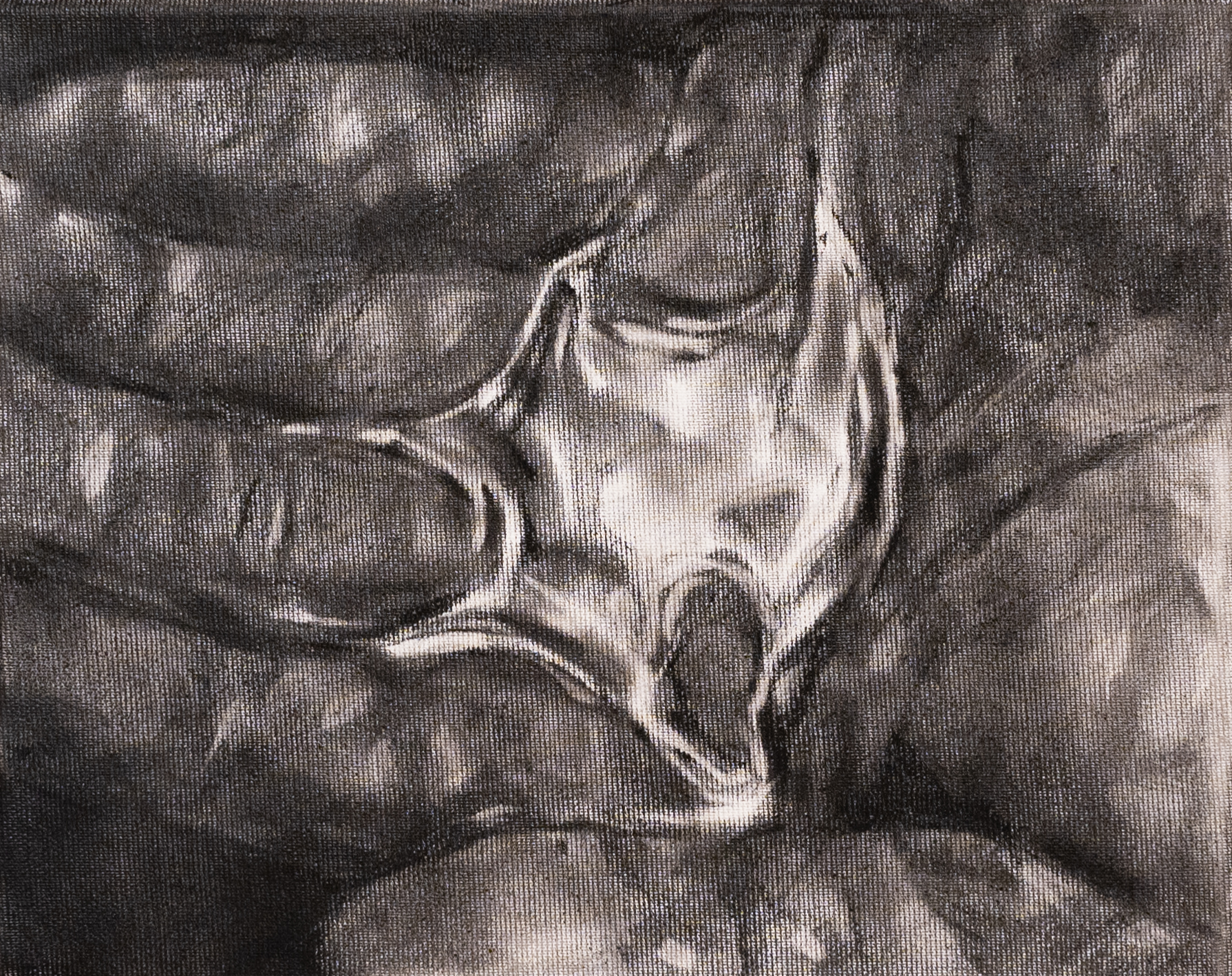
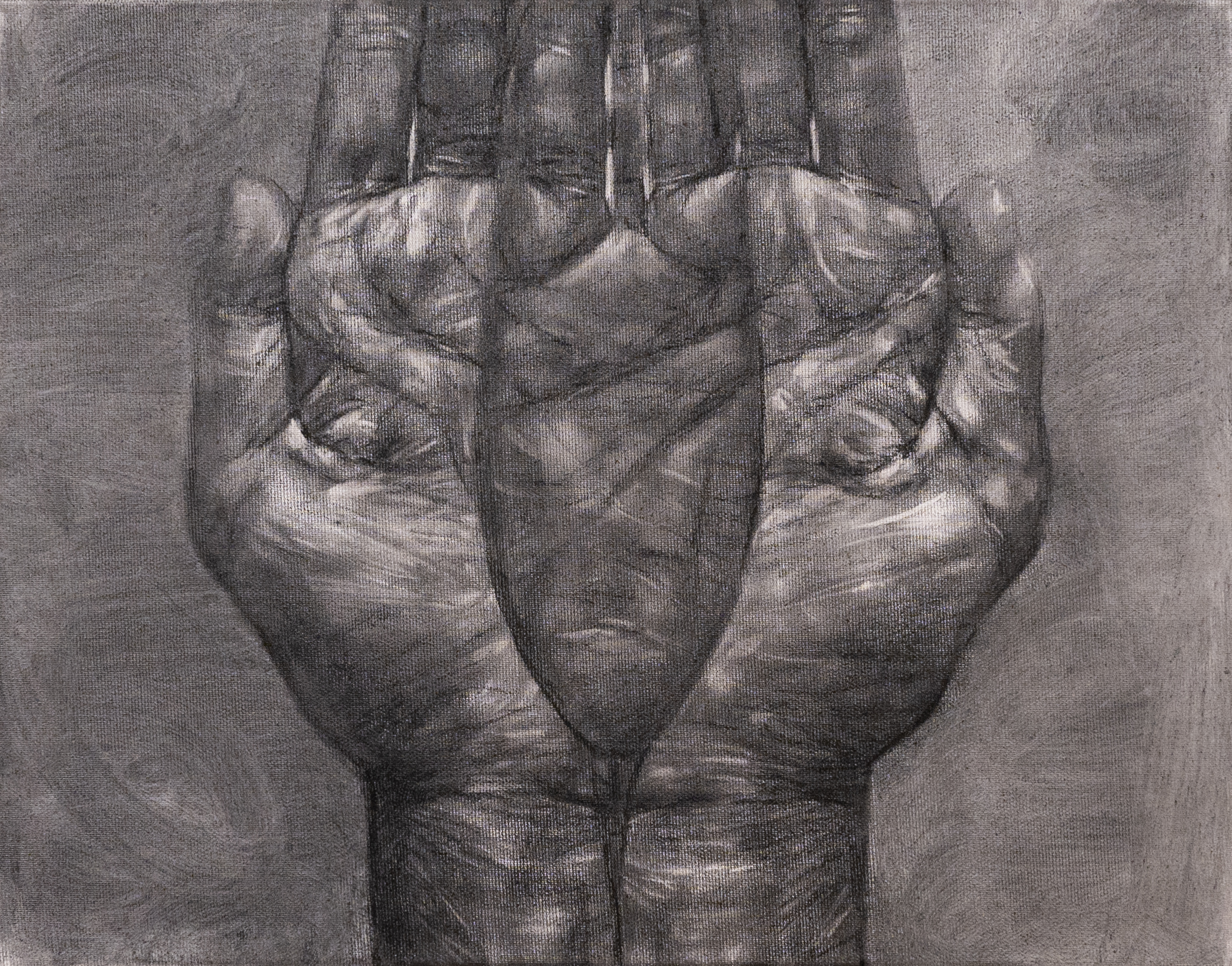
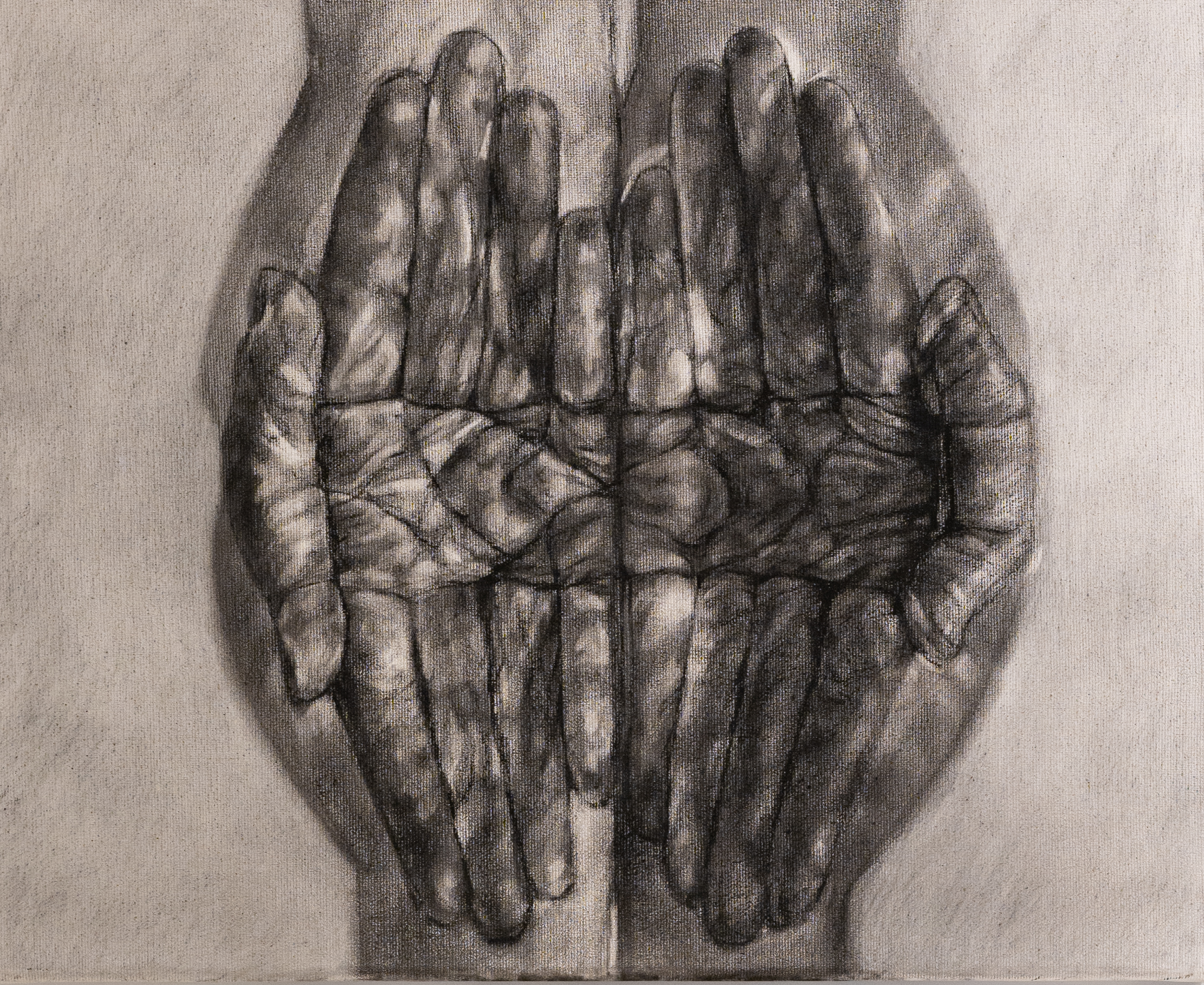
Ada Muntean's silent depictions evoke existential concerns, the illustration being a tool that maps the 3 instances of time to which the self relates: past, present, future. The intimate details of these body fragments, the palms, capture the changes that have taken place under the relentless influence of time.
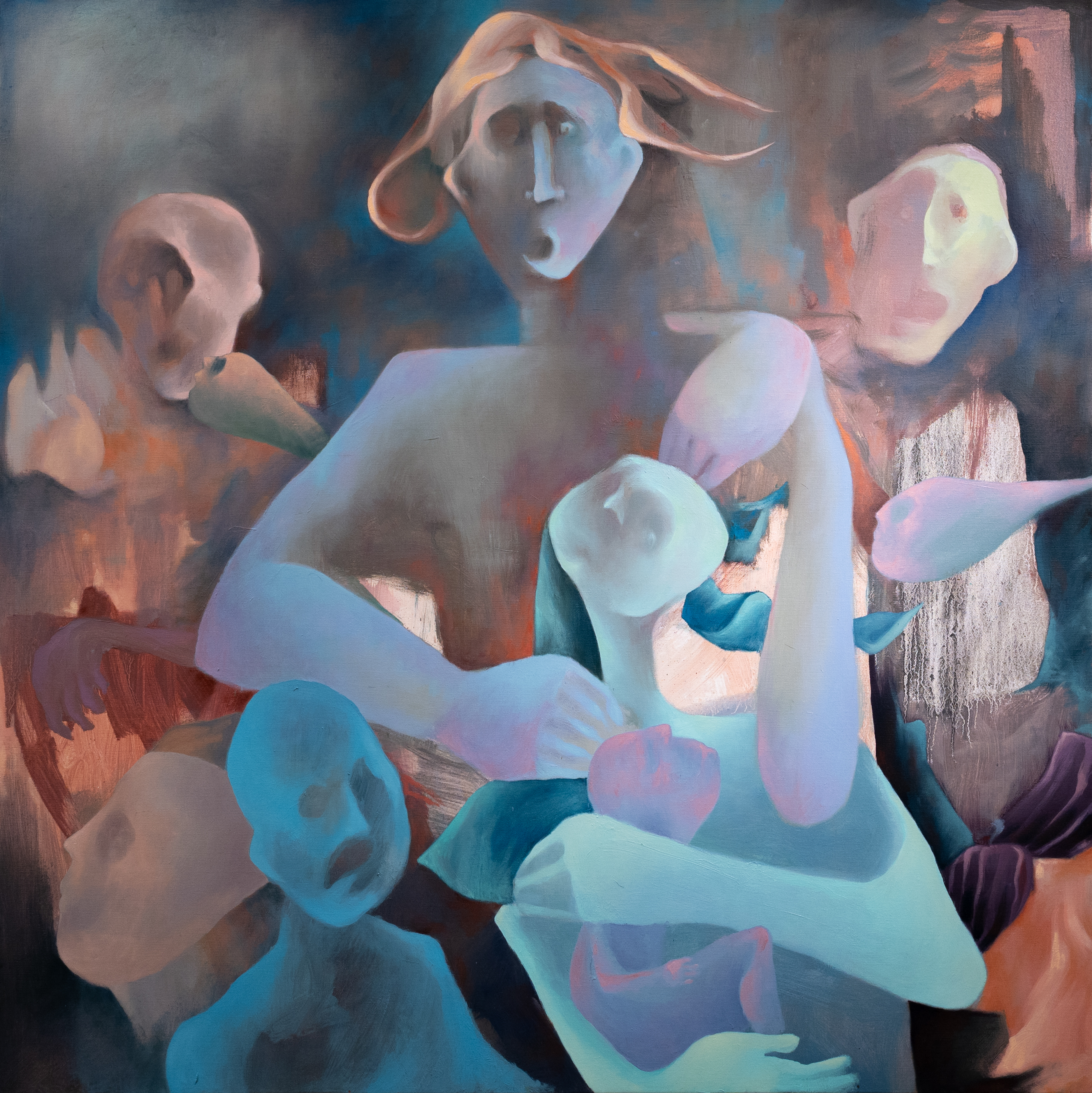
Radu Pandele contaminates the real with inescapable interrogations that he consumes across his surrealist-pop works, which until they reach the final form, be it painting, sculpture, installation, animation, embroidery, pass through the rigorous filters of classical studies but also through programs of 3D computer modeling.
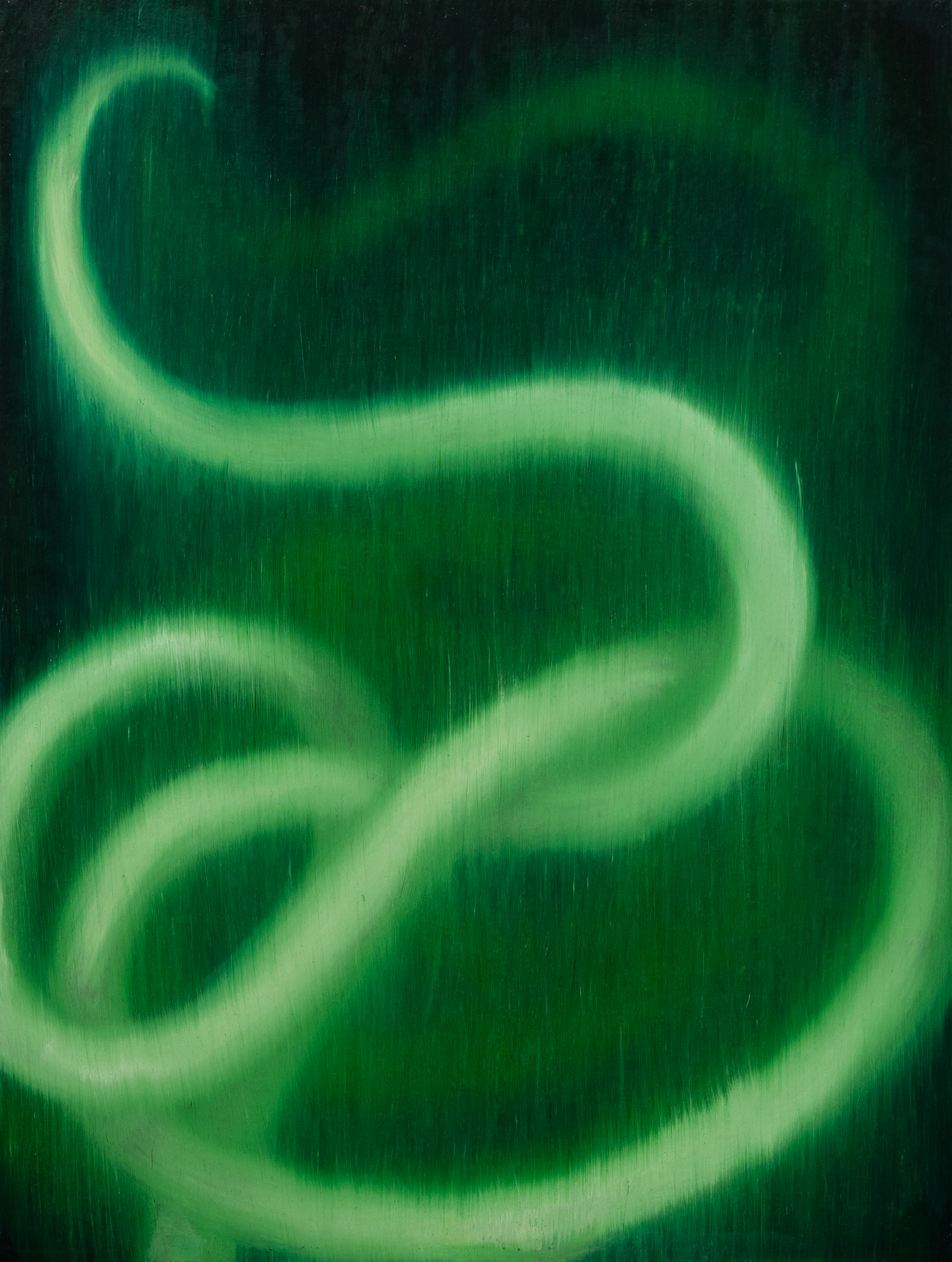
Diana Serghiuță Popa bridges the gap between the past and the present, sacrificing and sanctifying a symbol from folklore, the snake, thus offering a valuable perspective on how collective identity evolves and adapts to an ever-changing society.
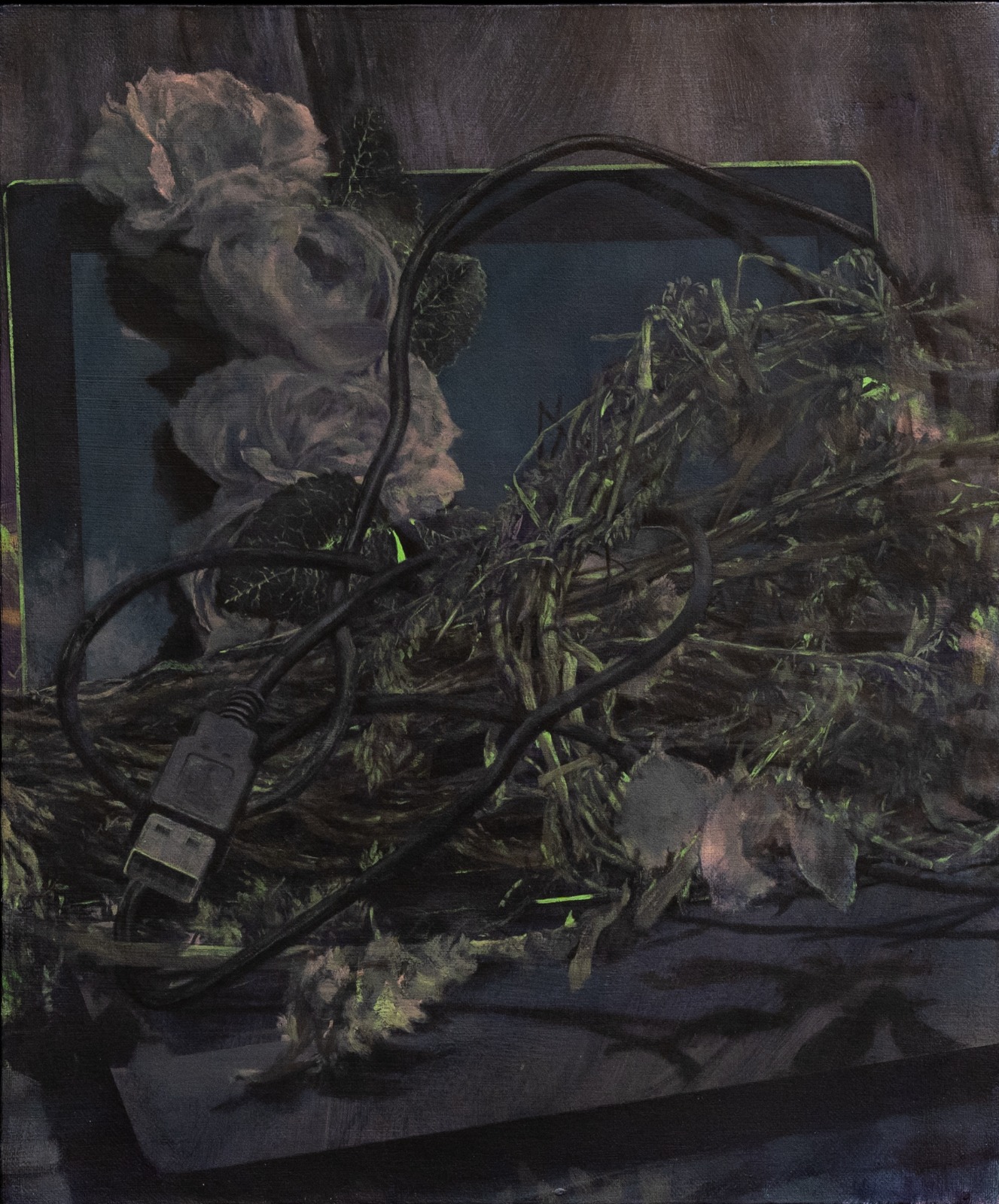
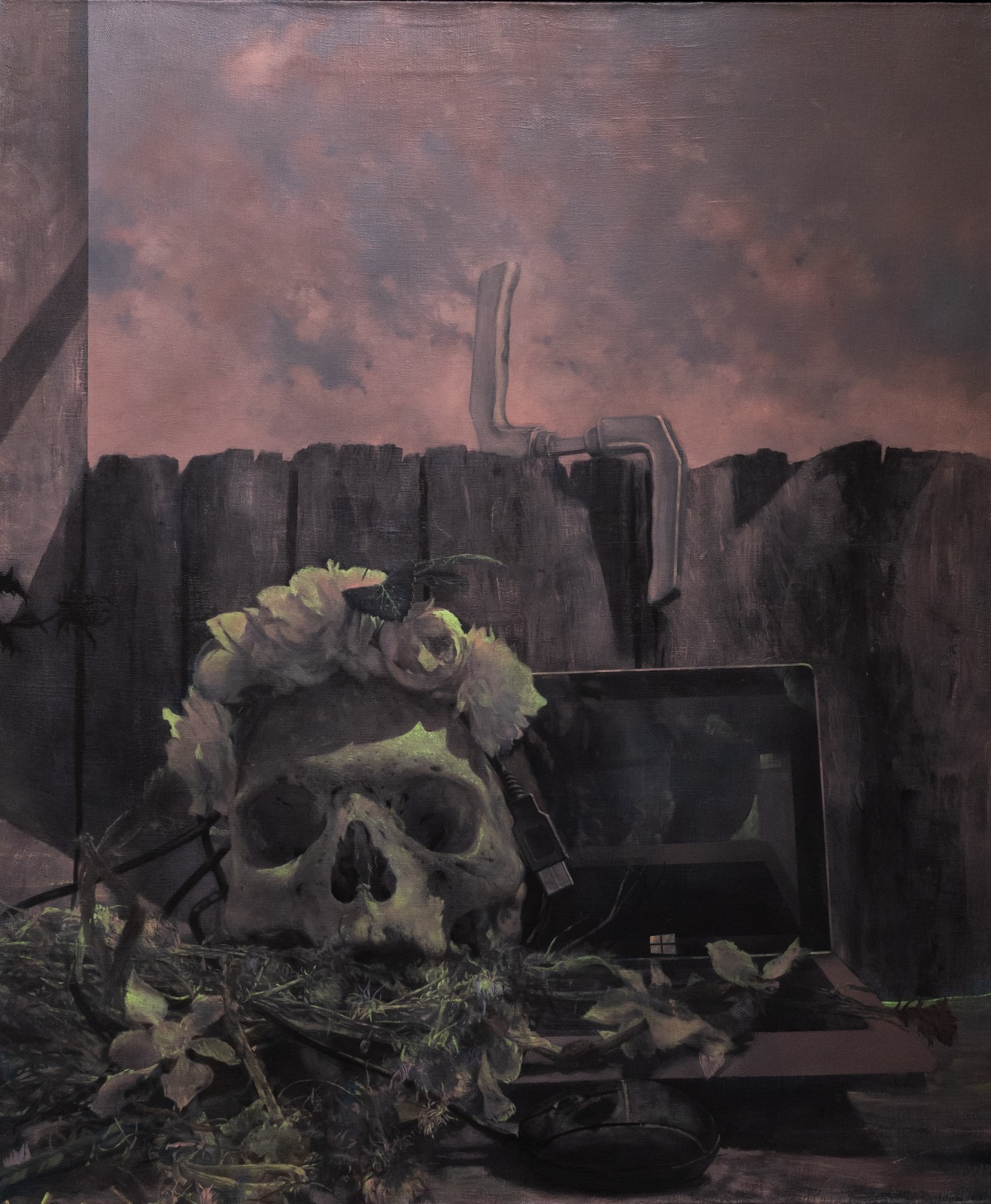
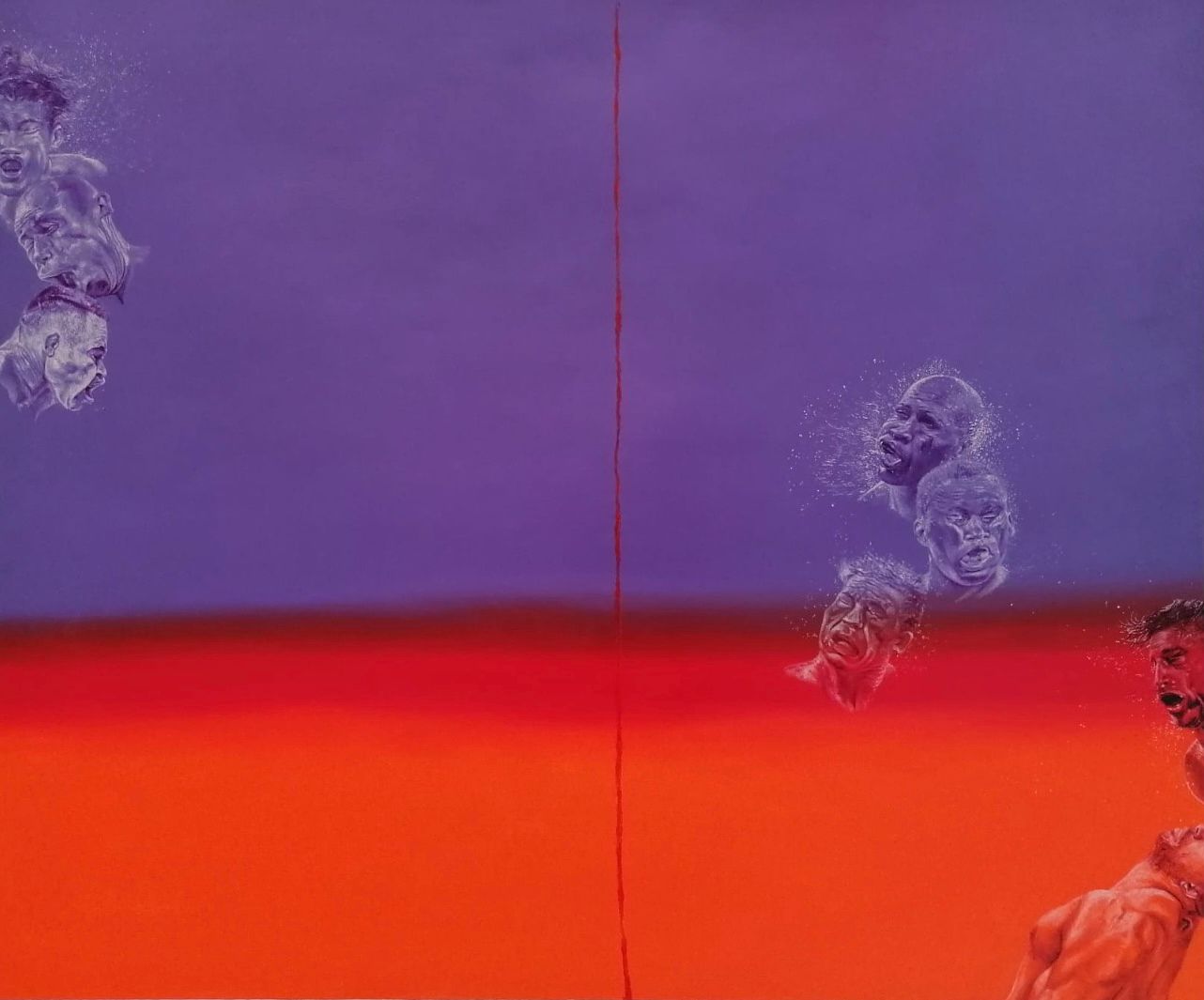
Almost exclusively a figurative painter, Andrei Tudoran is concerned with memory and archive processes, with the relationship between the painted image and digital iconography, with the cultivation of the logics of melancholy and paradox, of identity and difference.
Ruxandra Tudoran practices the mechanisms of altering and warping perception, with an almost scientific approach to how existence is shaped, cultivating experiment and working with tensions rendered by the juxtaposition of mismatched images.
*text & selection @ RuxandraTudoran