When light traverses space, it comes to a halt. Its swiftness is defined by invisibility—hence the particles that elude any rudimentary gaze. Its speed, measured by the absurd constancy of kilometers crossed within fractions of a second, becomes an engineer of space, flooding the most microscopic recesses of three-dimensionality.
Air, with its complex network of chemical and physical threads, thins and becomes a horizon of contemplation, an amplifier of worldly signals whose deciphering hides at the edge of planetary finitude.
Perspective opens. The point—the fundamental element of visual structure—oscillates. It migrates through the architecture of the trihedron, seeking its own coordinates, like photons delineating the contours of this world. Once stabilized, it articulates within its own circumstances: in chaotic systems captured by the lens, or in processes that operate with the obsessive rigor of repetition. In both cases, the point remains bound within the limits of paradox—wave and particle, whole and fragment.
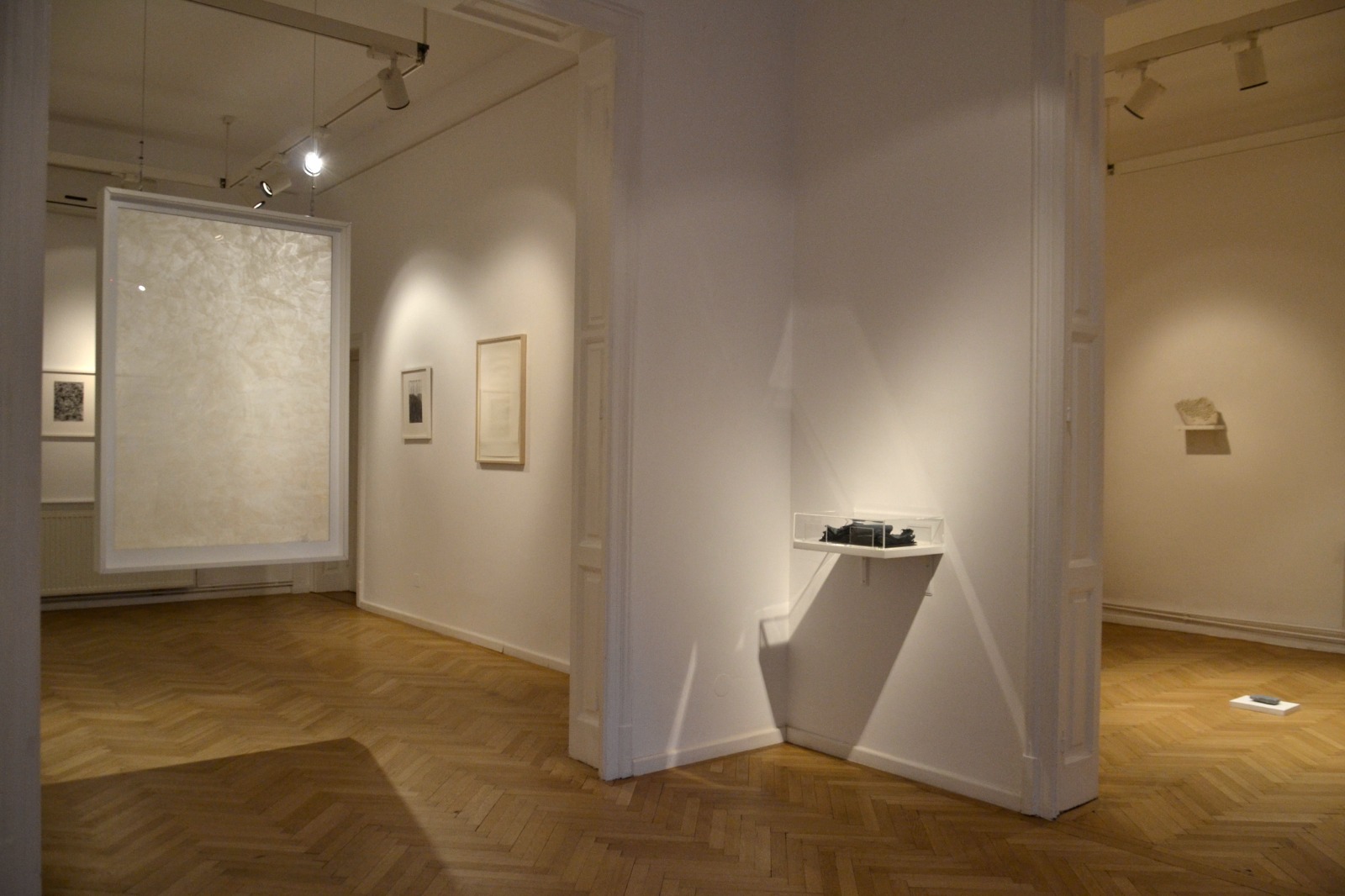
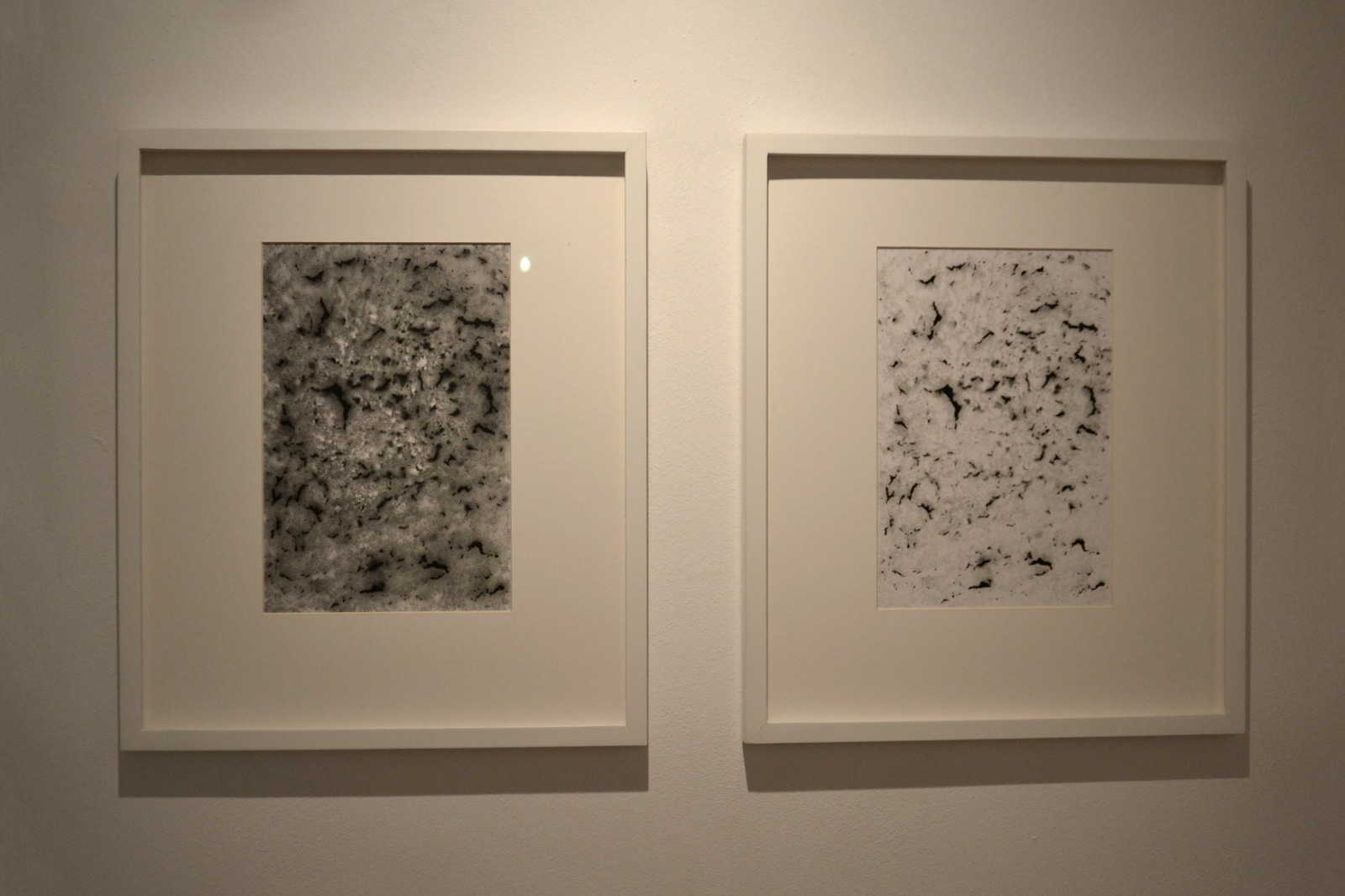
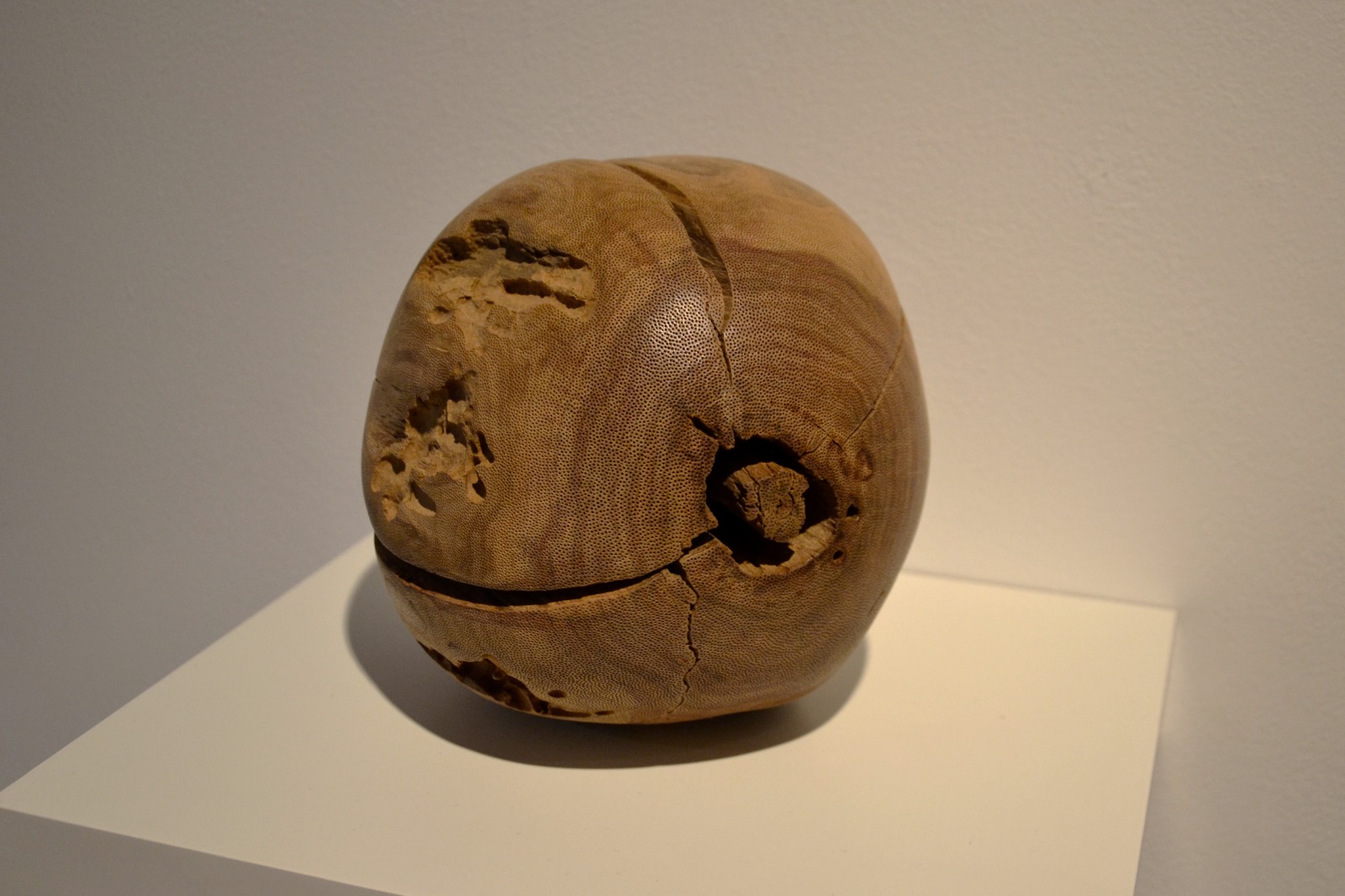
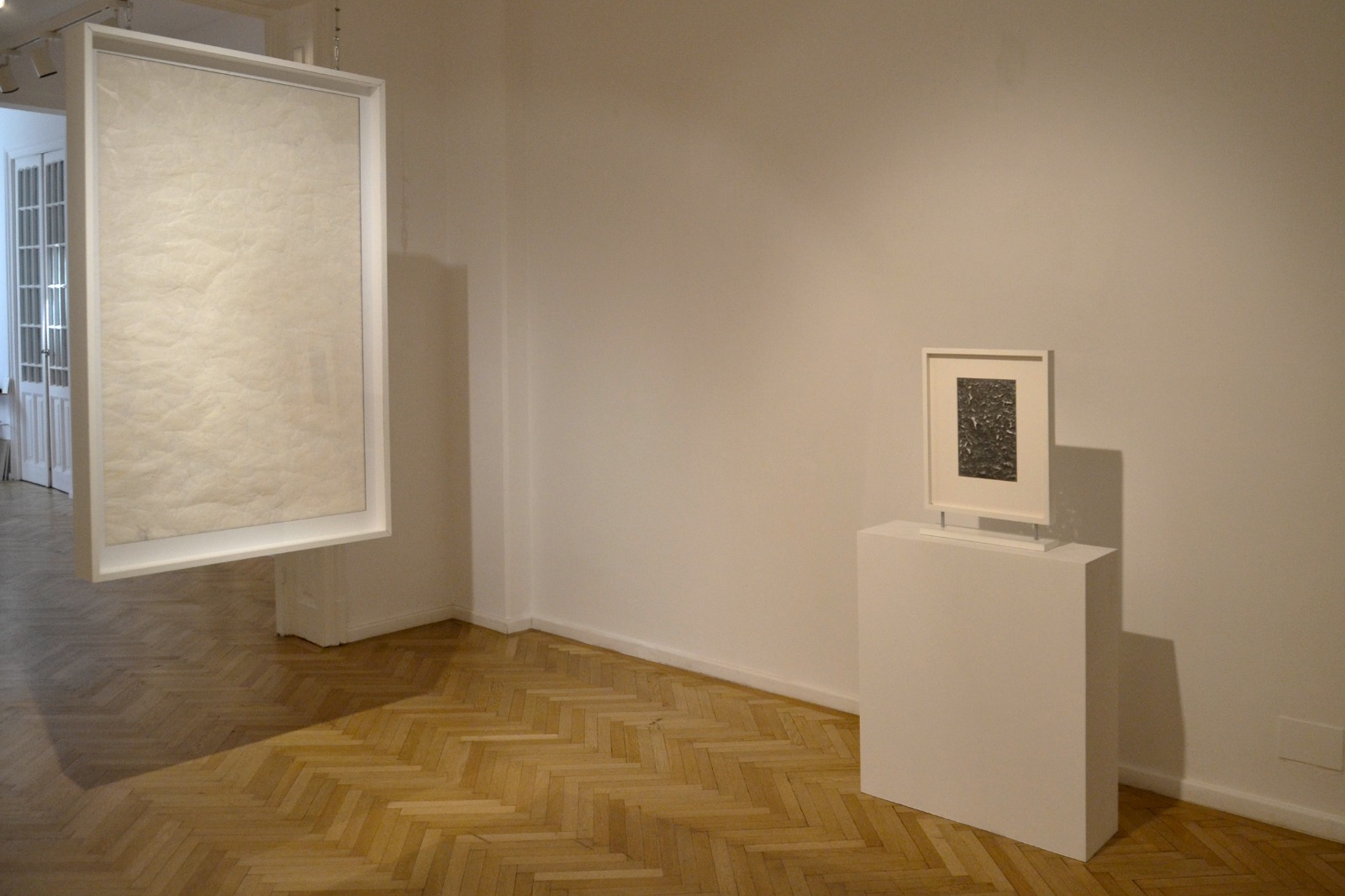
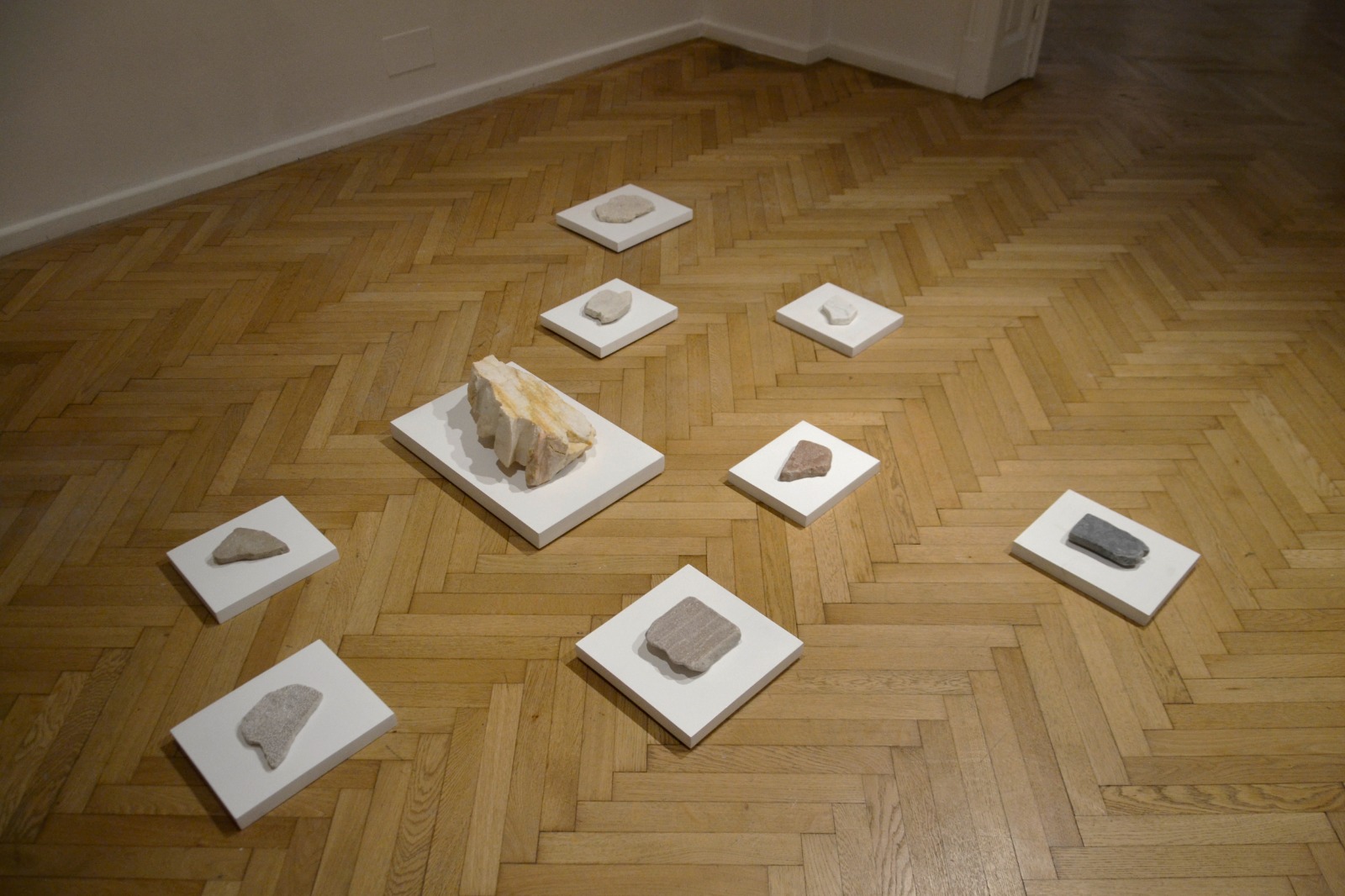
Diana Popuț’s works operate through similar mechanisms. In attempting to capture the magical properties of light, her practice perforates the material plane, releasing the time stored within latent processes of observation. This research unfolds within the parameters of an endless repetition, where each gesture of piercing the surface of paper, marble, or wood becomes an exercise in slowing down temporal duration. Thus, the perforated object abandons its natural habitat and becomes a repository of accumulated time.
The intertwining of space and time—the helix generated through repetition—shapes the architecture of the pierced object. The visual formula, fixed in collective memory, becomes an image altered by the (im)perfection of a point-like network, resembling a mosaic surface. The tension between the organic structure of matter and the punctiform drawing of the needle or drill becomes a catalyst for metamorphic processes.
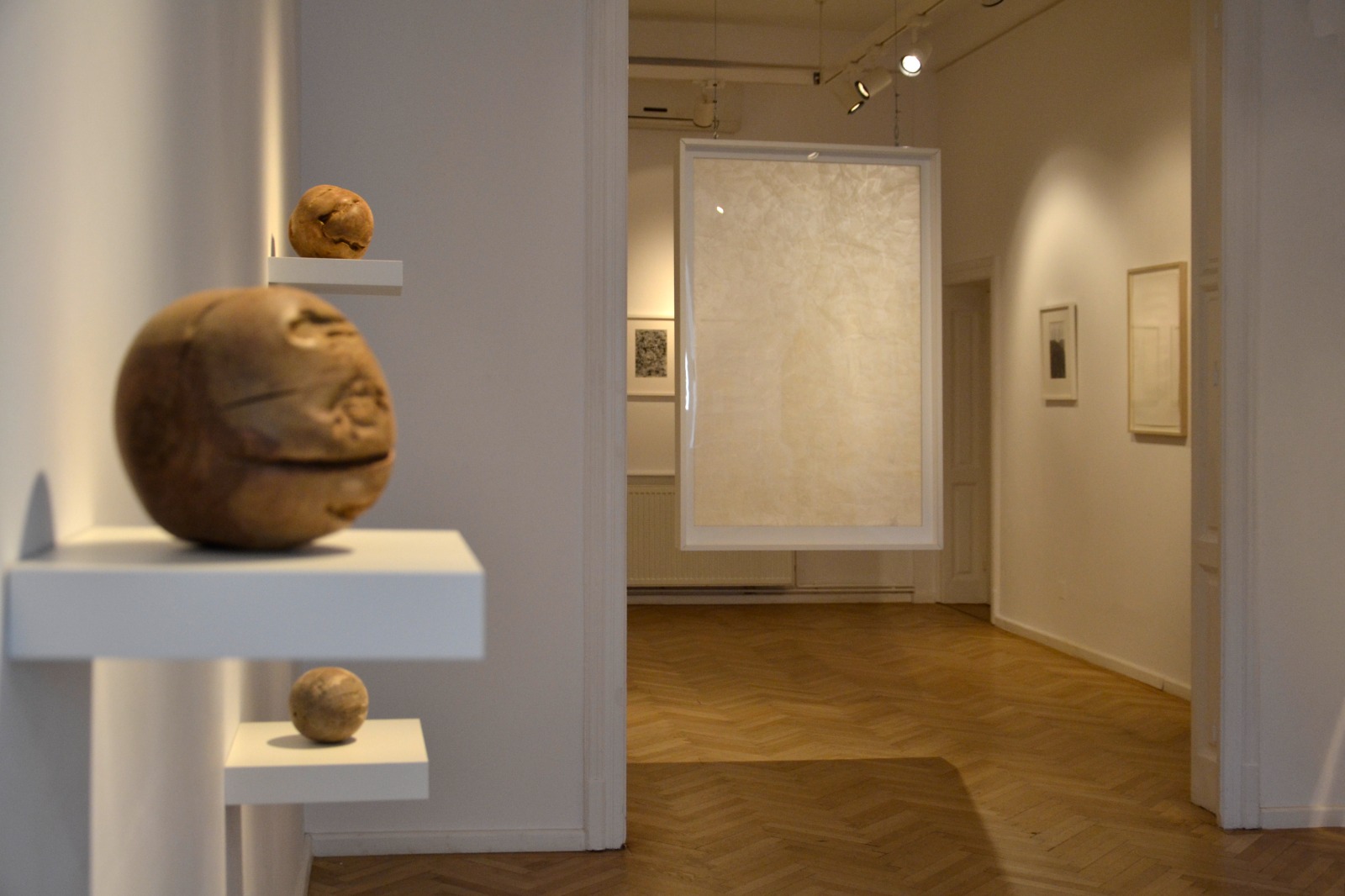
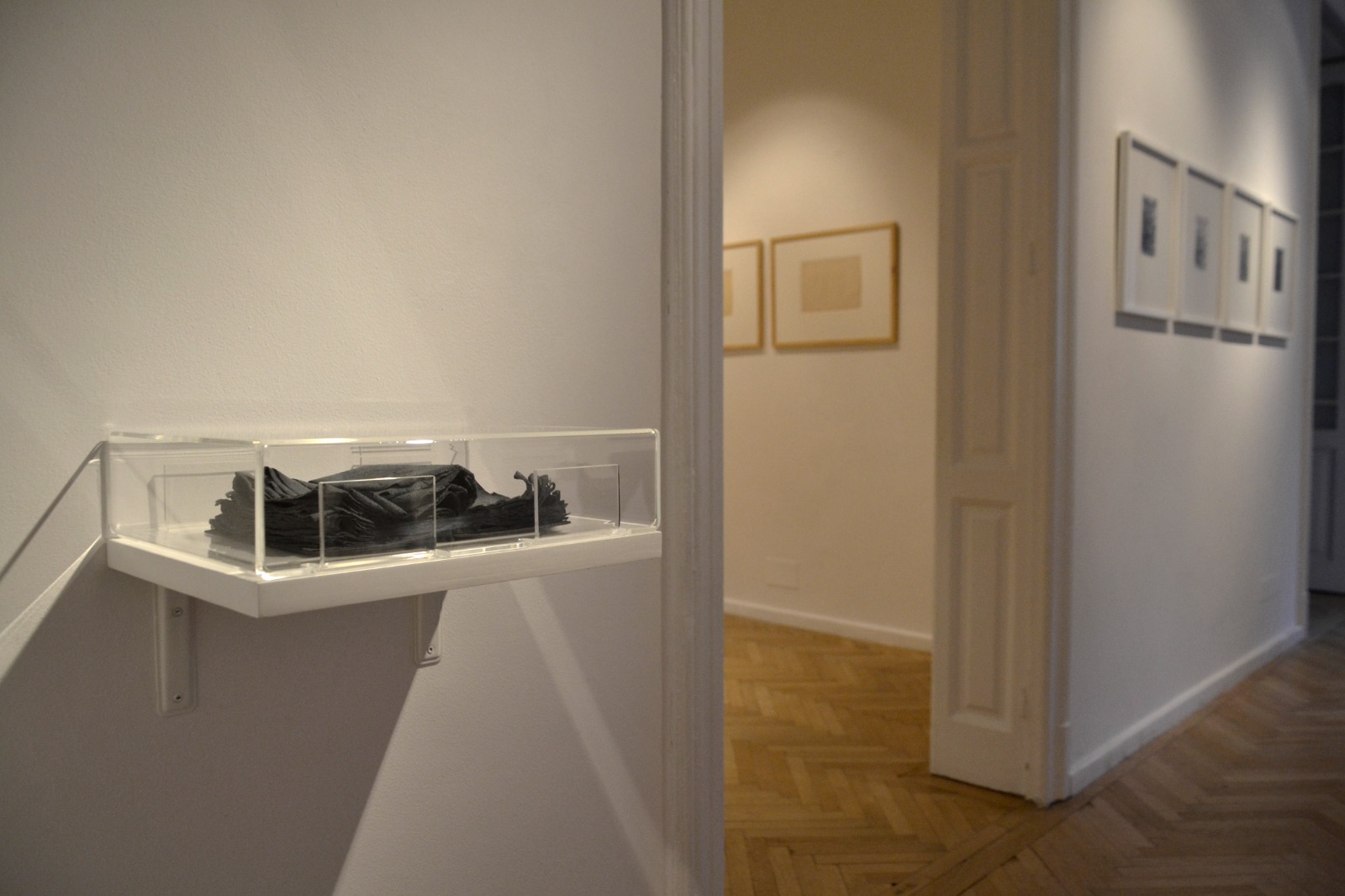
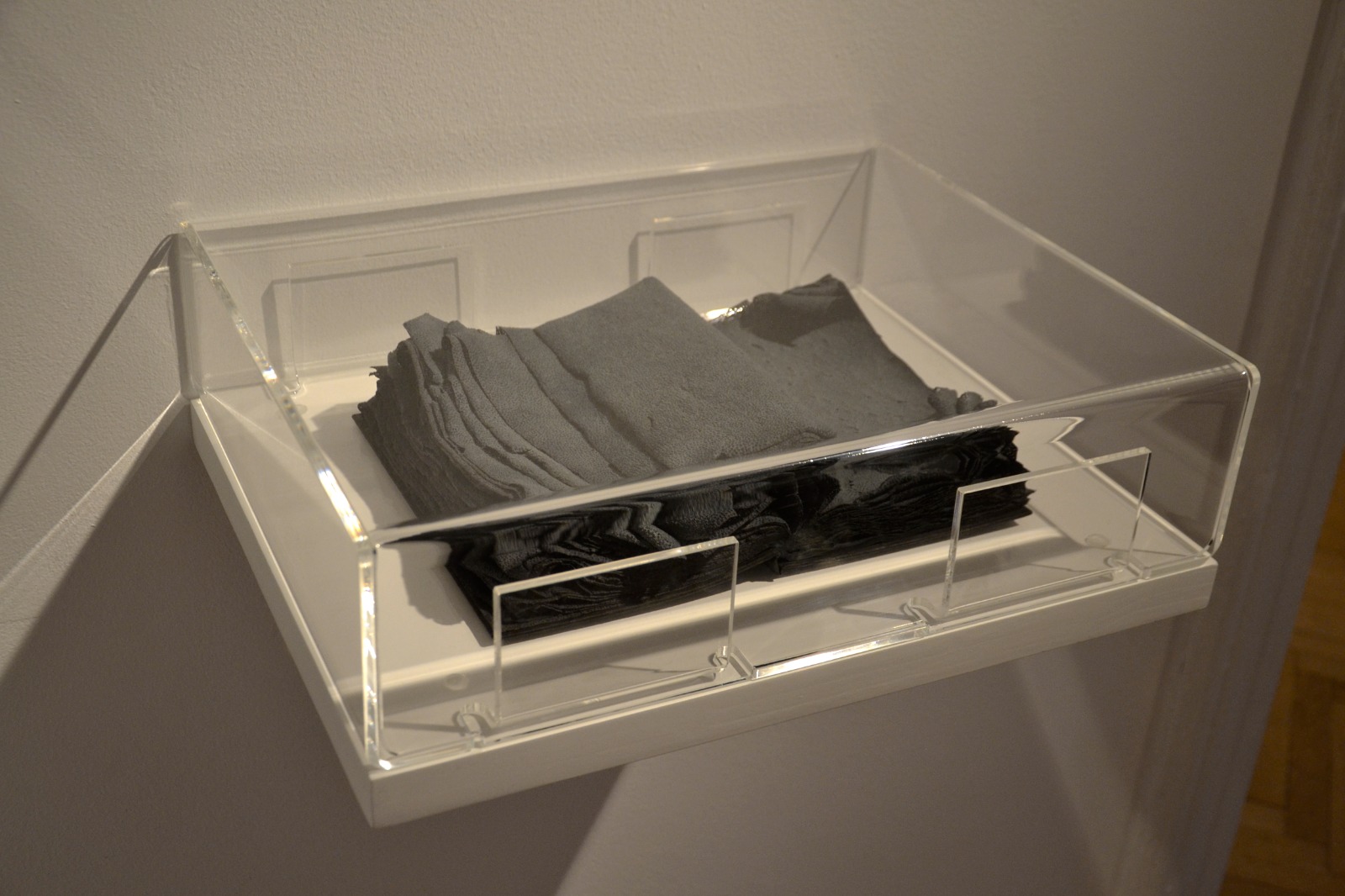
Once altered, the nature of these objects transforms: the immaculate plane of paper becomes the perishable architecture of the needle, activating its own fibrous body through micro three-dimensional contortions; the geological structure of marble is reorganized into artificial apophyses, guided by a near-robotic meticulousness (Fragments series); while wood becomes a processed object which serves as mockup for an astronomy of matter, a planet mapped by the condensation of time into the voids excavated by the drill (Sporóus series).
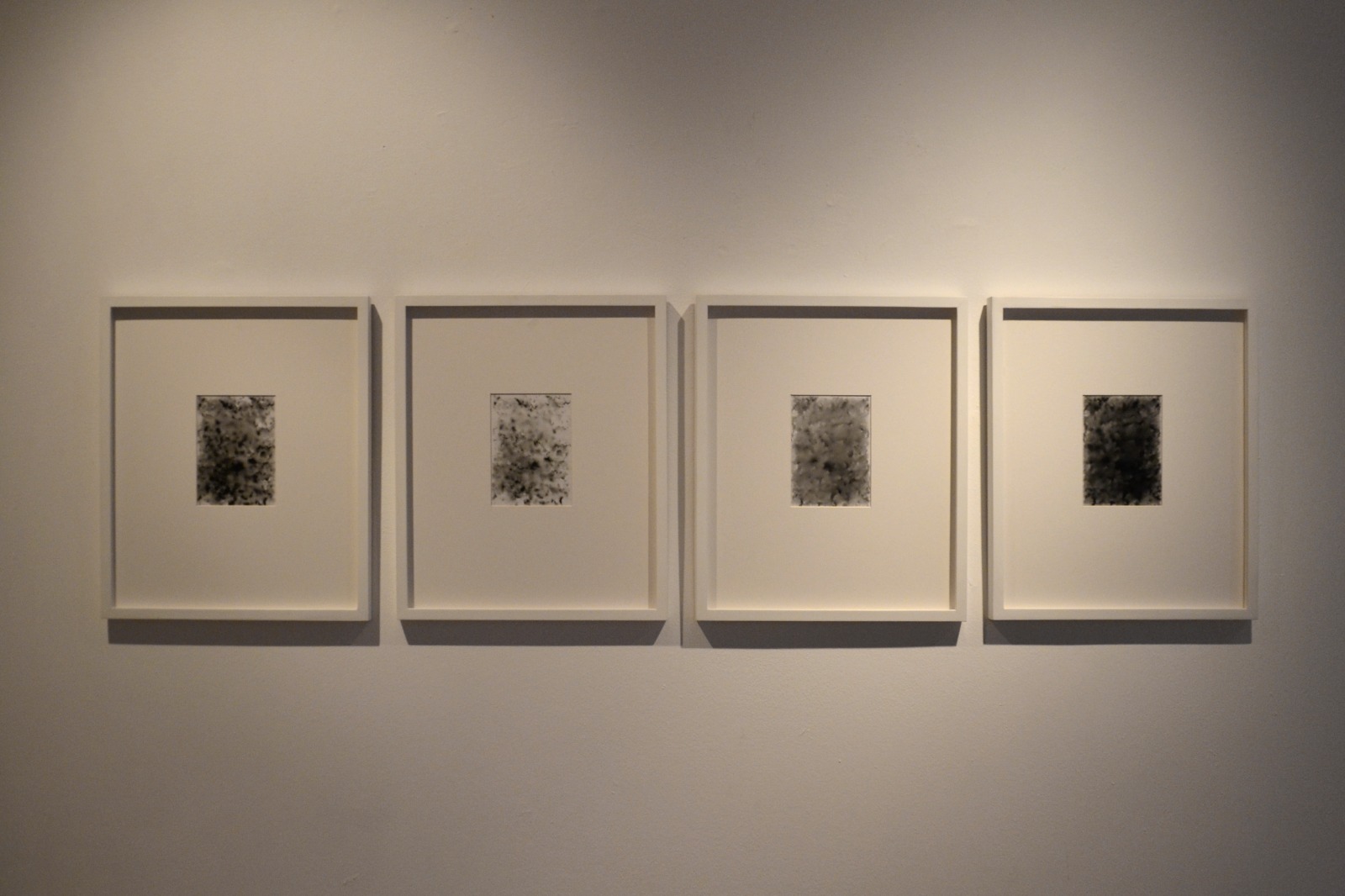
The genetics of these works lies within the point, with its own spatial ramifications, which—once activated—transform matter into new optical cartographies. The air in the Finistre series becomes thinned, fragile, while the play of photons along the edge of each perforation constructs the image of a diffuse reality. The spaces formed between the two planes of paper communicate through these rasterized configurations, mapping processual topographies delineated by subtle reliefs. The newly constituted geography shapes the paper into a topography of sectioned air, offering traces of a slow erosion of cellulose.
Photography appears in Popuț’s practice as a quantum possibility—amplifying the series of perforated papers through multiple variations of its own identity. The resulting negative becomes another face of light, the space in which a diffused image inversely activates the receptors of photographic paper.
Time, entwined with light, transcends the logic of an effervescent world—where the process of infinite repetition replaces the narrative of perpetual change. Here, time diminishes, the second expands, solid merges with air, and vision itself becomes a pause for contemplation within the new structure of the perforated element.
Curated by Norbert Filep