Every natural, human, divine, or speculative construct hinges around a structuring element, a cell, an atom, a particle, the planet, a bone, a musical note, the DNA chain, or a grain of sand, as a key to unlocking mysteries of the world; a petal, a dot, a line, a plane, a three-dimensional surface, a repeated fragment, a piece of something bigger and bigger, as big as the eye, as big as the hand, the tree, the city, the Milky Way and beyond.
The human brain will attempt to simplify all complex images by subconsciously organizing the parts into a structured system that creates a whole, rather than just a series of disparate elements. Any constituent fragment will be thus hidden, as the creation of the divine - after which all things are made, from small to macro - is still a great mystery. Every element is conscious and its understanding belongs to the area of reflection, philosophical, scientific, or artistic analysis. It always implies a second layer of perception because first, we can see, and then we can put things into perspective while seeking to understand.
For this exhibition, the entire concept is born around a (repetitive) element participating in the whole, skeleton, in the entire structure of things. The exhibition as a creative act, speculates contemplation which is made from intrinsic artistic relationships. The work of art depicts the flow of ideas, whilst the eye works as a duplicitous "machinery" of perception, in a continuous oscillation between the distant view of the whole and the awareness that takes place through the immersion in details, in the construction of the elements.
Emma Păvăloaia, Denis Nanciu, Ioana Stelea, Otilia Boeru, Dana Catona, Ada Muntean - six artists from different artistic disciplines, and generations - look, analyze, and seek to understand the world/worlds, on the scale of human anatomy. With the help of the internal eye turned towards itself, but open to understanding, they look for those elements that stand at the base of all things, as explained in "L'O'eil et l'Esprit" by the French philosopher Merleau-Ponty. At the base of all things are tools of artistic and speculative thinking such as the intuitive perception and the conscious analysis of the world – two processes that artists operate with, in their artistic practice.
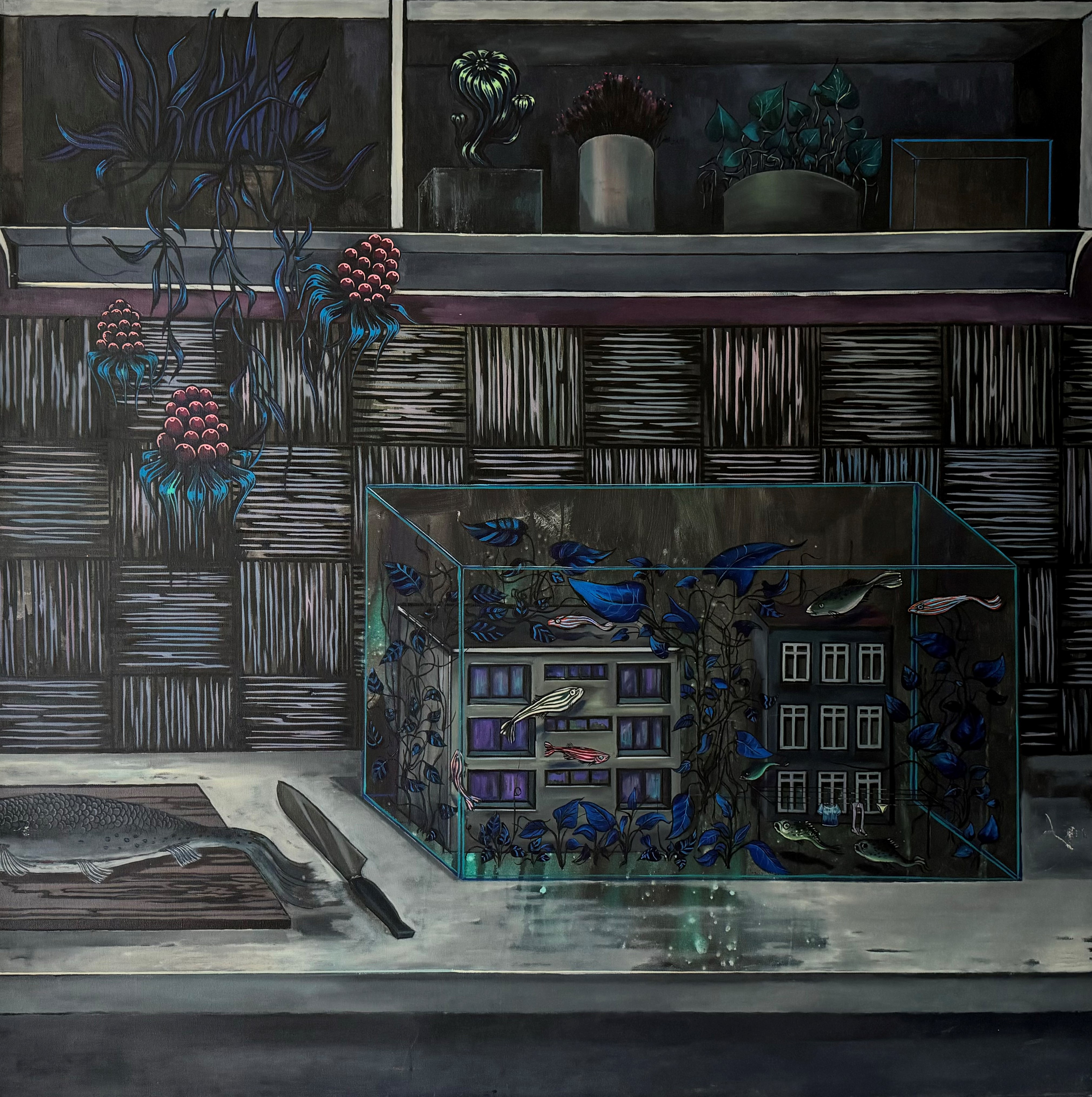
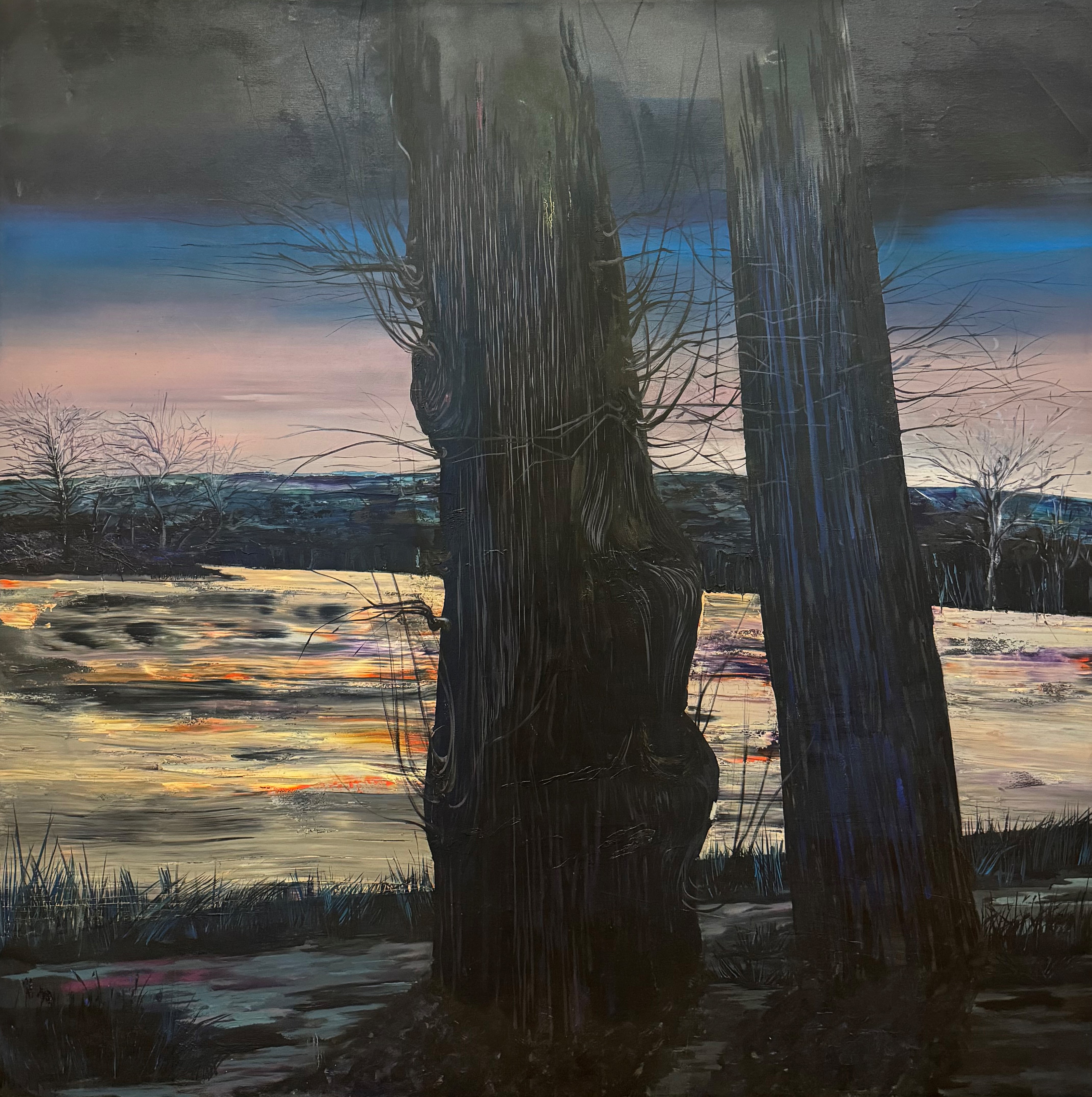
Born in 1994, Emma Păvăloaia is a young painter from Cluj who describes through surrealist poetic formulations, on large-sized canvases, domestic moments or lakeside landscapes, forest, scenes located on the border between dream and reality- on short - depopulated situations that take place during twilight and at night that can easily be (self)representations of the inner self.
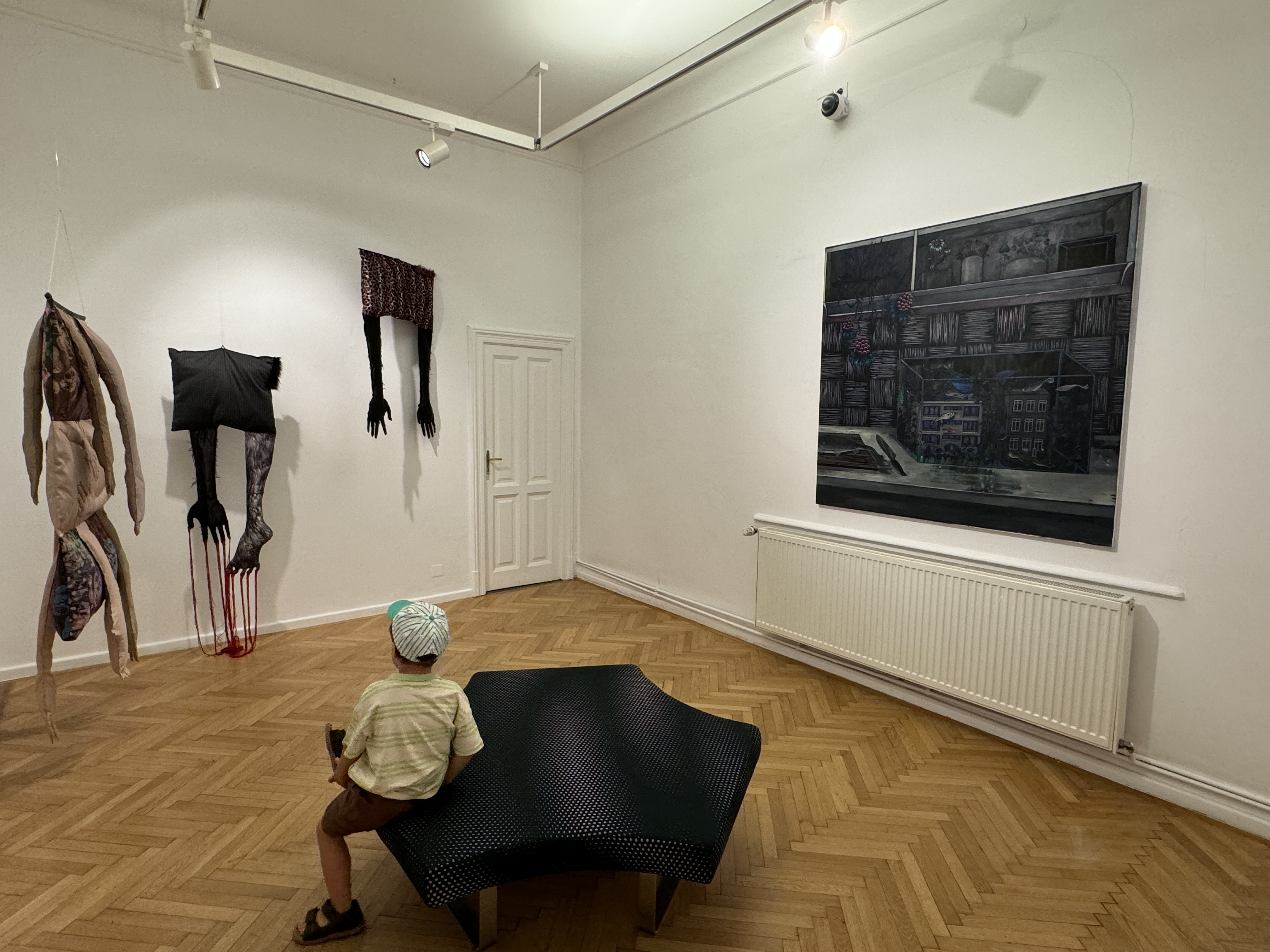
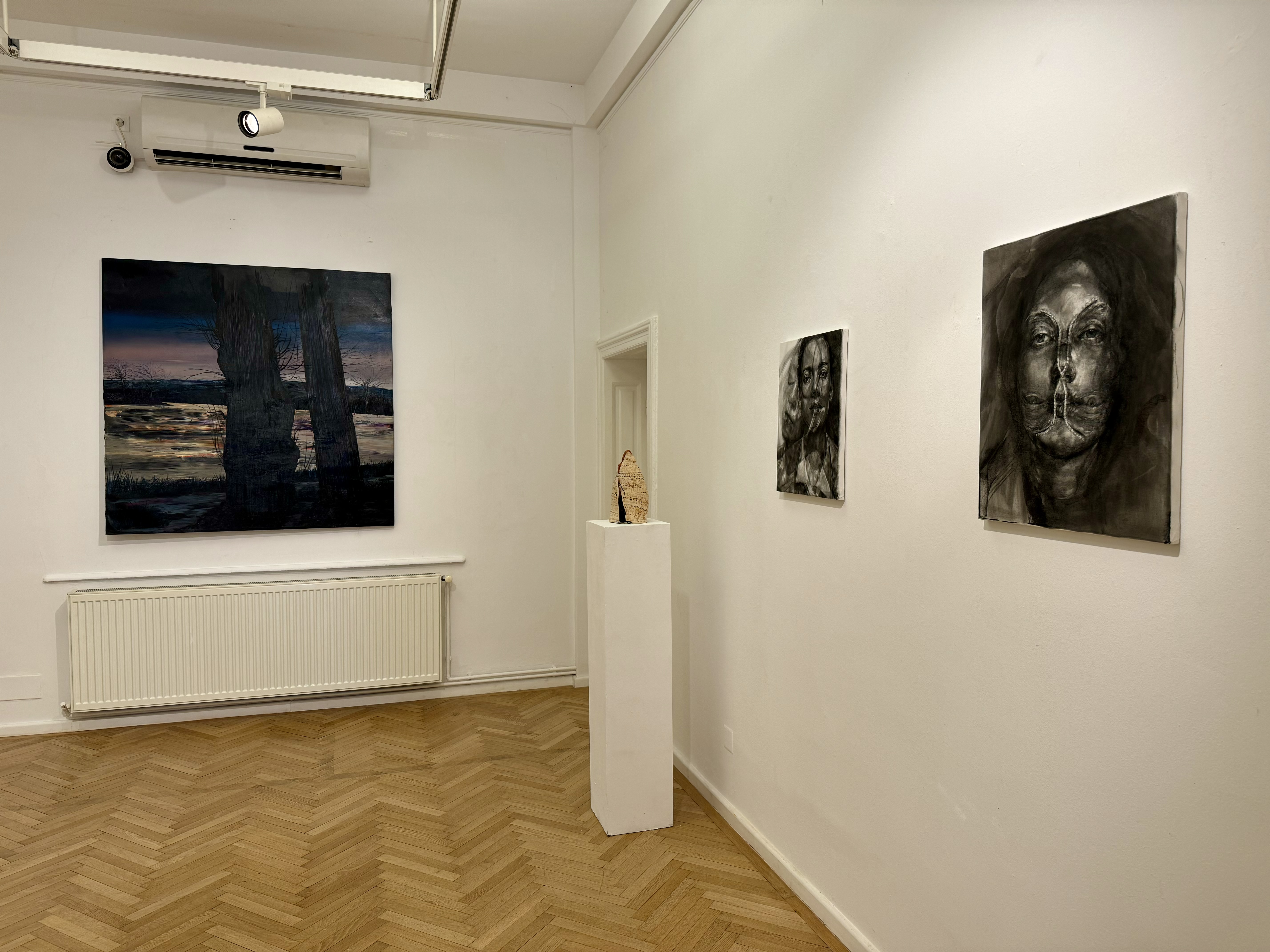
The artist uses a dark palette and repetitive elements such as lines, points, angles, and the perspective of the turned eye that refits the objects within the canvas and opens windows to other dimensions on the territory where the real and the imaginary overlap. Her visual stories are (re)constructed from shadows that disappear into colorful darkness; the flowers, the fish, and the trees in Emma Păvăloaia's works are not simple compositional elements. They bring magic and mystify the nocturnal interior or exterior landscapes, generating new ecosystems that are empty of vertebrate presences.
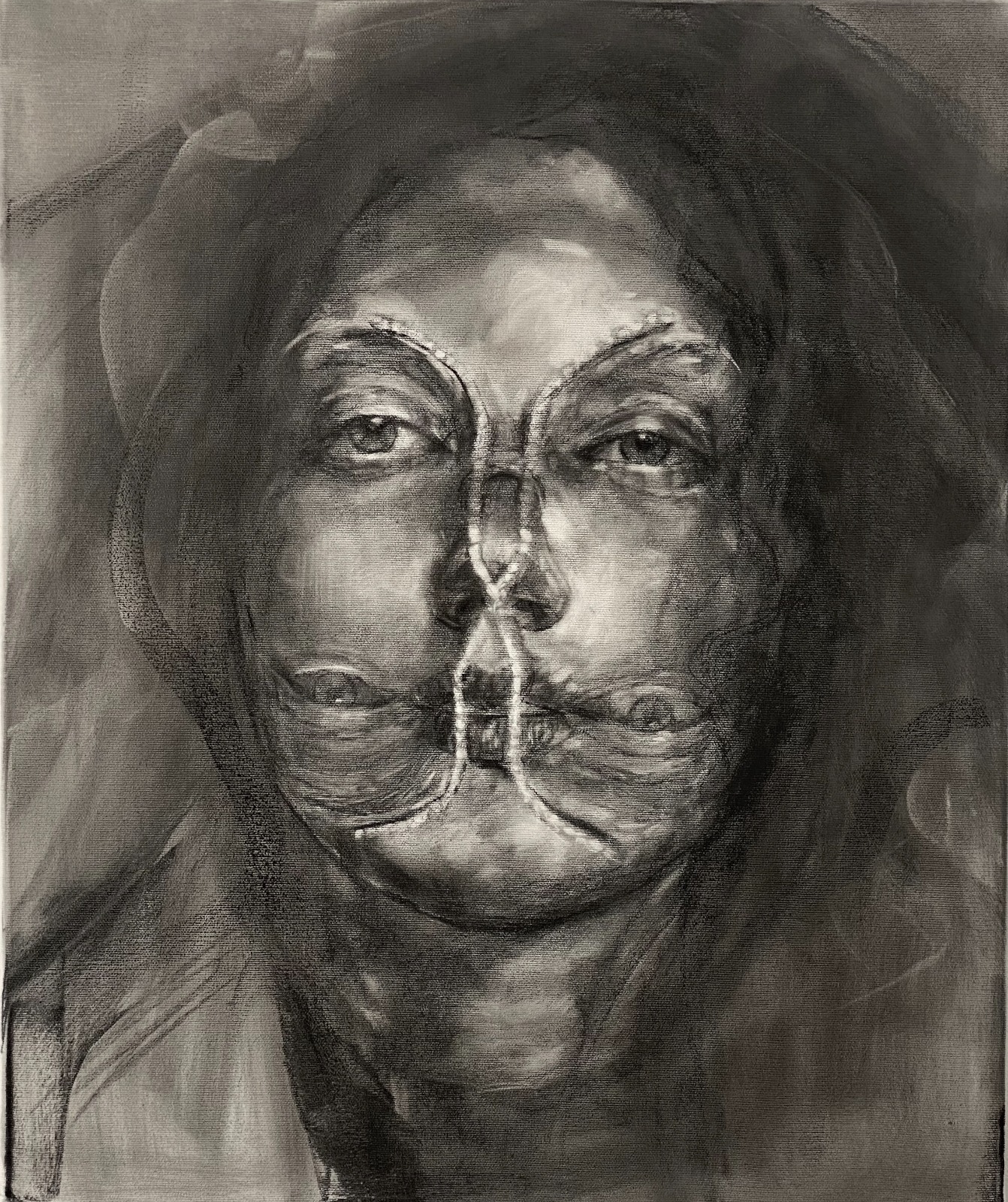
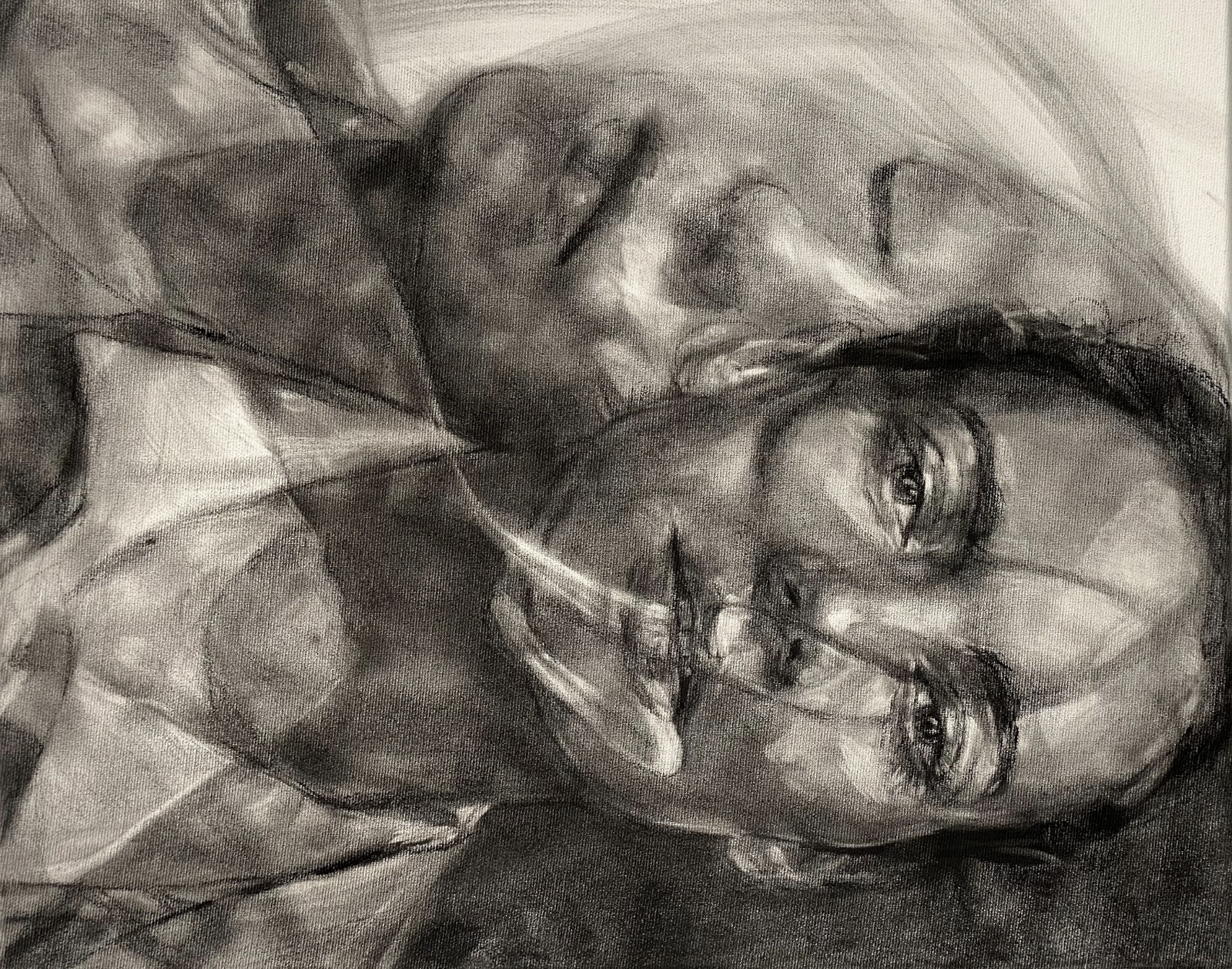
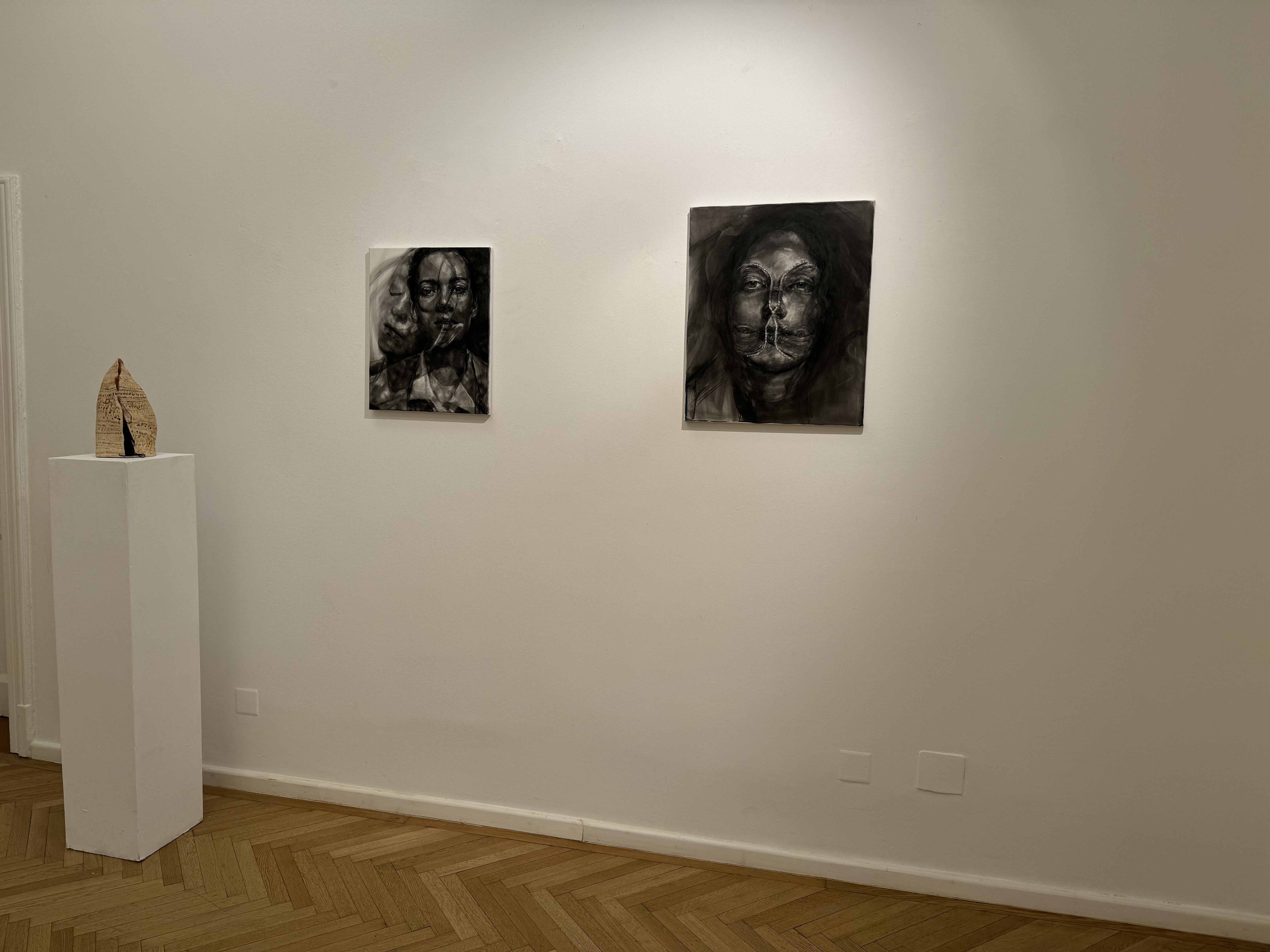
Ada Muntean (born in 1987) is an artist from Cluj, and a university assistant at UAD. Just like a philosopher artist or an analyst of the human genome, she re)structures anatomical elements in disintegrated portraits which then recomposes by looking inward and paying attention to the outside as well. These black and white drawings, made in charcoal on canvas are speculative proposals of a personal anatomy (ana=through, tomein=cut), a formula that aims to probe what lies further, deeper than what is seen in the image.
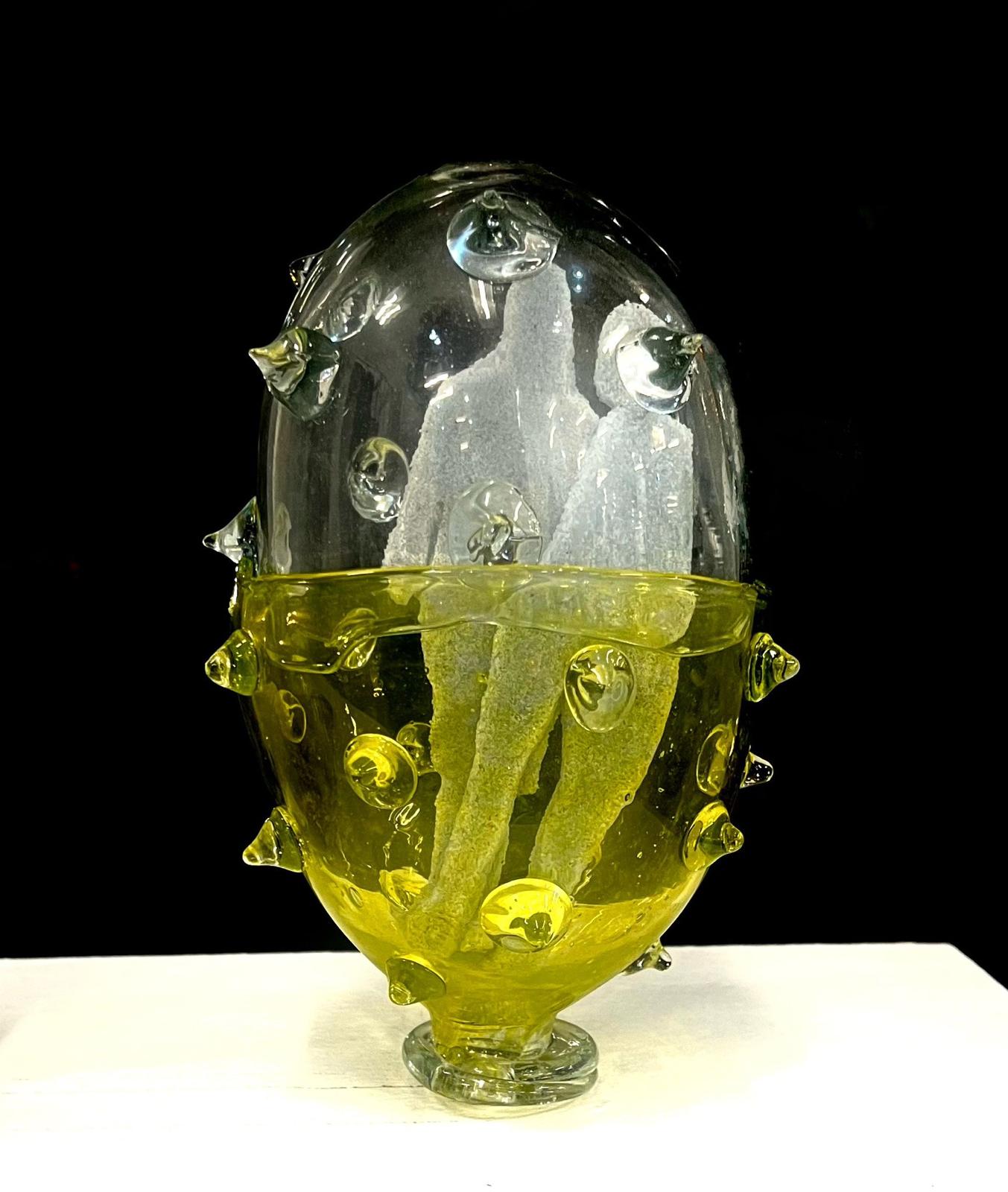
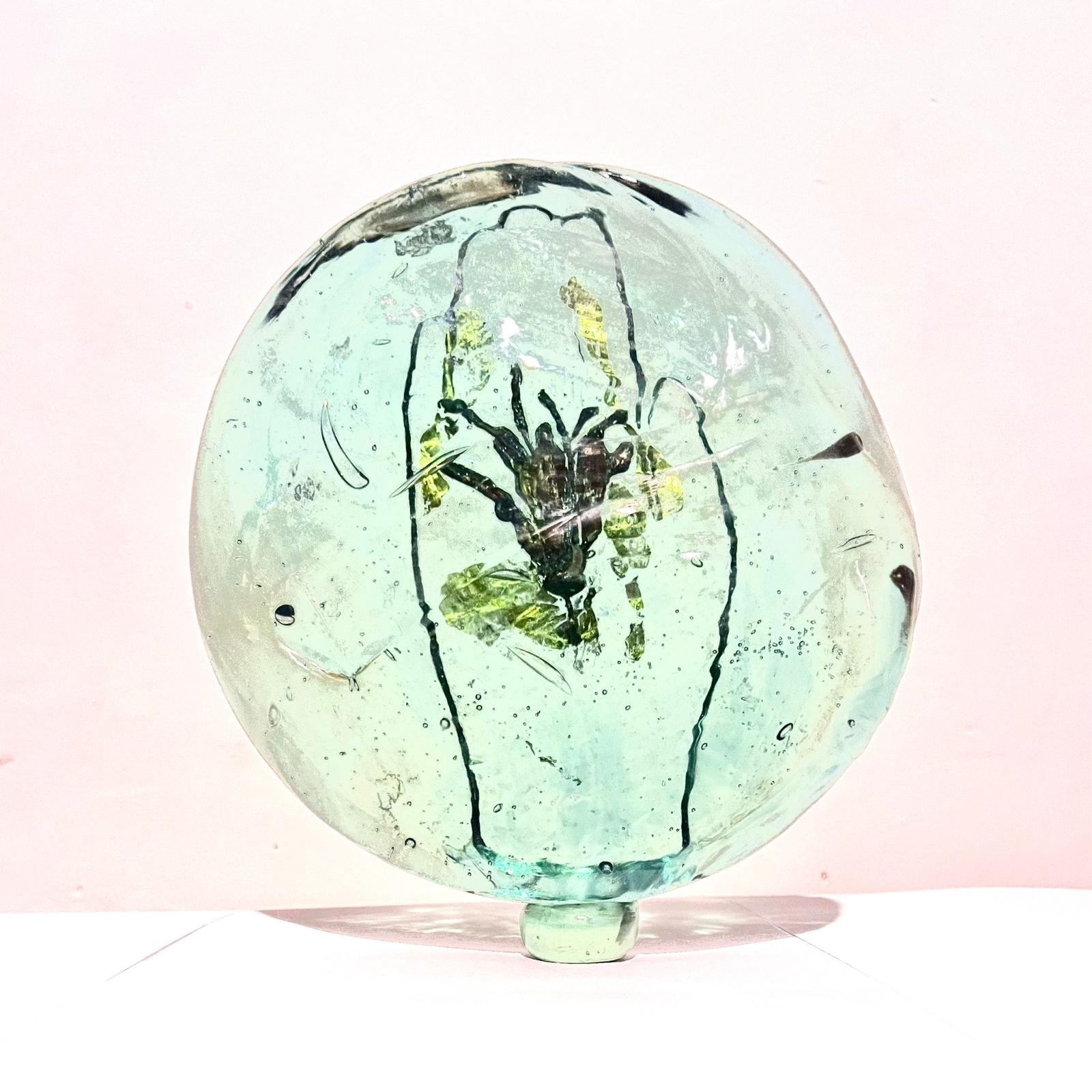
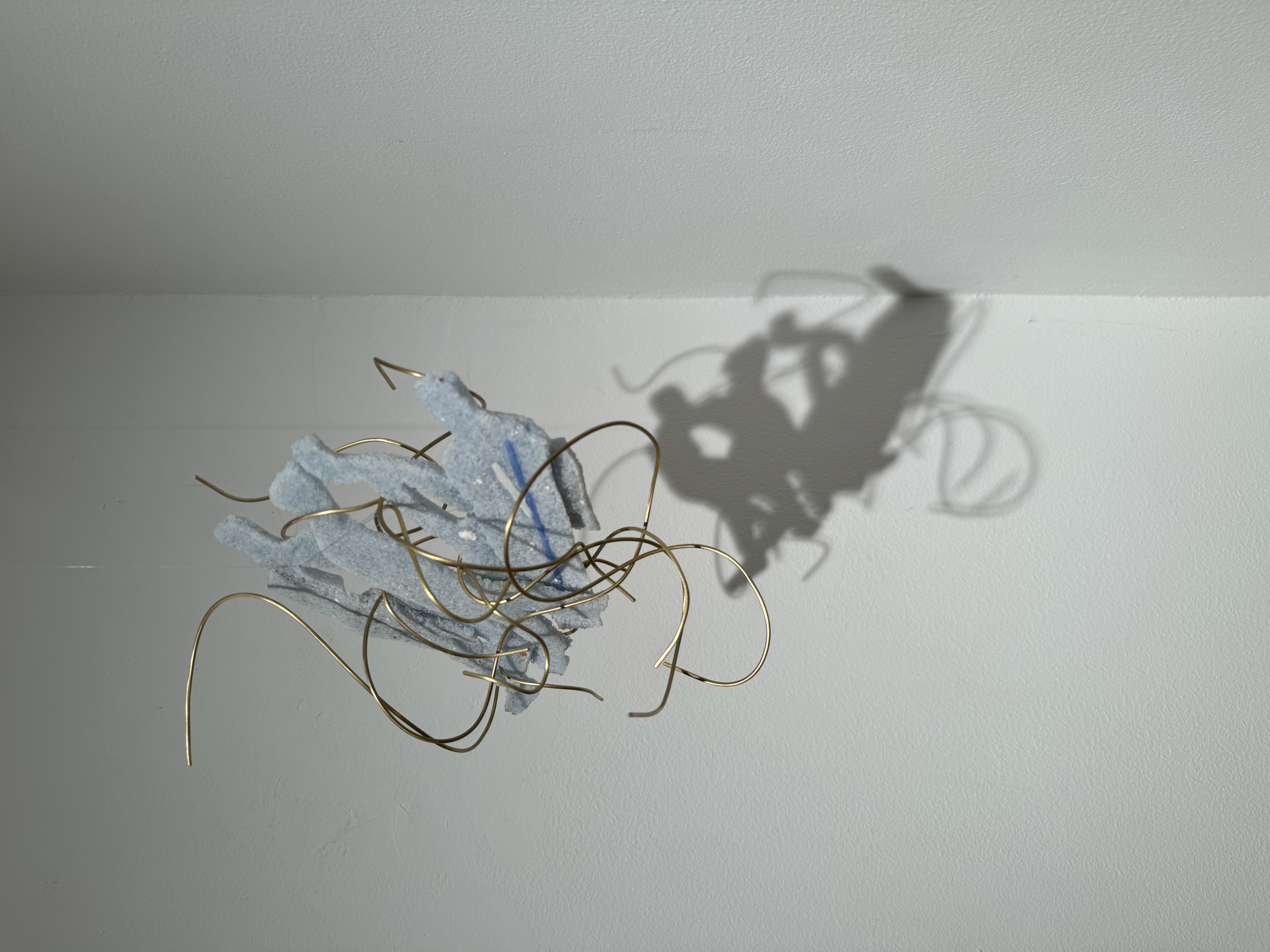
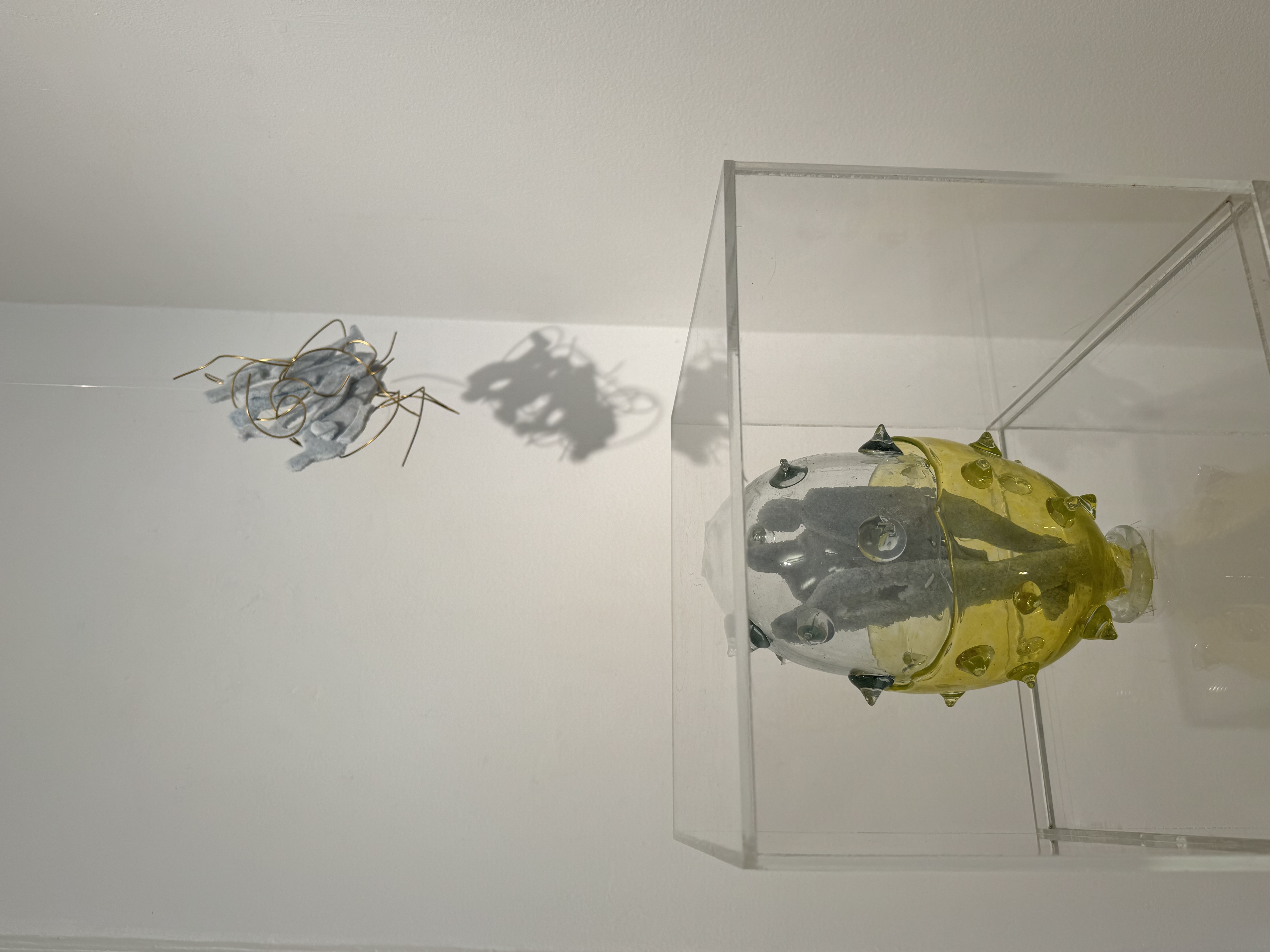
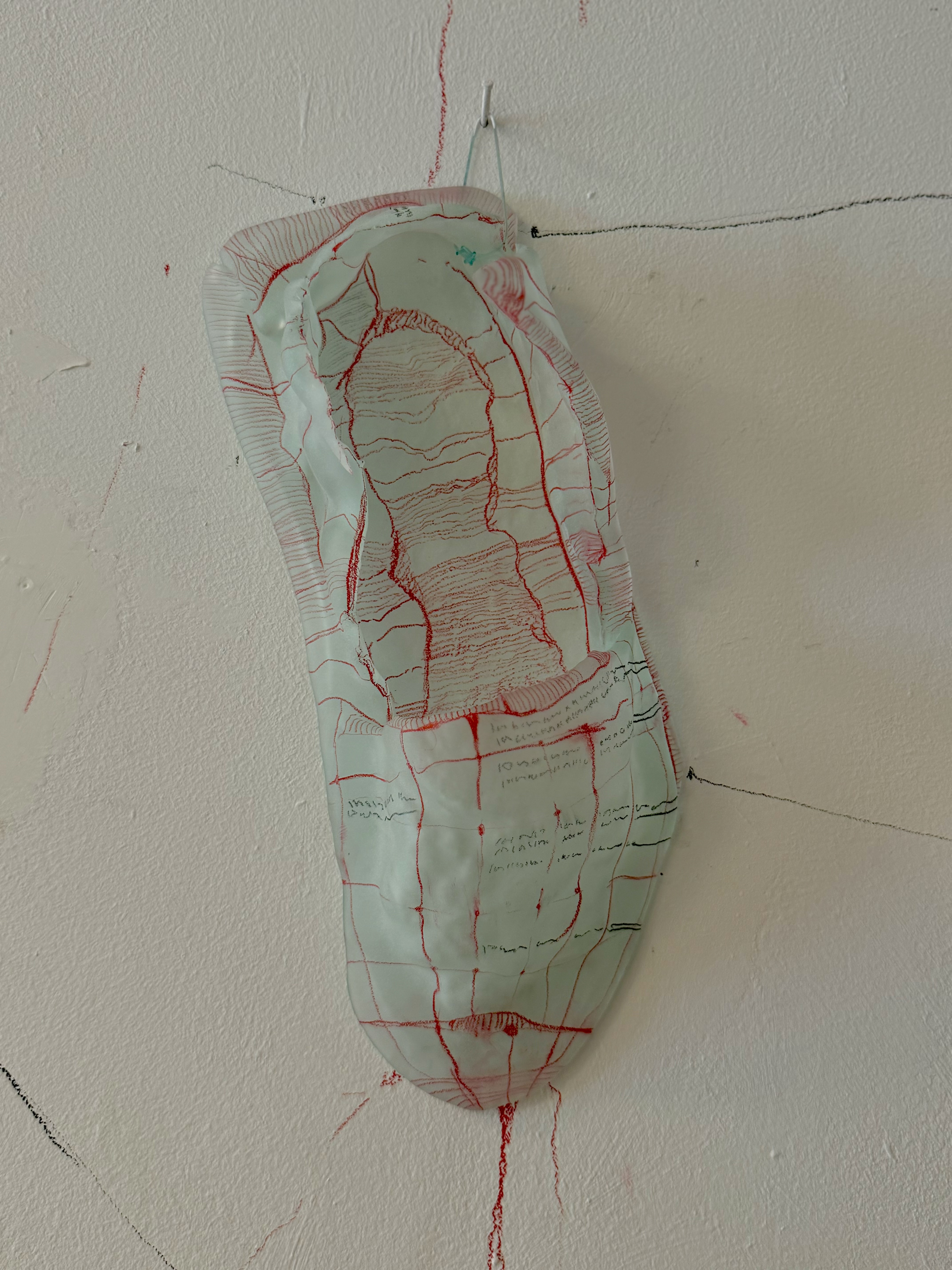
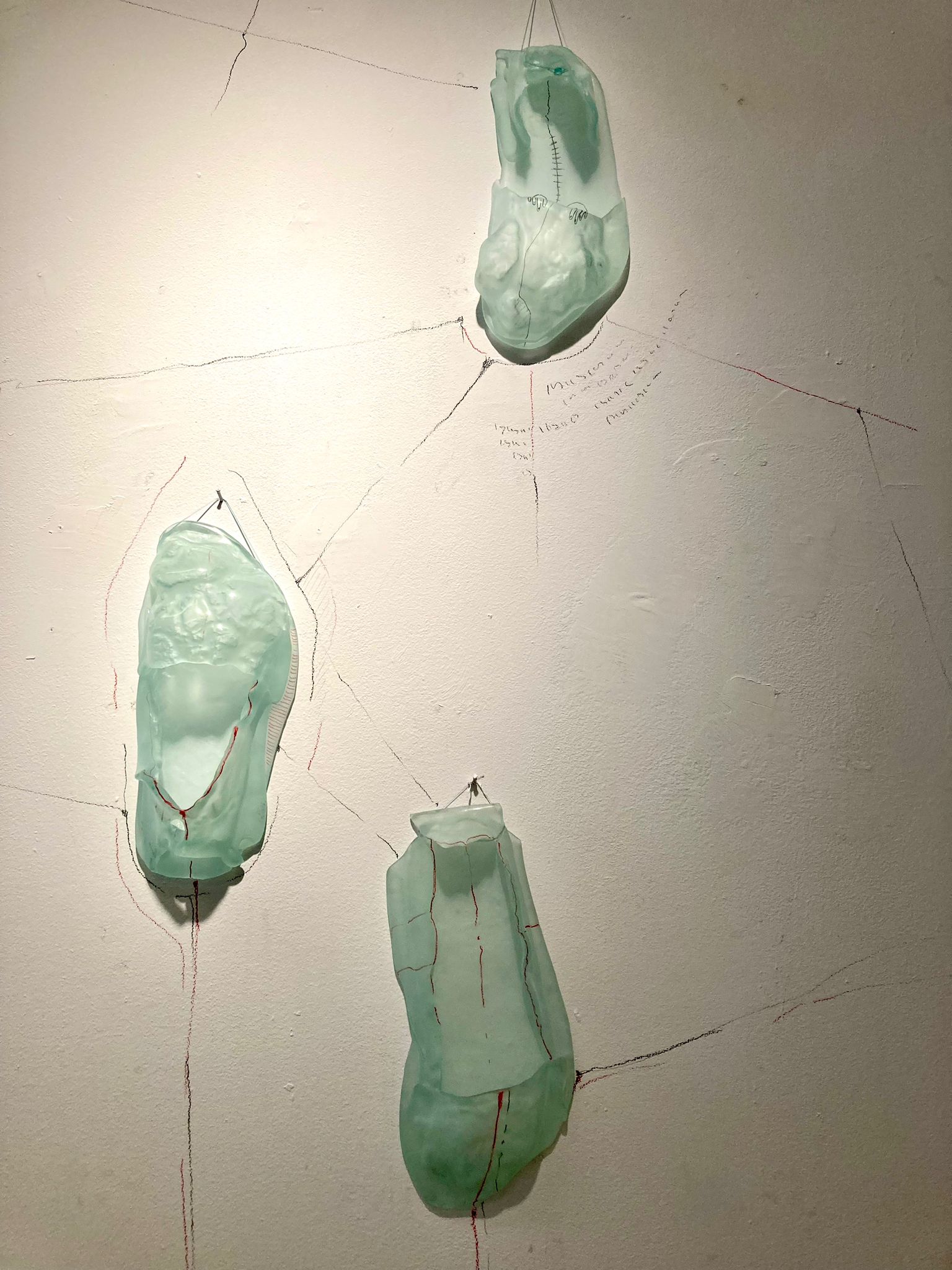
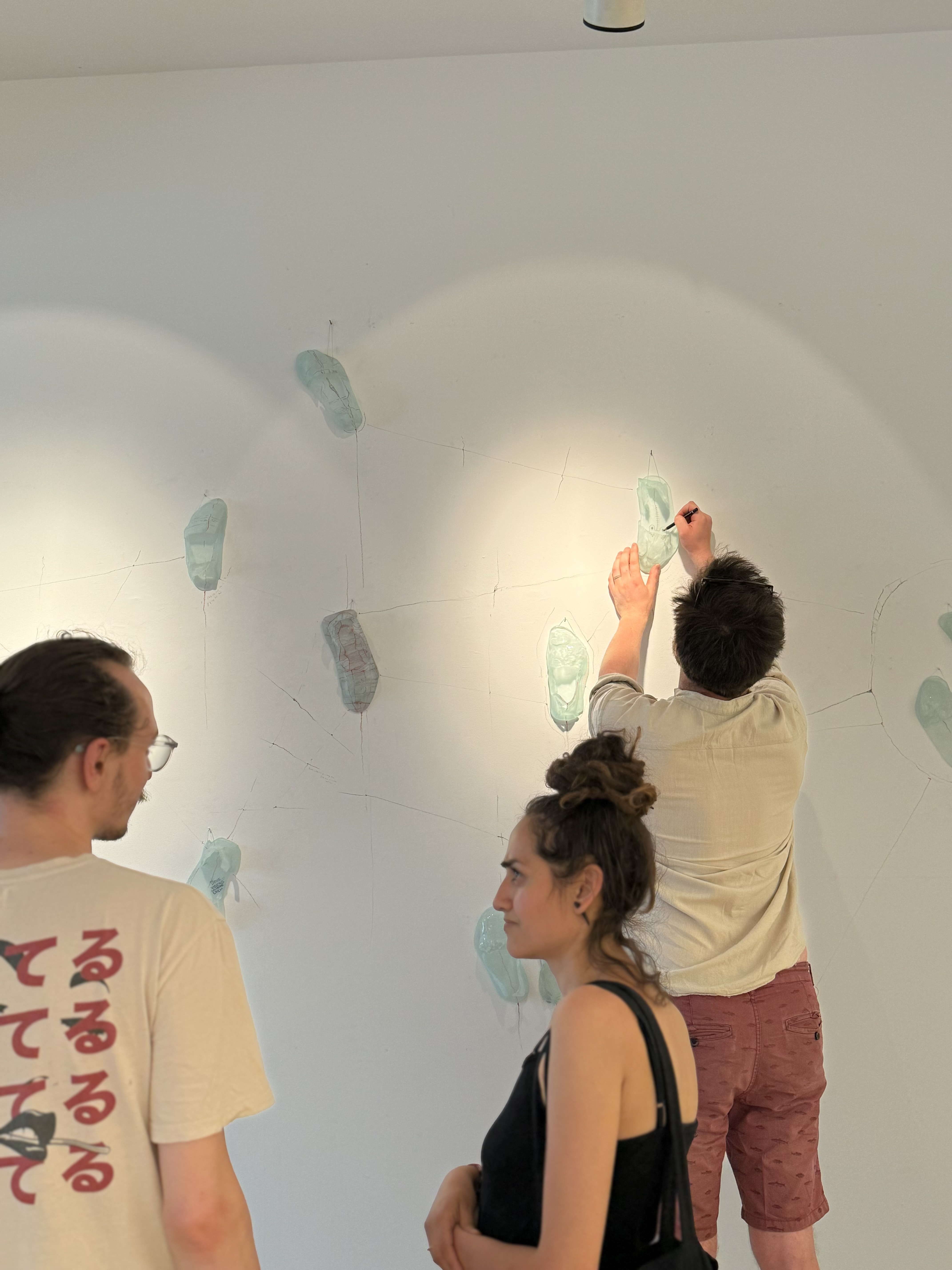
Denis Nanciu is an emerging artist, born in 1999 and established in Bucharest. He brings in the exhibition a staging collection of eclectic glass or metal objects, populated by beings-elements-thoughts, objects that have his recognizable style. The artist transforms the glass material into stories that transcend the limits of the decorative; they are transparent liquid windows to different worlds, each piece revealing a unique narrative that reflects the artist's personal experiences. Denis Nanciu is a calm being, and with the concentration stemming from this calmness, he practices introspection and uses the magic globe as a divinatory eye to stage and understand the realities of this world.
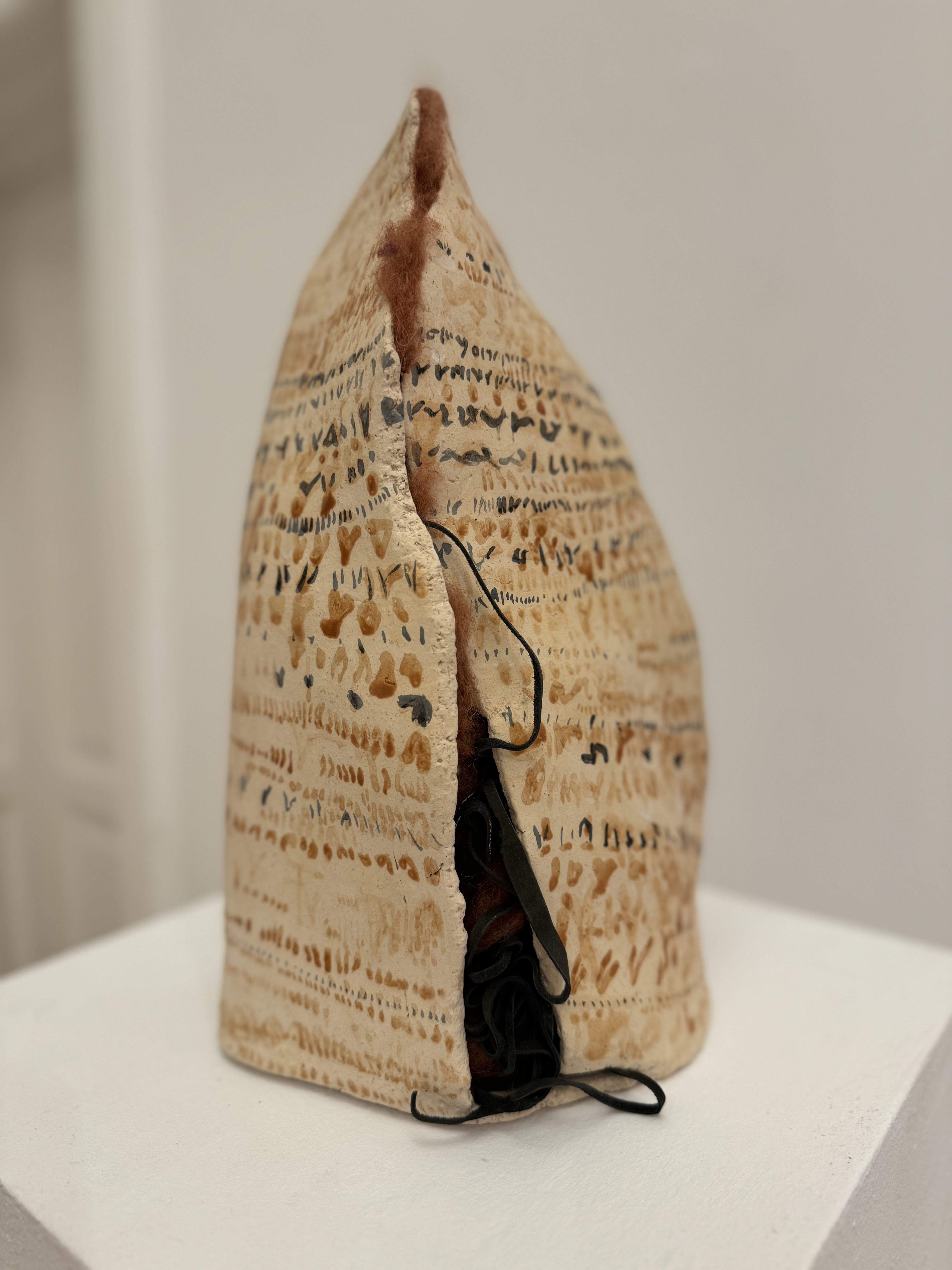
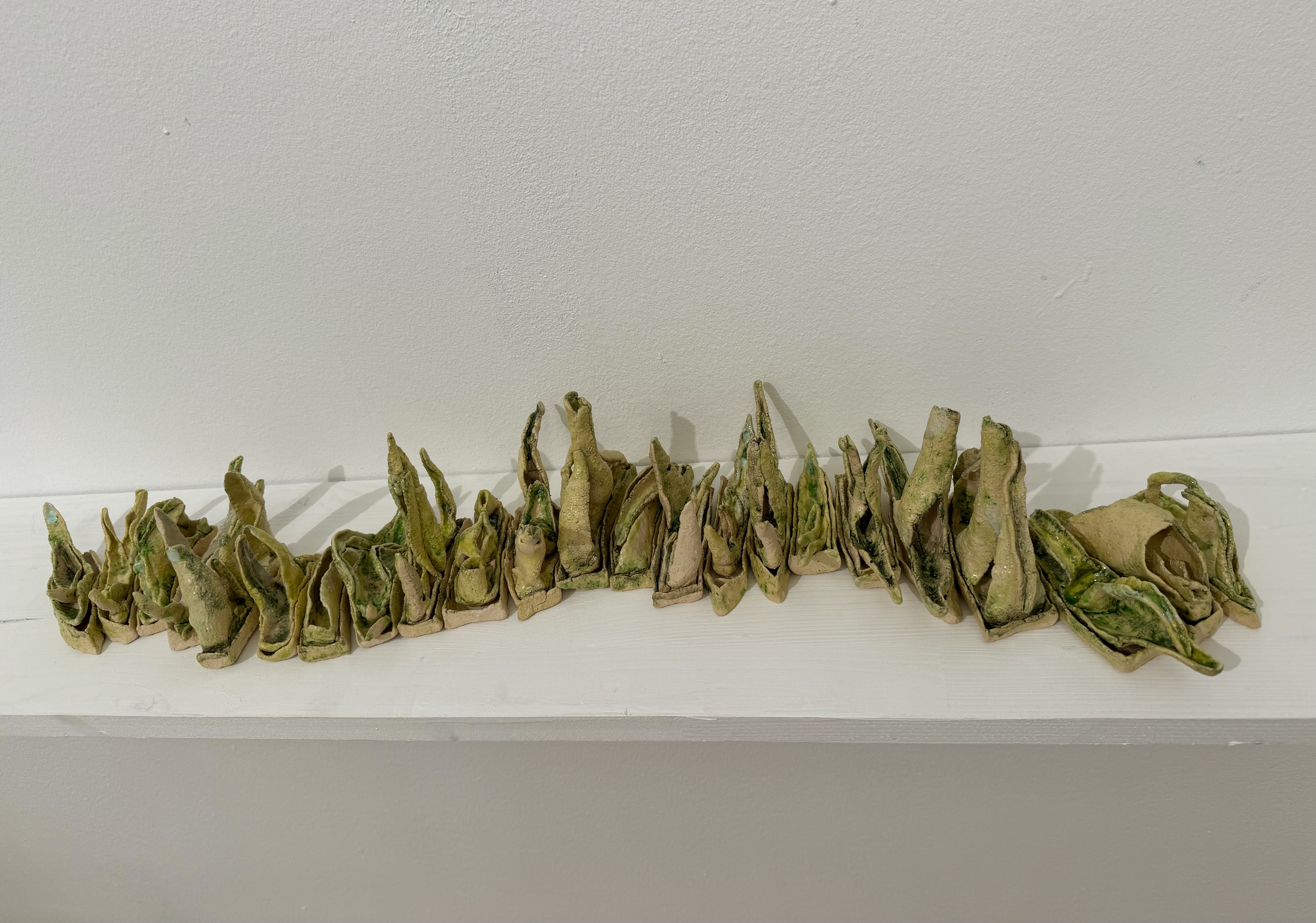
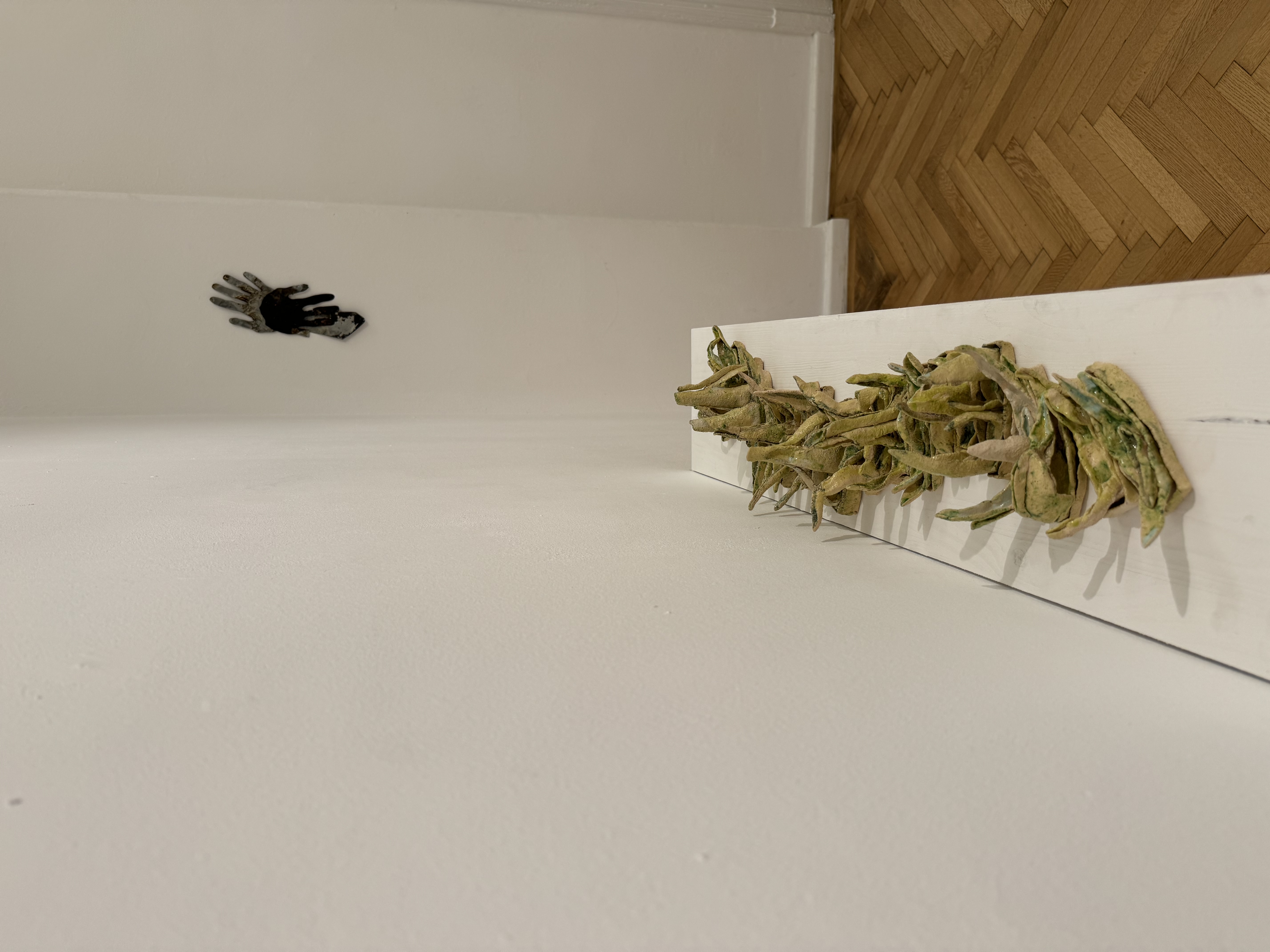
Poet and visual artist, Dana Catona was born in 1966 and works as a university lecturer at FAD Timișoara. She is present in the exhibition with two module/modular works - artistic expressions that combine rustic, formally ancestral aesthetics with meaning - challenging the viewer to reflect on the relationship between structure and space. Her works have hybrid forms and sensitive geographies and are made of ceramics, fired at high temperatures. They can be equally called installations or sculptures. Two different worlds are found in these forms modeled by the artist: the spine, the structure of the internal anatomy, and the nest-tent that speaks of the habitat of the human body in its physical body.
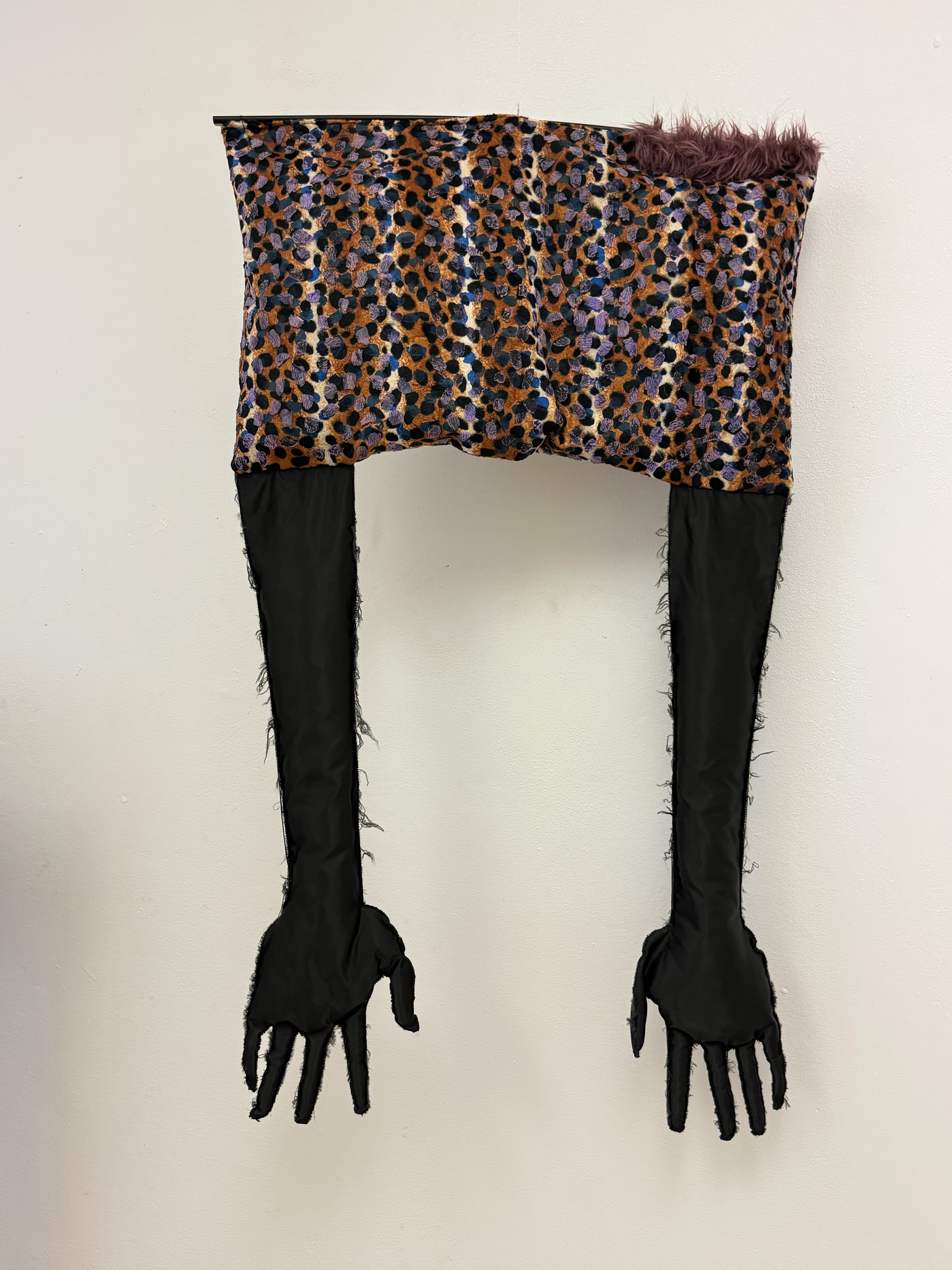
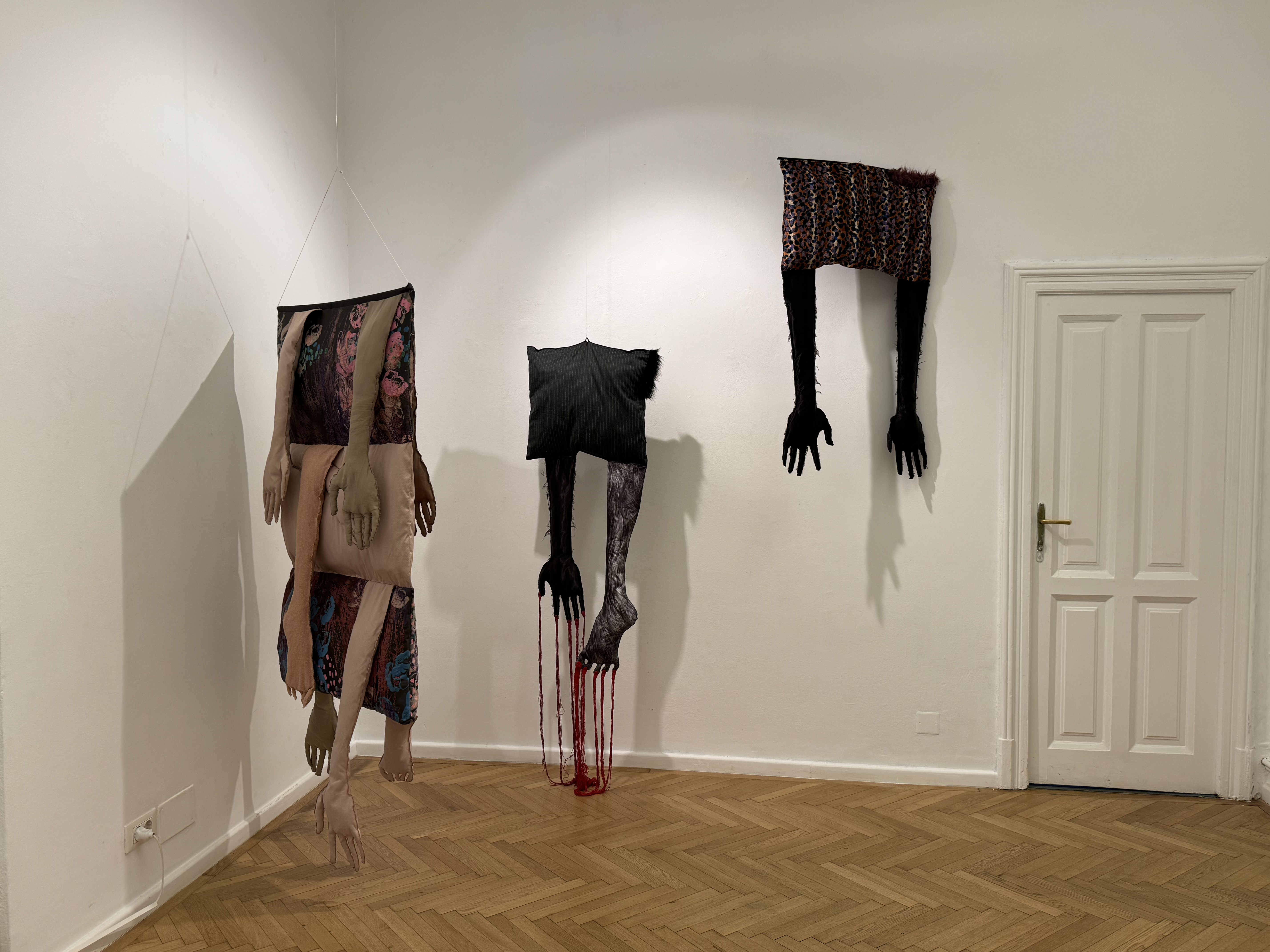
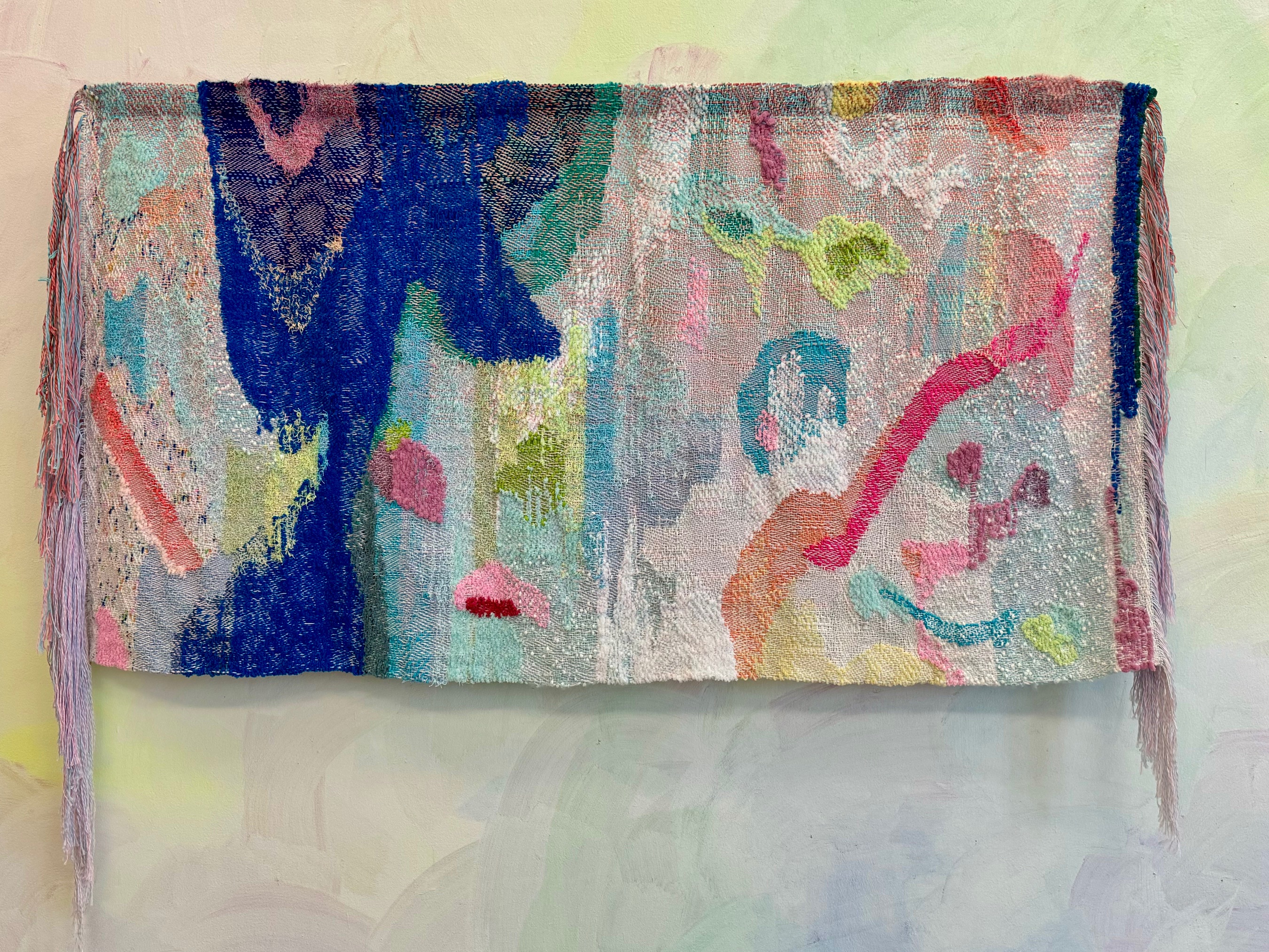
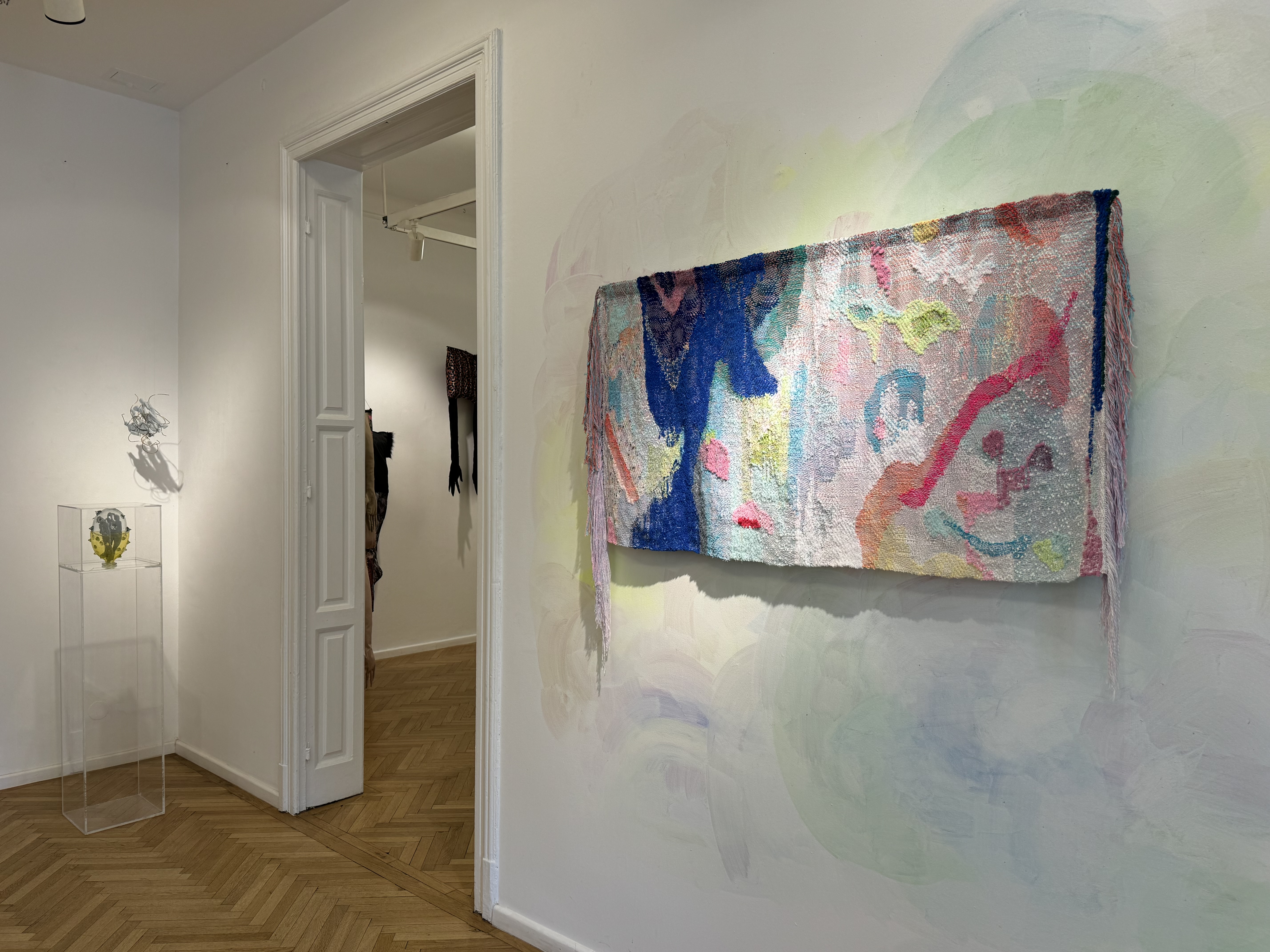
Otilia Boeru another artist who also works as a university lecturer at UNARTE Bucharest is born in 1979 and participates in the exhibition with works that represent two conceptual directions, specific to her creation: a warped fabric with twelve threads, and the textile installation in the form of a soft sculpture composed of anthropomorphic anatomical details. In the tapestry, the artist works with abstract forms aiming to experiment with the tactile structure of the matter, of the textile fiber, the beat, and threads, of the color while in the human-animal installation, she articulates anthropomorphic elements with which recreates fantastic, ancient animals. Her preoccupation with the theme of the human body and its relationship with the world and nature or place in space is visible in these three works.
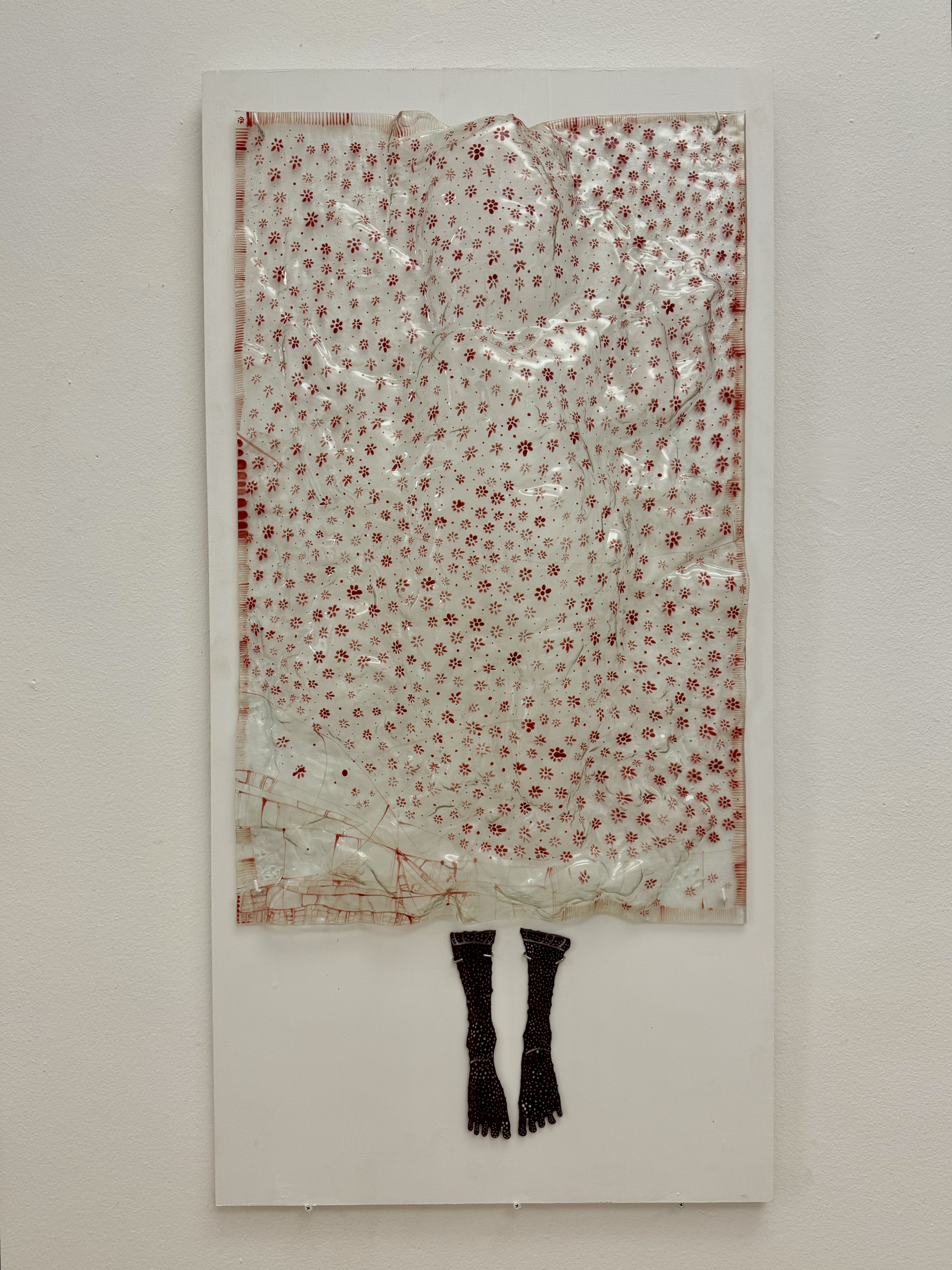
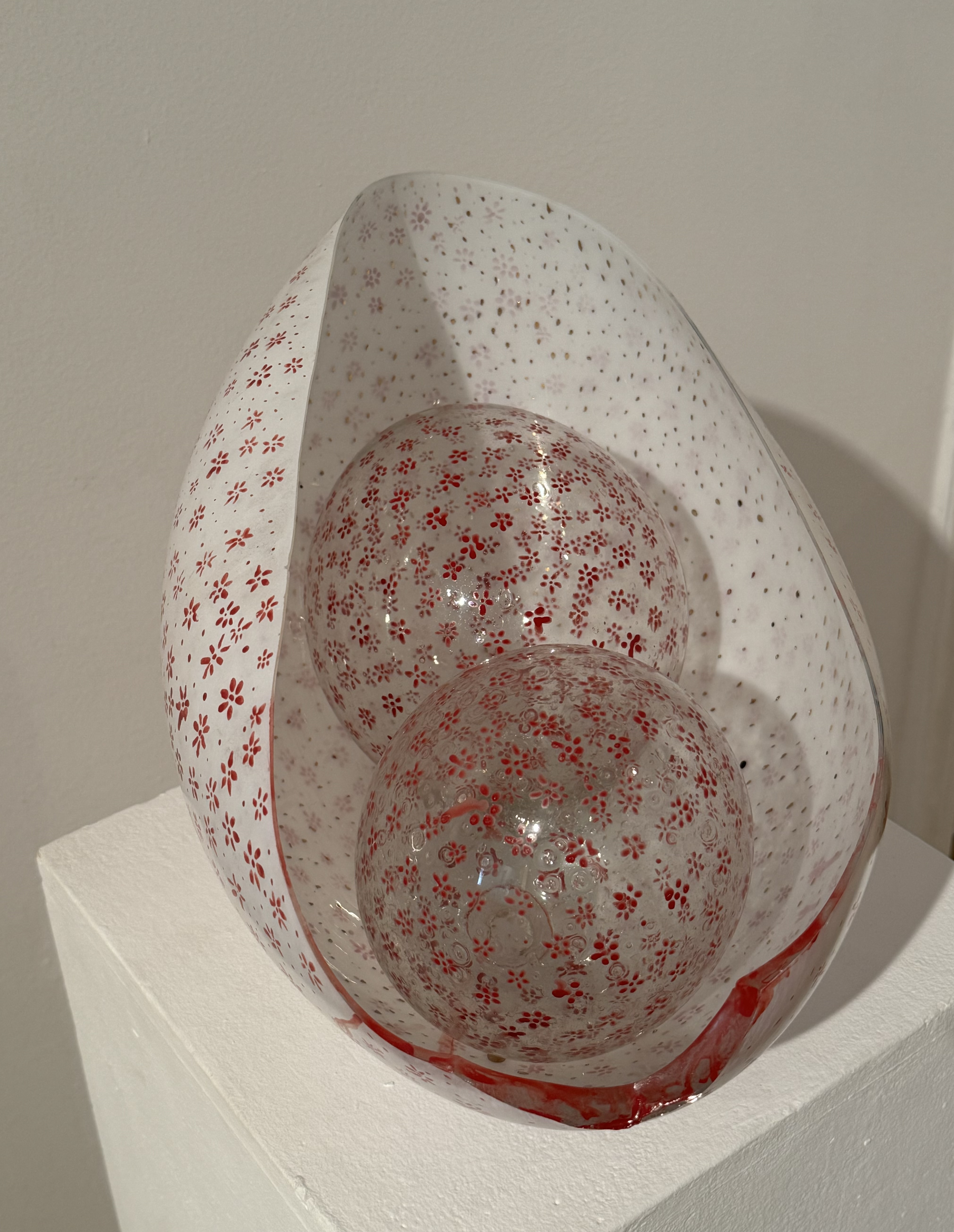
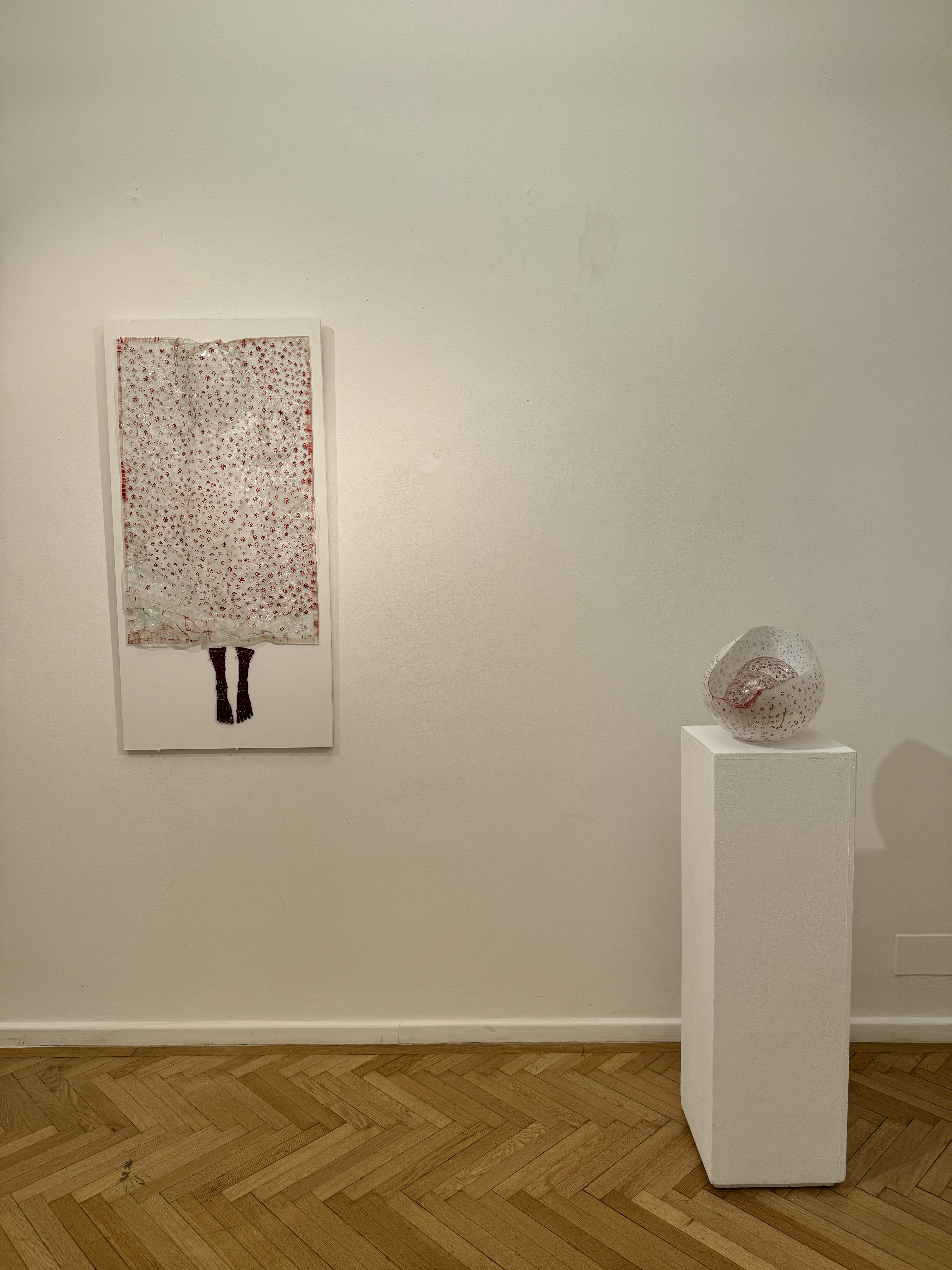
In the hands of the artist Ioana Stelea (born in 1988), the glass becomes something else: a modulated emblem of a female silhouette and the nest with the primordial sphere, an egg made of transparent glass. As a magician of this translucent substance, the artist aims to experiment. She seems to hold the key to the science of modeling this transparent and colored matter. The structures of her works are fragile as the artist aims to suggest the idea of (self) protection and invites the viewer to reflect on the themes of the transition of the human body from one state to another. The transparency and colors of the glass used by Ioana Stelea add intensity to the whole visual experience. Through the way she manipulates matter, Ioana Stelea goes beyond the conventional boundaries of glass art, transforming it into an environment for exploration and experimentation.
Thirty-three vertebrae of the spine, two spheres, a unique form of habitat, four fingers on a hand, thirty-nine tiles, two trees, three palms, a foot, an indefinite number of colored threads and needles, a few pairs of eyes, many human silhouettes, i.e.( the inventory resulting from the analysis made by the internal eye, that of the spirit) - are all component details and key elements intended to open new doors to a more expansive view of art. Each of these six artists explores the concept through their chosen medium in the Vertebrae Mundi exhibition.
curator: Raluca Ilaria Demetrescu